Omar Abdullah heads to Delhi to press Amit Shah on J&K statehood, LG powers
Synopsis
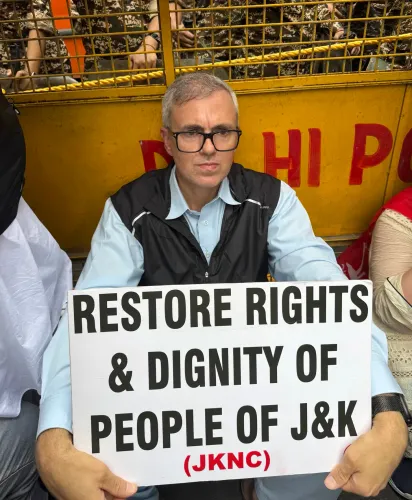
J&K Chief Minister Omar Abdullah flew to Delhi on 11 May for a closely watched meeting with Home Minister Amit Shah — the most substantive Centre-J&K engagement since the 2019 downgrade. With statehood, LG powers, and reservation all on the table, Abdullah was candid: don't expect a single meeting to restore what took one parliamentary session to remove.
Key Takeaways
Omar Abdullah departed for New Delhi on 11 May to meet Home Minister Amit Shah on statehood and governance issues.
Key agenda items include statehood restoration , LG's powers , business rules, Advocate General appointment, and a reservation issue referred to Delhi by the LG.
Abdullah cautioned that statehood restoration would not happen through a single meeting , calling it an ongoing process.
He defended keeping telecom powers with the LG, citing security and law-and-order considerations.
Abdullah walked back controversial liquor remarks , saying the government has not opened new liquor shops and does not intend to expand the trade.
A Cabinet reshuffle in J&K will be decided "at an appropriate time," he said, without elaborating.
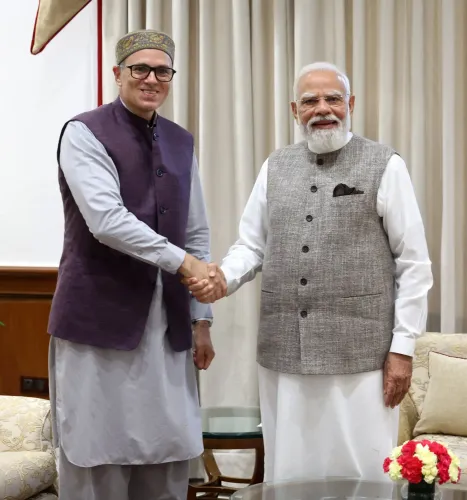
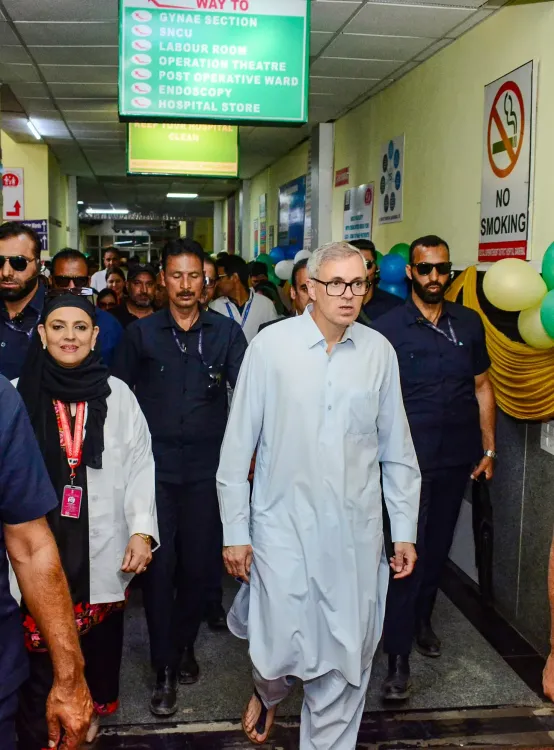
Jammu and Kashmir Chief Minister Omar Abdullah on Monday, 11 May departed for New Delhi to hold talks with Union Home Minister Amit Shah, with the restoration of statehood, the Lieutenant Governor's powers, and reservation among the key issues on the agenda. The high-stakes meeting is being closely watched in political circles as the first substantive engagement between the elected J&K government and the Centre on power-sharing since the region was downgraded to a Union Territory in August 2019.
Key Issues on the Table
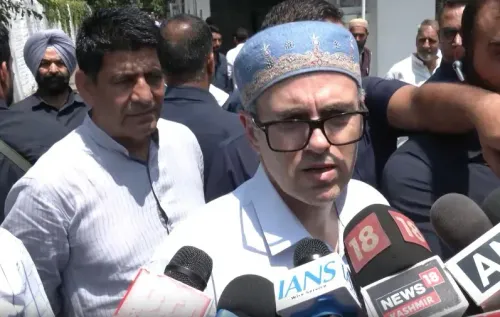
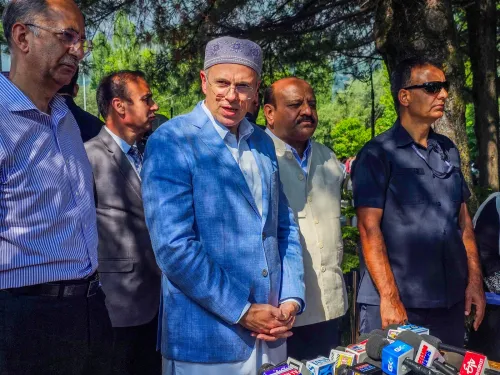
Speaking to reporters in Srinagar before his departure, Abdullah listed several pressing governance matters he intends to raise — including business rules, the appointment of the Advocate General, and a reservation issue that the Lieutenant Governor has referred to the Centre. He also flagged the broader constitutional friction between the elected government and the office of Lieutenant Governor Manoj Sinha.
"Besides, there are other issues like the business rules, Advocate General, reservation issue which the LG has referred to Delhi. I will talk to the Home Minister in Delhi this evening," Abdullah said.
Statehood Restoration: Measured Expectations
Abdullah was candid that the restoration of statehood — the central political demand in Jammu and Kashmir — would not be resolved in a single sitting. "I don't think that a single meeting will get our statehood back. The process is going on," he said. The Chief Minister has consistently argued that the overlapping of powers between the LG and the Chief Minister has seriously impeded the resolution of public grievances across the Union Territory.
Notably, statehood remains a live political flashpoint more than five years after the former state's special status was revoked and it was bifurcated into two Union Territories — Jammu and Kashmir and Ladakh — in August 2019.
Telecom Powers and the LG Framework
On the sensitive question of telecommunications control, Abdullah defended the current arrangement under which such powers remain with the Lieutenant Governor, citing security and law-and-order imperatives. "Telecom powers with the Governor under UT as Home Department looks after law-and-order issues. This power will save us from time to time. Till security and law and order is with LG, telecommunication power should lie with the LG," he said — a notably conciliatory position on one of the more contentious aspects of the UT framework.
Liquor Controversy: Abdullah Walks Back Remarks
The Chief Minister also attempted to defuse a political controversy sparked by his recent remarks on liquor shops in Kashmir. Admitting that his earlier response to reporters had created confusion, Abdullah attributed the ambiguity to time constraints. "Due to time constraint, I talked to reporters in a short way without any explanation," he said.
He clarified that the government had no intention of expanding the alcohol trade in Jammu and Kashmir, and reiterated that Islam prohibits liquor consumption. "Liquor shops are for those whose religion allows them to use liquor. No government has so far banned this liquor trade, but that doesn't mean we will increase its trade. Our religion prohibits it," he said. He accused Opposition parties of selectively circulating old videos of his earlier statements to manufacture a contradiction.
Cabinet Reshuffle and Political Sidelines
On speculation about a Cabinet expansion in Jammu and Kashmir, Abdullah was non-committal, saying such decisions would be taken "at an appropriate time." He also congratulated actor-turned-politician Vijay, apparently referencing recent political developments in southern India, and reiterated his position that the single-largest party should be invited to form any government. The Delhi meeting is expected to set the tone for the Centre-J&K relationship in the months ahead, with power-sharing arrangements and the statehood timeline the most consequential items on the agenda.
Point of View
And the LG framework is baked into the UT design. What Abdullah is really doing is building a public record of having pressed the case, which matters ahead of any future electoral reckoning in J&K. His defence of telecom powers remaining with the LG is telling — it suggests the elected government has quietly accepted the security architecture even as it contests administrative turf. The liquor controversy, meanwhile, reveals the tightrope any J&K government must walk: balancing constitutional obligations with the region's dominant religious sensibility. That Abdullah felt compelled to clarify at all, on the morning of a consequential Delhi trip, says something about how quickly political narratives can spiral in the Valley.
NationPress
24 Sept 2026
Frequently Asked Questions
Why is Omar Abdullah meeting Amit Shah in Delhi?
J&K Chief Minister Omar Abdullah travelled to New Delhi on 11 May to meet Home Minister Amit Shah to discuss the restoration of statehood, the Lieutenant Governor's powers, business rules, the Advocate General appointment, and a reservation issue referred to Delhi by the LG. The meeting is the most substantive Centre-J&K engagement on power-sharing since the region became a Union Territory in August 2019.
Will Jammu and Kashmir get statehood back after this meeting?
Abdullah himself tempered expectations, saying a single meeting would not restore statehood. He described the process as ongoing and said expectations should remain realistic, signalling that any restoration would require sustained political engagement and ultimately a parliamentary act.
What is the dispute between J&K's elected government and the Lieutenant Governor?
Since J&K became a Union Territory in August 2019, several administrative and constitutional powers — including law and order, telecommunications, and certain appointments — rest with Lieutenant Governor Manoj Sinha rather than the elected Chief Minister. Abdullah has argued this overlap has impeded the resolution of public grievances.
What did Omar Abdullah say about liquor shops in Kashmir?
Abdullah clarified that his government has not opened any new liquor shops and has no intention of expanding the alcohol trade in Jammu and Kashmir. He said his earlier remarks to reporters were made hastily without full explanation and accused Opposition parties of twisting his statements for political purposes.
When was Jammu and Kashmir downgraded from a state to a Union Territory?
Jammu and Kashmir was bifurcated into two Union Territories — Jammu and Kashmir, and Ladakh — in August 2019, when the Centre revoked its special status under Article 370 and Article 35A. Statehood restoration has since remained the central political demand of the region's elected leadership.