Omar Abdullah Vows to Fight On After Jantar Mantar Protest Blocked
Synopsis
J&K Chief Minister Omar Abdullah declared the statehood struggle 'only the beginning' after authorities stopped his party from marching to Jantar Mantar in New Delhi on 20 July 2026. The National Conference has campaigned for statehood restoration since the 2019 reorganisation that converted the former state into a Union Territory.
Key Takeaways
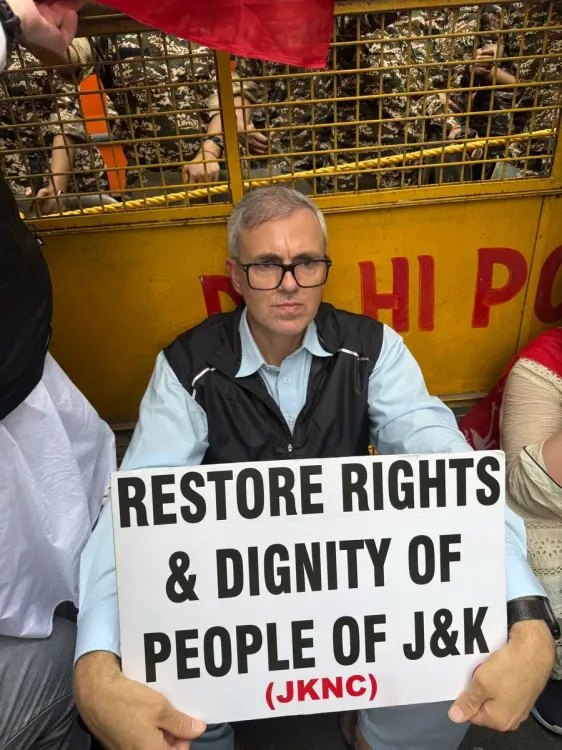
Omar Abdullah and National Conference supporters were stopped from reaching Jantar Mantar in New Delhi on 20 July 2026 .
Abdullah declared the blocked protest 'only the beginning' of the struggle for statehood, rights, and dignity.
Jammu and Kashmir was reorganised from a state into two Union Territories in August 2019 under the Jammu and Kashmir Reorganisation Act.
The National Conference has consistently demanded statehood restoration through protests, court petitions, and electoral platforms since 2019.
The central government has not announced any timeline for restoring full statehood to Jammu and Kashmir.
The incident adds a new flashpoint over the right to protest in the national capital to the existing centre-UT political standoff.
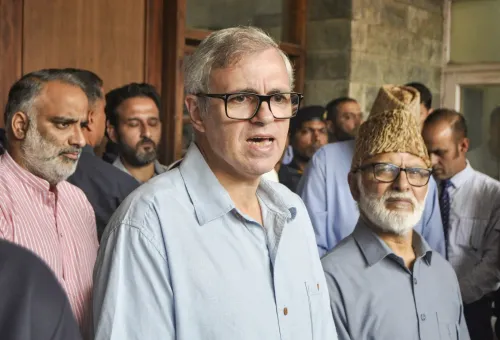
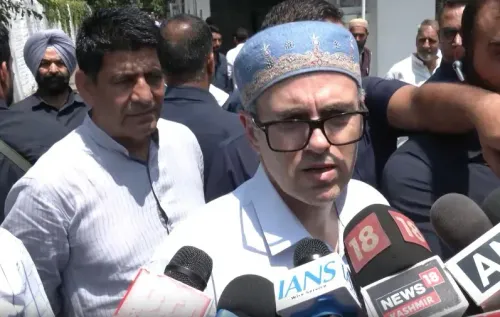
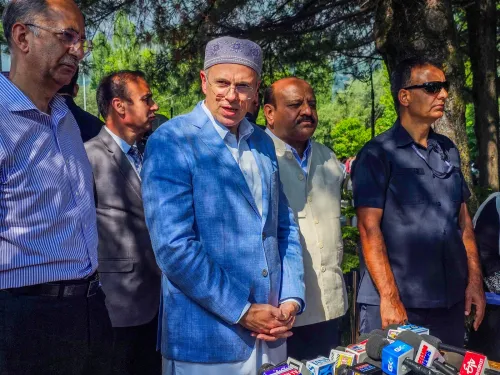
Jammu and Kashmir Chief Minister Omar Abdullah on Monday, 20 July 2026, declared that his party's statehood campaign would continue after authorities prevented him and his supporters from reaching Jantar Mantar in New Delhi to stage a peaceful protest. Abdullah said the demonstrators were stopped but not silenced, framing the blocked march as the opening salvo of a broader struggle.
Context
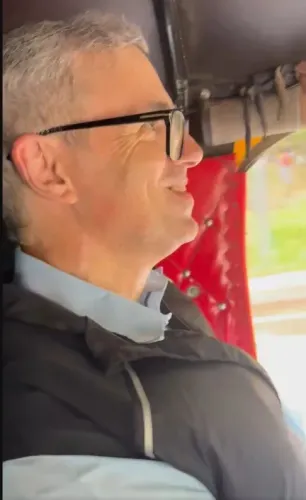
In a post on X, Abdullah wrote: 'We were stopped from getting to Jantar Mantar and stopped from protesting peacefully for what is rightfully ours but we were not silenced. This is only the beginning of our struggle for statehood, our rights, our dignity and everything that was taken away from us.' The statement accompanied four videos, suggesting the demonstration and its disruption were captured on the ground.
The protest targeted Jantar Mantar, the iconic New Delhi venue that has historically served as a focal point for opposition movements and regional-party agitations. The National Conference, the oldest political party in Jammu and Kashmir, organised the demonstration as part of its sustained push to reclaim full statehood for the region.
Policy Backdrop
The roots of the statehood demand lie in August 2019, when Parliament passed the Jammu and Kashmir Reorganisation Act, revoking the region's special status under Article 370 and bifurcating the former state into two Union Territories — Jammu and Kashmir, and Ladakh. The reorganisation stripped the region of its legislature-backed statehood, a move that regional parties have contested ever since through court petitions, electoral campaigns, and street protests.
Successive central governments have indicated that statehood restoration will be considered after delimitation exercises and assembly elections are completed. Assembly elections were subsequently held, and Abdullah's National Conference returned to power — yet the statehood question remained unresolved, keeping it at the centre of the party's political agenda.
Stakeholders and Impact
The statehood campaign directly concerns the roughly 1.25 crore residents of the Union Territory of Jammu and Kashmir, who currently live under an administrative arrangement that gives the central government greater direct authority than a full state government would have. Regional parties, including the National Conference, argue that the absence of statehood curtails democratic rights, limits the elected government's powers over land and police, and erodes the dignity of the people.
The blocked protest adds a new dimension to the centre-state tension: the right to demonstrate in the national capital. By attempting to march to Jantar Mantar, Abdullah and the National Conference were invoking a constitutionally protected right, and the prevention of that march is likely to energise the party's base and draw attention from civil-society groups and opposition parties across the country.
What's Next
Abdullah's declaration that 'this is only the beginning' signals that the National Conference intends to escalate its statehood campaign beyond a single protest. The party is expected to pursue the issue through further demonstrations, parliamentary pressure, and legal avenues. Any fresh legislation or executive order from the central government on statehood restoration would be the most direct resolution — but none has been announced. Until then, the political standoff between Srinagar and New Delhi over the constitutional status of Jammu and Kashmir is set to intensify.
Point of View
Reinforcing the party's argument that Jammu and Kashmir's democratic deficit runs deeper than the absence of statehood alone. This episode fits a broader pattern in which regional parties governing Union Territories find themselves in an asymmetric relationship with New Delhi, lacking the constitutional leverage that full statehood would provide. The statehood question is now likely to become a sharper electoral and parliamentary battleground in the months ahead.
NationPress
21 Jul 2026
Frequently Asked Questions
Why was Omar Abdullah stopped from reaching Jantar Mantar?
Omar Abdullah stated that he and his supporters were prevented by authorities from reaching Jantar Mantar in New Delhi, where they had planned a peaceful protest demanding statehood for Jammu and Kashmir. The specific orders or agency responsible have not been officially detailed.
What is the National Conference's demand for Jammu and Kashmir statehood?
The National Conference demands that Jammu and Kashmir be restored to full statehood, reversing the 2019 reorganisation that converted it into a Union Territory. Full statehood would give the elected government greater constitutional powers over subjects including land and law enforcement.
Why did Jammu and Kashmir lose statehood in 2019?
In August 2019, Parliament passed the Jammu and Kashmir Reorganisation Act and abrogated Article 370, stripping the region of its special status and bifurcating it into two Union Territories — Jammu and Kashmir, and Ladakh.
What is Jantar Mantar and why is it used for protests?
Jantar Mantar in New Delhi is a designated protest site that has long been used by political parties, trade unions, and civil-society groups for demonstrations. Its central location makes it a high-visibility venue for agitations targeting the central government.
What happens next in the Jammu and Kashmir statehood campaign?
Omar Abdullah has signalled that the 20 July 2026 blocked protest is 'only the beginning,' suggesting the National Conference will escalate through further demonstrations, parliamentary action, and legal challenges until the central government acts on statehood restoration.