Omar Abdullah demands Mehbooba Mufti apologise over Jantar Mantar force remarks
Synopsis
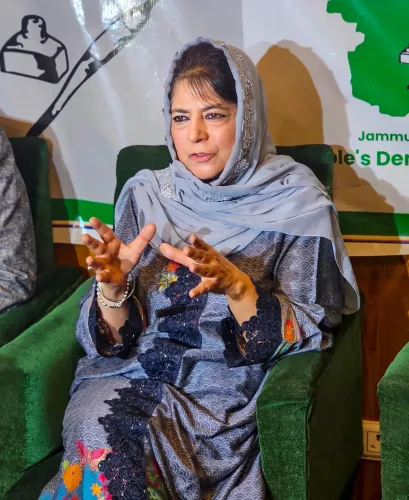
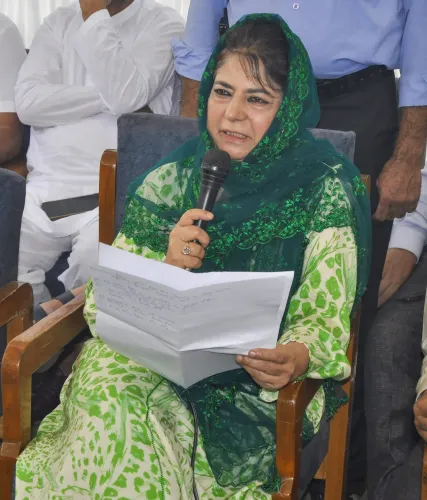
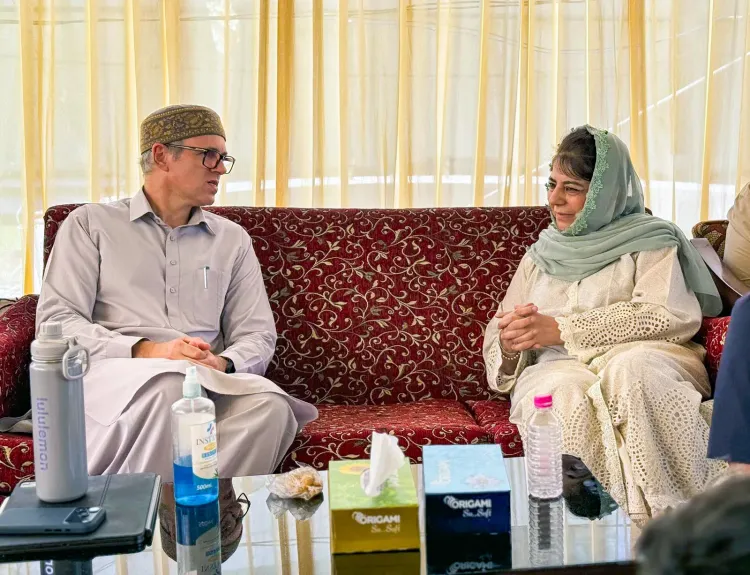
J&K Chief Minister Omar Abdullah has publicly demanded that PDP president Mehbooba Mufti apologise for remarks suggesting that the use of force at Jantar Mantar was unjustified because such force 'could only be used in Kashmir' — and rejected her camp's claim that the video was AI-generated. The exchange lays bare a deep fault line between the two dominant political forces in Jammu and Kashmir.
Key Takeaways
Omar Abdullah on 27 July demanded Mehbooba Mufti publicly apologise for her Jantar Mantar force remarks.
Mufti's camp claimed the video of her speech was AI-generated; Abdullah rejected this, saying 'everyone saw that reel.' Abdullah alleged Mufti's remarks justified the use of force in the Kashmir Valley rather than representing the region's people.
He cited the PDP-BJP alliance of 2015 as another episode over which Mufti has never expressed regret.
Abdullah drew a distinction between countering militancy and what he called arbitrary arrests and passport denials targeting ordinary citizens.
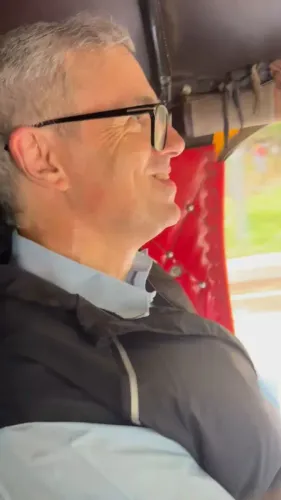
Jammu and Kashmir Chief Minister Omar Abdullah on Monday, 27 July called on former Chief Minister and Peoples Democratic Party (PDP) president Mehbooba Mufti to publicly apologise for her controversial remarks about the use of force at Jantar Mantar, saying her attempt to blame the controversy on an AI-generated video was unacceptable. Speaking to reporters in Srinagar, Abdullah said Mufti's refusal to acknowledge her own words despite widespread criticism reflected a pattern of political double-speak.
What Omar Abdullah Said
Abdullah accused Mufti of trying to appease certain sections outside Jammu and Kashmir rather than owning her statement. He alleged that her remarks at Jantar Mantar did not represent the interests of the people of the region — instead, he said, they appeared to justify and even advocate the use of force in the Kashmir Valley.
'She has not forgotten the habit of saying one thing here and another in Delhi,' Abdullah remarked pointedly.
On the AI-generated video claim made by one of Mufti's MLAs, Abdullah was direct: 'Everyone saw that reel. She should have accepted that what she said was not correct,' he said, adding that a public apology would not have cost Mufti any political standing.
The Controversy Over Mufti's Remarks
Mehbooba Mufti's comments at Jantar Mantar drew sharp criticism after she reportedly said that the force used on students there was not justified — because, she suggested, such force could only be used in Kashmir. The remarks were widely seen as implying a normalisation of state action against Kashmiris, triggering backlash from political figures across the region.
A spokesperson from Mufti's camp subsequently claimed the video of the speech was AI-generated, a denial that Abdullah explicitly rejected.
Omar Abdullah on Militancy and Civil Liberties
Broadening his remarks, Abdullah acknowledged that militancy remains a challenge in Jammu and Kashmir but argued it cannot serve as a blanket justification for curtailing ordinary citizens' rights. 'If there is militancy here, that does not mean there should be random arrests or that passports should be withheld,' he said.
This framing positions Abdullah as distinguishing between legitimate security operations and what he described as arbitrary action against civilians — a line he argued Mufti's remarks had blurred.
PDP-BJP Alliance and a Pattern of No Regret
Abdullah also revisited Mufti's political record, citing the PDP's alliance with the Bharatiya Janata Party (BJP) in 2015 as one of several episodes over which she has neither apologised nor expressed regret. He alleged that refusing accountability has been a consistent feature of her political conduct, making the current controversy part of a longer pattern rather than an isolated incident.
What Comes Next
The exchange sharpens the political divide between the two largest parties in Jammu and Kashmir ahead of what is expected to be a contested period for the Union Territory's administration. Mufti has not publicly responded to Abdullah's latest remarks. Whether the PDP formally addresses the controversy — or continues to contest the video's authenticity — is likely to define the next phase of this political standoff.
Point of View
He is making an accountability argument that goes well beyond a single video. What mainstream coverage underplays is that Mufti's original remark — that force is acceptable in Kashmir but not at Jantar Mantar — touches a raw nerve about the differential treatment of Kashmiri citizens, a debate that neither party has fully confronted. Abdullah's pivot to militancy and passport denials suggests he is aware of this tension, even if he stops short of addressing it directly.
NationPress
25 Oct 2026
Frequently Asked Questions
What did Mehbooba Mufti say about Jantar Mantar that caused controversy?
Mehbooba Mufti reportedly said that the force used on students at Jantar Mantar was not justified because such force could only be used in Kashmir. The remark was widely criticised as implying that state force against Kashmiris is acceptable, triggering a political backlash.
Why did Omar Abdullah demand an apology from Mehbooba Mufti?
Omar Abdullah said Mufti should have acknowledged her remarks and apologised publicly instead of allowing her MLA to claim the video was AI-generated. He argued a public apology would not have diminished her political standing.
What is the AI-generated video claim about?
After Mufti's Jantar Mantar remarks drew criticism, a member of her party claimed the circulating video of the speech was AI-generated. Omar Abdullah dismissed this, saying the footage was widely seen and that Mufti should have owned her words.
What did Omar Abdullah say about militancy and civil liberties?
Abdullah acknowledged militancy as an ongoing challenge in Jammu and Kashmir but said it cannot justify arbitrary action against ordinary people, including random arrests or withholding of passports. He framed this as a line Mufti's remarks had effectively crossed.
What is the history between Omar Abdullah and Mehbooba Mufti?
The two lead rival parties — the National Conference and the PDP — in Jammu and Kashmir. Abdullah has previously criticised Mufti over the PDP's 2015 alliance with the BJP, an episode he revisited on Monday to argue she has a pattern of avoiding accountability for controversial political decisions.