Owaisi: 1857 fighters changed India's history while fasting
Synopsis
AIMIM president Asaduddin Owaisi invoked the 1857 uprising on 16 November 2026, honouring Muslim ancestors who fought the British while observing the Ramzan fast — connecting faith, sacrifice, and India's freedom struggle in a single post.
Key Takeaways
AIMIM president Asaduddin Owaisi posted on 16 November 2026 about Muslim fighters in the 1857 War of Independence .
He highlighted that these fighters observed the Islamic fast — roza — even as they fought against colonial rule.
The 1857 Indian Rebellion began in Meerut and spread across northern India as a wide uprising against East India Company rule.
AIMIM has historically used 1857 imagery to position the Muslim community as integral to India's mainstream freedom movement.
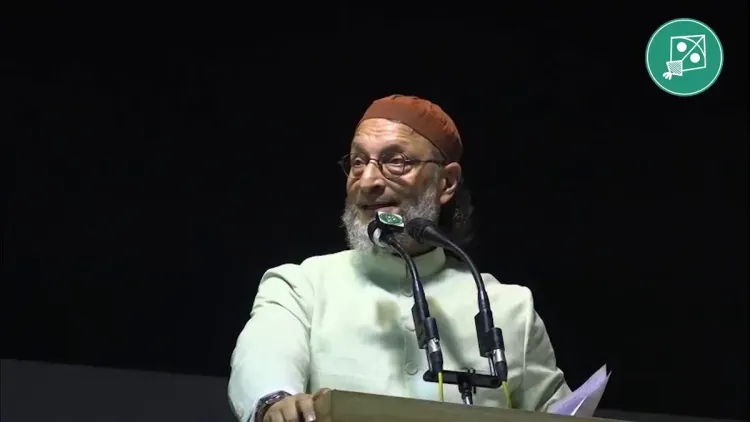
The post included an attached video, suggesting a broader commemorative or documentary framing beyond the text alone.
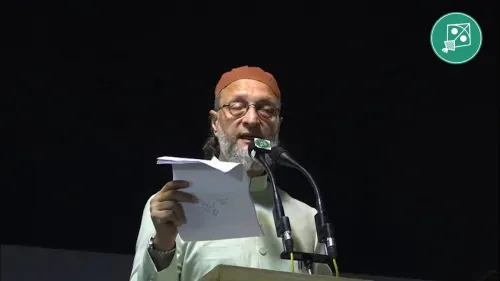
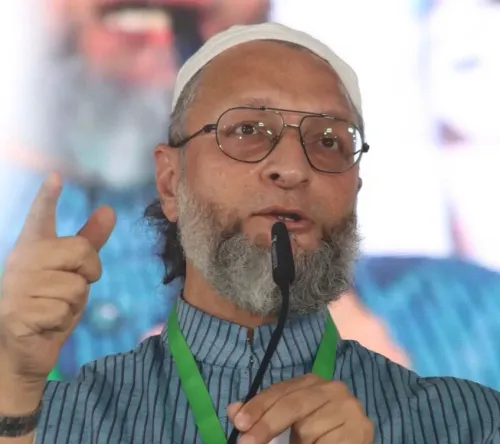
In the heat of India's 1857 uprising, soldiers and rebels fought their battles while observing roza — the Islamic fast. That image, vivid and defiant, is what AIMIM president Asaduddin Owaisi placed at the centre of a post on Monday, 16 November 2026, reminding followers that Muslim participation in the First War of Independence was inseparable from religious devotion.
Owaisi wrote: 'In the 1857 War of Freedom, it was while keeping the fast that our elders changed the history of Hindustan.' The phrasing is deliberate — jang-e-azadi (war of freedom), roze ki halat mein (in a state of fasting), buzurgon (elders/ancestors). Each word stitches faith and sacrifice into the same sentence.
What the 1857 Rebellion meant — and who fought it
The Indian Rebellion of 1857, which began in Meerut before sweeping across northern India, is widely regarded as the first large-scale organised resistance to East India Company rule. Soldiers, peasants, princes, and clerics of every background joined what British administrators at the time called a 'mutiny' — a label India's freedom movement later forcefully rejected in favour of 'First War of Independence.'
Muslim scholars, soldiers, and local leaders featured prominently in that rebellion, and the symbolism of fighting while observing religious duties has long been part of community memory. It is a detail that underlines both the depth of commitment and the intertwining of faith with political resistance.
AIMIM's deliberate use of 1857 imagery
This is not the first time Owaisi or AIMIM has drawn on the iconography of 1857. The party has historically used the rebellion as a touchstone to anchor the community's identity firmly within the mainstream freedom struggle — a counter-narrative to any suggestion that Indian Muslims were peripheral to the independence movement.
Such references carry a pointed political logic: they assert belonging, continuity, and sacrifice in a single historical frame. Coming with an attached video, the post appears designed to amplify that message visually, extending its reach beyond a text statement.
Owaisi's post arrives in a media environment where the history of 1857 — who led it, who suffered for it, whose memory it honours — remains actively contested in public discourse. Reclaiming fasting fighters as ancestors is a move both backward-looking in reference and very much forward-looking in intent.
Point of View
Anchoring identity in the most iconic pre-independence uprising is a powerful rhetorical move. The detail of fasting adds a layer that secular nationalist narratives often elide: that religious observance and political resistance were not in tension but coexistent. For AIMIM, 1857 is less a history lesson than a living argument.
NationPress
16 Nov 2026
Frequently Asked Questions
What did Owaisi say about 1857 and roza?
Owaisi stated that Muslim elders changed the history of India during the 1857 War of Independence while keeping the fast ( roza ), highlighting the intertwining of religious devotion and anti-colonial resistance.
What was the 1857 Indian Rebellion?
The Indian Rebellion of 1857 was a widespread uprising against East India Company rule that began in Meerut and spread across northern India. It is recognised as the First War of Indian Independence.
Why does AIMIM reference the 1857 revolt?
AIMIM uses 1857 imagery to place the Muslim community firmly within India's mainstream freedom struggle, countering narratives that marginalise Muslim contributions to anti-colonial resistance.
Who is Asaduddin Owaisi?
Asaduddin Owaisi is the president of the All India Majlis-e-Ittehadul Muslimeen (AIMIM) and a sitting Lok Sabha MP from Hyderabad , known for his vocal advocacy on issues affecting Indian Muslims.
What is the significance of fasting during 1857 fighting?
The image of fighters observing roza (the Islamic fast) while waging armed resistance underscores that faith and political sacrifice were inseparable for many Muslim participants in the 1857 uprising — a detail Owaisi uses to honour both dimensions of their legacy.