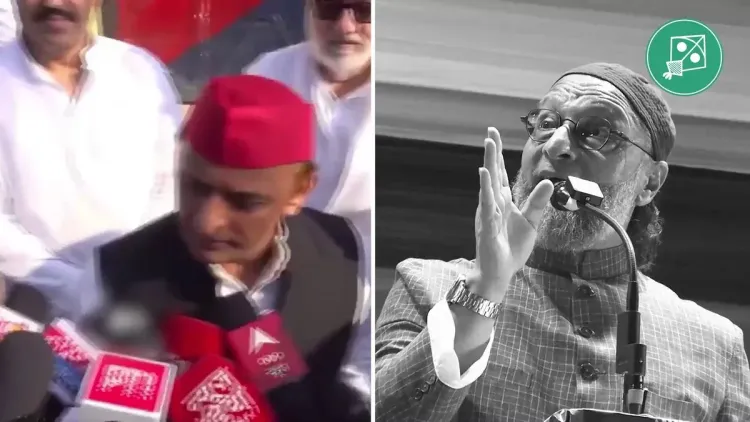
Owaisi Accuses Akhilesh of Speaking BJP-RSS Language
Synopsis
AIMIM president Asaduddin Owaisi publicly accused Samajwadi Party chief Akhilesh Yadav of speaking in the 'tongue of the RSS and BJP' after Yadav reportedly invoked imagery of a skullcap-and-beard-wearing Ravan, deepening the opposition fault-line in Uttar Pradesh ahead of state elections.
Key Takeaways
Owaisi accused Akhilesh Yadav on 26 October 2026 of adopting BJP-RSS language by invoking a Muslim-coded image of Ravan.
The post reads: 'Akhilesh Yadav has started speaking in the tongue of the RSS and BJP; that is why he now sees a Ravan wearing a skullcap and a beard.' The Samajwadi Party relies heavily on the Muslim-Yadav (MY) coalition in Uttar Pradesh — making the charge politically explosive.
AIMIM has a documented pattern of challenging SP's credentials as a defender of Muslim interests during election cycles.
The specific Akhilesh Yadav statement that prompted the accusation is not quoted in Owaisi's post and remains unverified.
The exchange intensifies competition for minority votes in Uttar Pradesh , where both parties are rivals as much as potential allies.
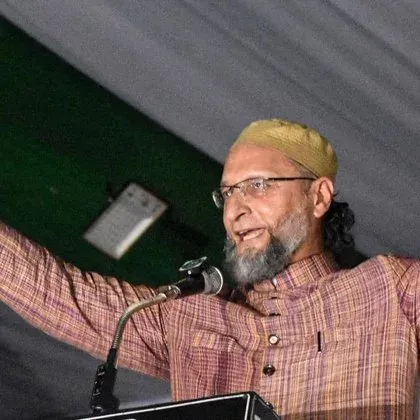
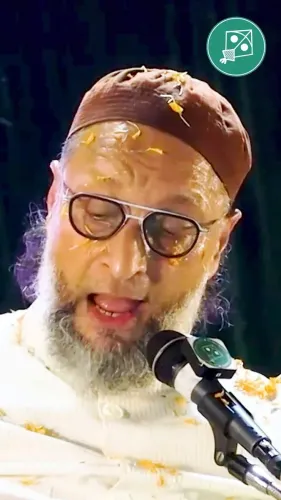
A sharp political barb landed on Monday, October 26, 2026, when AIMIM president Asaduddin Owaisi turned his fire on Samajwadi Party chief Akhilesh Yadav — accusing him of borrowing the vocabulary of the BJP and RSS after Yadav apparently invoked an image of Ravan wearing a topi (skullcap) and a beard.
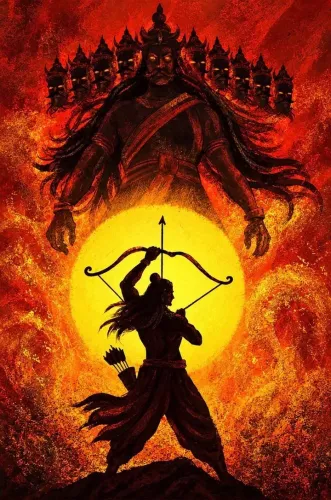
Owaisi's post, in pointed Hindi, pulled no punches: 'Yadav Akhilesh ki zubaan RSS-BJP ki ho gayi hai, tabhi unhen topi-daadhi waala Raavan nazar aa raha hai' — 'Akhilesh Yadav has started speaking in the tongue of the RSS and BJP; that is why he now sees a Ravan wearing a skullcap and a beard.' The imagery is deliberate and stinging: in Hindu festival tradition Ravan is the demon-king of the Ramayana, and his effigy is burned on Dussehra to symbolise the defeat of evil. To dress that effigy in Muslim religious markers is, in Owaisi's framing, communal dog-whistling — and he is placing that charge squarely at Akhilesh's door.
Why This Jab Cuts Deeper Than a Routine Spat
The Samajwadi Party has long anchored its political coalition on Muslim and Yadav voters — the so-called MY combination that has been the spine of SP's electoral arithmetic in Uttar Pradesh for three decades. An accusation from AIMIM that SP is drifting toward majoritarian language is not merely a Twitter skirmish; it is an attempt to pry open a fault-line inside the non-BJP opposition's support base.
AIMIM has, on multiple occasions, positioned itself as the uncompromising advocate for Muslim political interests, challenging SP and Congress whenever it perceives those parties softening their stance on identity issues to court broader Hindu swing voters. The pattern is well established: as Uttar Pradesh assembly elections approach, AIMIM sharpens this critique to raise its own profile and question SP's reliability as a guardian of minority interests.
Ramayana Symbolism and the Long Shadow of 1990s Politics
The use of Ramayana imagery in Indian electoral politics stretches back to the Ram Janmabhoomi agitation of the early 1990s, when BJP and RSS weaponised the epic's symbols to transform the political landscape of northern India. Since then, Dussehra effigies and Ravan iconography have carried a loaded charge in any political conversation. Owaisi's accusation that Akhilesh is now operating within that same symbolic register — attaching Muslim visual markers to a figure of evil — frames the SP chief not as an ally of minorities but as a participant in the very politics he claims to oppose.
The specific statement by Akhilesh Yadav that triggered this response is not quoted in the post, and Owaisi does not elaborate on the context — leaving Yadav's precise words a matter of dispute. What is unambiguous is the verdict Owaisi is delivering: the tongue has changed, even if the face has not.
With Uttar Pradesh perpetually on the electoral horizon and both SP and AIMIM competing for overlapping vote banks, this exchange signals that the opposition space will be anything but united in the months ahead.
Point of View
He forces Akhilesh onto the defensive — compelling him either to clarify a contentious statement or absorb the damage. This is a long-running AIMIM strategy: rather than building a direct alliance with SP, position the party as the only 'uncompromised' option for Muslim voters, chipping away at SP's base. The timing, close to a potential UP electoral cycle, suggests this is as much about vote-bank arithmetic as ideological critique.
NationPress
26 Oct 2026
Frequently Asked Questions
What did Asaduddin Owaisi say about Akhilesh Yadav?
Owaisi accused Akhilesh Yadav of speaking in the 'tongue of the RSS and BJP', claiming that is why Yadav now sees a Ravan wearing a skullcap and a beard — markers associated with Muslim identity.
Why is the 'topi-daadhi Ravan' remark controversial?
Attaching Muslim visual markers — a skullcap (topi) and beard (daadhi) — to Ravan, the demon-king burned on Dussehra to symbolise evil, is widely seen as communally charged imagery. Owaisi argues this frames Muslims as the enemy.
What is the relationship between AIMIM and the Samajwadi Party?
The two parties compete for overlapping Muslim voter support in Uttar Pradesh. AIMIM has repeatedly criticised SP for what it calls a softening of its stance on minority issues to attract majority-community voters.
What did Akhilesh Yadav say to provoke Owaisi's post?
The specific Akhilesh Yadav statement that triggered Owaisi's response is not quoted in the post and has not been independently verified based on available information.
How does this exchange affect Uttar Pradesh politics?
It deepens the split within the non-BJP opposition in UP, potentially weakening the Muslim-Yadav coalition that anchors SP's electoral strategy and giving AIMIM a platform to present itself as a more reliable defender of Muslim interests.