Owaisi Backs Sonam Wangchuk, Urges Centre to Address Ladakh Demands
Synopsis
AIMIM president Asaduddin Owaisi on 16 July 2026 called on the Union government to seriously consider Sonam Wangchuk's demands, adding cross-party parliamentary weight to Ladakh's long-running campaign for Sixth Schedule protections and statehood.
Key Takeaways
AIMIM president Asaduddin Owaisi on 16 July 2026 publicly demanded the Union government seriously engage with Sonam Wangchuk's demands.
Sonam Wangchuk is a Ladakhi activist and innovator who has campaigned for Sixth Schedule inclusion and statehood for Ladakh .
Ladakh was made a Union Territory without a legislature under the Jammu and Kashmir Reorganisation Act of 2019 .
Both Leh (Buddhist-majority) and Kargil (Muslim-majority) districts have jointly pressed the Centre for constitutional safeguards since 2020 .
Cross-party support from national parliamentarians is increasing political pressure on the Ministry of Home Affairs to respond.
AIMIM president Asaduddin Owaisi on Thursday, 16 July 2026, called on the Union government to seriously consider the demands raised by Ladakhi activist Sonam Wangchuk, extending cross-party solidarity to a cause that has long sought constitutional safeguards and greater autonomy for the region.
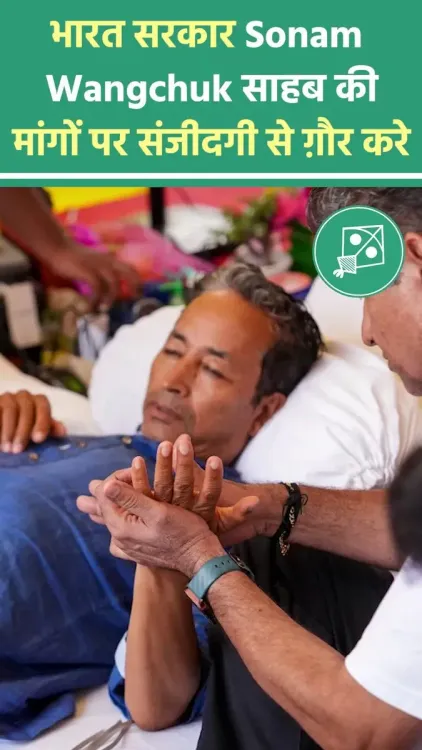
In a post in Hindi, Owaisi stated: 'hum Bharat sarkar se maang karte hain ki Sonam Wangchuk sahab ki maangon par sanjeedgi se gaur kare' — 'We demand that the Government of India seriously consider the demands of Sonam Wangchuk.'
Context
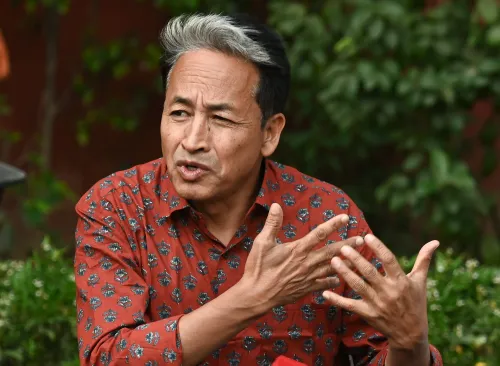
Sonam Wangchuk is a Ladakh-based engineer, innovator and environmental activist internationally recognised for the Ice Stupa project, which creates artificial glaciers to address water scarcity. Beyond environmental work, he has emerged as one of the most prominent civil-society voices demanding that Ladakh be granted Sixth Schedule status under the Constitution and, ultimately, full statehood with a legislative assembly.
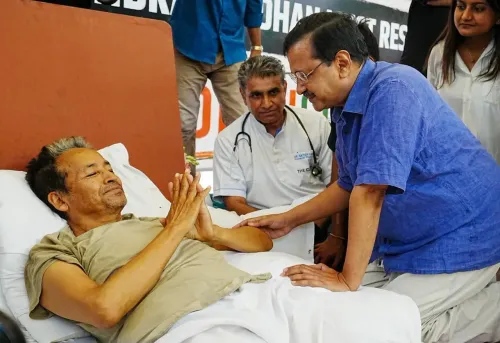
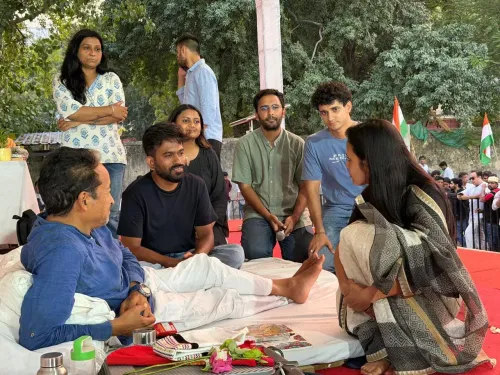
Wangchuk has undertaken multiple hunger strikes and public campaigns to press these demands on the Ministry of Home Affairs. His appeals have drawn attention from political leaders across the spectrum, and Owaisi's statement on 16 July 2026 is the latest instance of a national parliamentarian amplifying Ladakh's constitutional grievances.
Policy Backdrop
The roots of the current impasse trace to the Jammu and Kashmir Reorganisation Act of August 2019, which bifurcated the former state and established Ladakh as a Union Territory without a legislature — placing it under direct central administration. Residents of both Leh and Kargil districts have since argued that the change stripped the region of the democratic and constitutional protections it previously enjoyed.
Since 2020, the Ladakh Apex Body and the Kargil Democratic Alliance have submitted successive memoranda to the Centre demanding inclusion in the Sixth Schedule of the Constitution, which provides tribal communities with autonomous district councils and legislative safeguards. Statehood — restoring a locally elected legislature — is a parallel demand. Neither has been acted upon as of the time of Owaisi's statement.
Stakeholders and Impact
The stakes are high for Ladakh's roughly 3 lakh residents, drawn from the Buddhist-majority Leh district and the Muslim-majority Kargil district — a rare alignment of communities that has historically held different political orientations. Their joint advocacy for constitutional protections underscores the cross-communal nature of the demand, making it difficult to frame as a sectarian issue.
Tribal communities in particular stand to gain from Sixth Schedule inclusion, which would give them statutory control over land use, cultural practices and local governance. Environmental activists also argue that without such protections, Ladakh's fragile Himalayan ecosystem faces unchecked developmental pressure from decisions made in New Delhi.
Owaisi's intervention carries political weight because AIMIM, while primarily associated with Muslim minority interests, has periodically aligned itself with broader federalist demands and regional autonomy causes. His statement signals that Wangchuk's campaign has resonance beyond Ladakh's own political networks.
What's Next
Attention will now turn to whether the Ministry of Home Affairs schedules a formal meeting with Ladakh delegations, and whether cross-party pressure from parliamentarians like Owaisi accelerates that process. A constitutional amendment to extend the Sixth Schedule to Ladakh, or a bill granting it a legislative assembly, would require parliamentary consensus that has so far proved elusive.
With multiple national voices now on record, the Union government faces growing political cost in maintaining silence — making the coming weeks a critical window for Ladakh's long-pending constitutional aspirations.
Frequently Asked Questions
What are Sonam Wangchuk's demands from the Indian government?
Sonam Wangchuk has primarily demanded that Ladakh be included in the Sixth Schedule of the Constitution, granting tribal communities autonomous governance rights, and that Ladakh be accorded full statehood with a legislative assembly.
Why does Ladakh want Sixth Schedule status?
The Sixth Schedule provides tribal communities with statutory autonomous district councils and protections over land, culture and local governance. Ladakhi leaders argue these safeguards are essential after the region lost its legislature when it became a Union Territory in 2019.
What did Owaisi say about Sonam Wangchuk?
On 16 July 2026, Owaisi posted in Hindi demanding that the Government of India 'seriously consider' Sonam Wangchuk's demands, extending parliamentary support to Ladakh's constitutional campaign.
When did Ladakh become a Union Territory?
Ladakh became a Union Territory without a legislature in August 2019 under the Jammu and Kashmir Reorganisation Act, which bifurcated the former state of Jammu and Kashmir.
Which political parties support Ladakh's statehood demand?
The demand has drawn support from multiple parties and civil-society groups. AIMIM president Asaduddin Owaisi's 16 July 2026 statement is one of the more recent instances of a national parliamentarian publicly backing the cause.