Owaisi's Query Prompts Centre to Detail Content Takedown Safeguards
Synopsis
AIMIM president Asaduddin Owaisi's Lok Sabha query has prompted the Centre to formally outline new safeguards for online content takedowns under the IT Act, spotlighting the ongoing tension between content regulation and free speech guarantees.
Key Takeaways
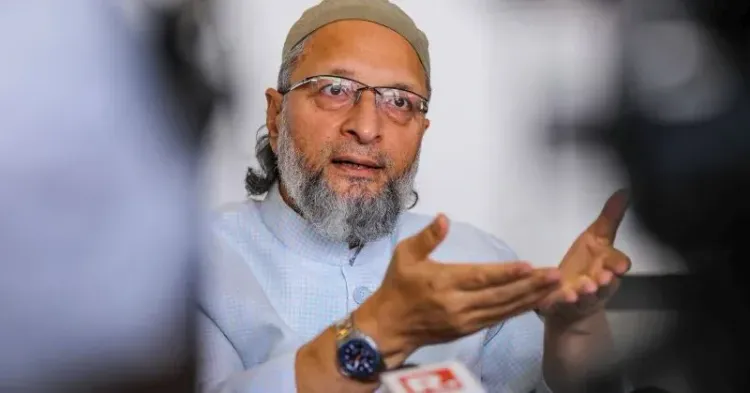
Asaduddin Owaisi , AIMIM president and Hyderabad MP, raised a parliamentary query on content takedown procedures, prompting a formal government response.
The Ministry of Electronics and Information Technology (MeitY) detailed new procedural safeguards in response to the query.
Section 69A of the IT Act, 2000 currently allows the Centre to order content blocking without notifying the affected user.
The IT Rules, 2021 introduced grievance redressal mechanisms but have faced criticism for insufficient user protections.
The response follows a broader pattern of parliamentary questions and judicial observations nudging the government to clarify its content blocking framework.
Implementation circulars from MeitY and potential court challenges will determine whether the new safeguards are substantive.
A parliamentary question from AIMIM president Asaduddin Owaisi has drawn a formal government response outlining new procedural safeguards for online content takedowns — a rare instance of a single MP's query visibly moving the needle on digital governance policy.
Owaisi, the Lok Sabha MP from Hyderabad, has a consistent record of pressing the government on digital rights and minority concerns from the floor of Parliament. His query, directed at the Ministry of Electronics and Information Technology (MeitY), sought clarity on the process by which content is ordered removed from social media platforms — a process that has long drawn criticism for its opacity.
What the Law Currently Says — and Where the Gaps Are
Section 69A of the Information Technology Act, 2000 grants the Centre sweeping authority to direct the blocking of online content on grounds including national security, public order, and sovereignty. The Information Technology (Intermediary Guidelines and Digital Media Ethics Code) Rules, 2021 added grievance redressal mechanisms and due diligence requirements for platforms — but critics have long argued these rules leave users with little recourse when content is taken down without explanation. The core tension is constitutional. Article 19(1)(a) of the Constitution guarantees freedom of speech; content blocking orders under 69A are issued without notifying the affected user, a practice that has faced repeated judicial scrutiny.A Pattern of Parliamentary Pressure Producing Policy Responses
This is not the first time a parliamentary query has prompted MeitY to articulate its safeguard framework. Successive governments have issued procedural clarifications in response to questions from MPs and observations from courts — a pattern that reveals both the utility of parliamentary oversight and the persistent pressure civil society places on digital governance. What MeitY's latest response adds to that framework — whether new procedural checks, expanded notice requirements, or stronger appeal mechanisms — will become clearer through implementation circulars the ministry is expected to issue. Any subsequent parliamentary follow-up or court challenge will be the real test of whether the safeguards have teeth. For now, the government's willingness to respond in detail signals at least an acknowledgment that the current system needs explaining — if not reforming. Whether explanation is enough is the question Owaisi's query has placed squarely on the table.Point of View
However, does not resolve the structural problem: Section 69A blocking orders remain opaque to the users they affect. The real policy arc to watch is whether MeitY's stated safeguards translate into enforceable, user-facing rights, or remain procedural assurances visible only inside government corridors.
NationPress
27 Sept 2026
Frequently Asked Questions
What did Asaduddin Owaisi ask the government about content takedowns?
Owaisi raised a Lok Sabha query seeking clarity on the procedures and safeguards governing online content takedown orders issued by the Centre under the IT Act.
What is Section 69A of the IT Act?
Section 69A of the Information Technology Act, 2000 empowers the Central government to direct social media platforms and intermediaries to block content on grounds such as national security, public order, and sovereignty — without necessarily notifying the affected user.
What new safeguards has MeitY announced for content takedowns?
MeitY detailed new procedural safeguards in response to Owaisi's query; the specific measures will be confirmed through implementation circulars the ministry is expected to issue.
How do the IT Rules 2021 protect users from arbitrary content removal?
The IT Rules, 2021 require platforms to maintain grievance redressal mechanisms and follow due diligence obligations, but critics argue users still lack adequate notice or appeal rights when government-ordered blocking occurs.
Can a user challenge a content takedown order in India?
Content takedown orders under Section 69A are not disclosed to affected users, making direct challenges difficult; however, the procedure has faced judicial scrutiny and courts have occasionally examined its proportionality against Article 19(1)(a) free speech rights.