Owaisi questions silence on Ram Mandir donation theft
Synopsis
AIMIM president Asaduddin Owaisi on 19 July 2026 challenged the ruling establishment to explain its silence over an alleged theft of donations at the Ayodhya Ram Mandir, raising pointed questions about the financial oversight of the Shri Ram Janmabhoomi Teerth Kshetra Trust.
Key Takeaways
AIMIM president Asaduddin Owaisi posted a sharp rhetorical challenge on 19 July 2026 questioning silence over an alleged donation theft at the Ram Mandir, Ayodhya .
The post, in Hindi, translates to: 'A theft of donations has taken place right under your nose at the Ram Mandir — why do you not say anything about it?' The Shri Ram Janmabhoomi Teerth Kshetra Trust , a statutory body constituted by the central government, is responsible for managing temple donations and maintenance.
The temple was built following the Supreme Court of India's 2019 verdict awarding the disputed Ayodhya site to the trust.
Owaisi's challenge is part of a broader opposition pattern of demanding transparent audit mechanisms for large government-backed religious projects.
The Teerth Kshetra Trust and Uttar Pradesh authorities have yet to issue a formal public statement on any investigation into the alleged theft.
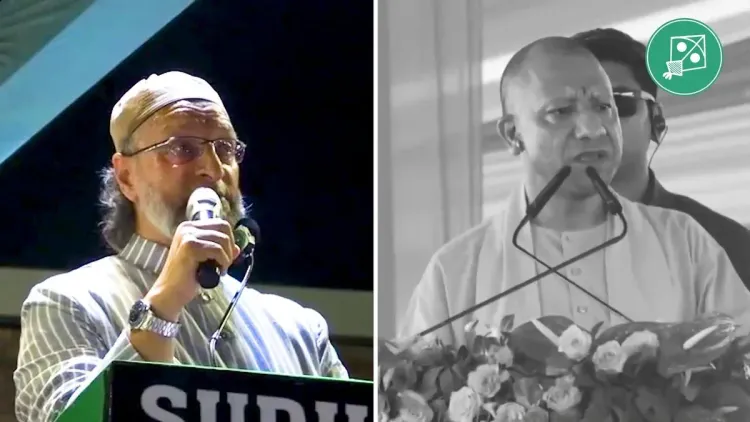
AIMIM president Asaduddin Owaisi on Sunday, 19 July 2026, sharply questioned why those in power had stayed silent over an alleged theft of donations at the Ram Mandir in Ayodhya, posting a pointed rhetorical challenge on X that drew immediate attention.
In the post, Owaisi wrote in Hindi: 'अरे बाबा! आपके नाक के नीचे राम मंदिर में चंदे की चोरी हो गई, उस पर कुछ क्यों नहीं बोलते?' — which translates to: 'Good heavens! A theft of donations has taken place right under your nose at the Ram Mandir — why do you not say anything about it?'
Context
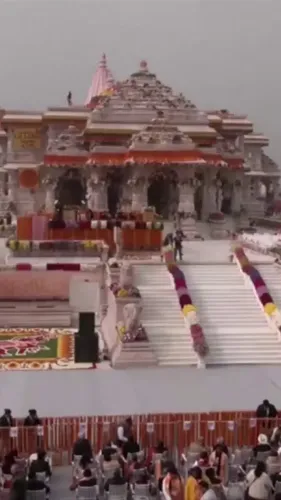
The Ram Mandir in Ayodhya, Uttar Pradesh, is one of the most prominent religious sites in India, built following the Supreme Court of India's 2019 verdict that awarded the disputed site to a trust for temple construction. The Shri Ram Janmabhoomi Teerth Kshetra Trust, constituted by the central government, oversees the temple's construction, maintenance, and donation management. The temple has received donations from millions of Hindu devotees across the country and abroad since its inception.
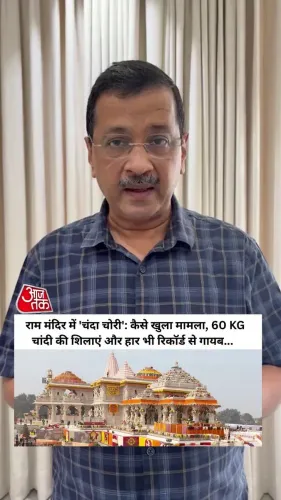
Owaisi's post appears to reference a reported incident of donation theft at the temple. As an AIMIM president and Lok Sabha MP from Hyderabad, he has a consistent record of raising governance and accountability questions around publicly prominent religious institutions and government-backed projects.
Policy Backdrop
The Teerth Kshetra Trust functions as a statutory body and is therefore subject to public accountability norms, even as it manages what is fundamentally a religious endowment. Questions around the transparency of funds collected for large-scale religious projects have surfaced periodically in parliamentary debates and public discourse since the temple's inauguration.
Opposition leaders across parties have previously sought clarity on audit mechanisms governing donations to newly constructed or renovated places of worship. Owaisi's latest post fits into this broader pattern of legislative scrutiny, framing the alleged theft as a failure of oversight by those who championed the temple's construction.
Stakeholders and Impact
The primary stakeholders affected by any lapse in donation management are the millions of Hindu devotees who have contributed funds to the temple, trusting the statutory trust with their offerings. A breach in that trust, if substantiated, would carry significant reputational and legal consequences for the Teerth Kshetra Trust and, by extension, for the central government that constituted it.
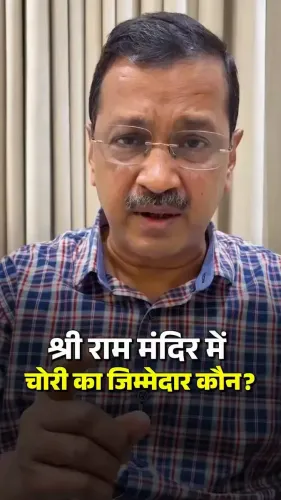
Owaisi's framing — 'right under your nose' — is a direct political challenge to the ruling establishment, implying that those who have most loudly associated themselves with the temple project bear the greatest responsibility for ensuring its financial integrity. The post, carrying a video, is likely to amplify the demand for an official response.
What's Next
Attention will now turn to whether the Shri Ram Janmabhoomi Teerth Kshetra Trust issues a formal statement addressing the alleged theft, and whether law-enforcement agencies in Uttar Pradesh confirm or detail any investigation. If a formal inquiry is underway, opposition parties are likely to press for independent audits of the trust's donation accounts in Parliament. The episode underscores the growing demand for robust, transparent oversight mechanisms at large government-backed religious institutions — a question that will only intensify as the Ayodhya complex continues to draw devotees and donations at scale.
Point of View
Using the language of moral irony to turn the BJP's most prominent cultural achievement into a governance liability. By framing the alleged theft as happening 'right under your nose,' he shifts the burden of explanation squarely onto those who have most publicly identified with the Ram Mandir project. This fits a well-established opposition playbook: when a flagship project faces internal failure, the political cost is amplified precisely because the project carries such symbolic weight. If the Teerth Kshetra Trust does not respond swiftly and transparently, the silence itself becomes the story — and the demand for parliamentary oversight of statutory religious trusts is likely to grow louder across party lines.
NationPress
19 Jul 2026
Frequently Asked Questions
What is the Ram Mandir donation theft that Owaisi is referring to?
Owaisi's post alludes to an alleged theft of donations at the Ram Mandir in Ayodhya. The specific details of the incident have not yet been officially confirmed by the Shri Ram Janmabhoomi Teerth Kshetra Trust or Uttar Pradesh authorities.
Who manages donations at the Ram Mandir in Ayodhya?
The Shri Ram Janmabhoomi Teerth Kshetra Trust , a statutory trust constituted by the central government following the Supreme Court's 2019 verdict, is responsible for overseeing all donations, construction, and maintenance at the Ayodhya Ram Mandir.
Why is Asaduddin Owaisi commenting on the Ram Mandir?
As AIMIM president and a Lok Sabha MP, Owaisi regularly raises governance and accountability questions about government-backed projects. His post challenges the ruling establishment to explain its silence over the alleged financial lapse at a temple it has strongly championed.
What was the Supreme Court's 2019 verdict on Ayodhya?
The Supreme Court of India in 2019 ruled that the disputed Ayodhya site be handed over to a government-constituted trust for the construction of a Hindu temple, while directing that an alternative site be provided for a mosque.
Can the Teerth Kshetra Trust be held accountable for donation theft?
Yes. As a statutory trust constituted by the central government, the Shri Ram Janmabhoomi Teerth Kshetra Trust is subject to public accountability norms, and any theft or mismanagement of donations can attract legal and parliamentary scrutiny.