CM Rekha Gupta Urges Delhiites to Plant Trees on Her Birthday
Synopsis
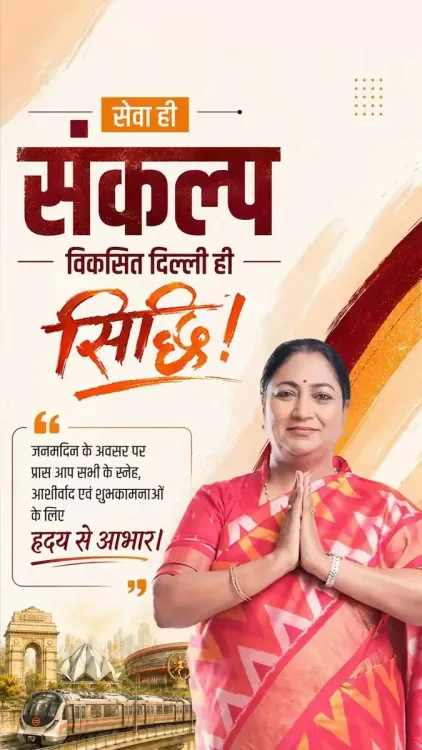
Delhi Chief Minister Rekha Gupta marked her birthday on 19 July 2026 by urging residents to plant saplings as a gift, linking the appeal to the government's pledge of 70 lakh trees. She called for collective effort toward a green, developed Delhi and a developed India.
Key Takeaways
Delhi CM Rekha Gupta used her birthday on 19 July 2026 to launch a public tree-planting appeal.
She asked residents to plant a sapling as their 'most precious gift' to her.
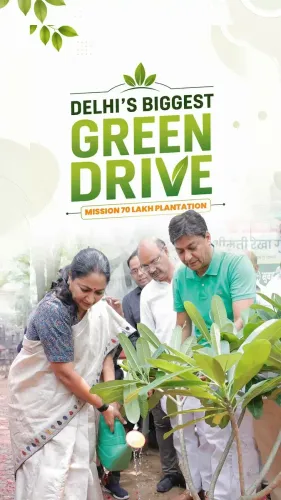
The appeal is anchored to a government target of planting 70 lakh (7 million) trees and plants across Delhi .
The drive aligns with the monsoon planting window — the optimal season for sapling establishment.
Gupta linked the greening effort to the 'Viksit Delhi' and 'Viksit Bharat' development vision.
Progress on the 70-lakh target and future environment budget allocations will be key metrics to watch.
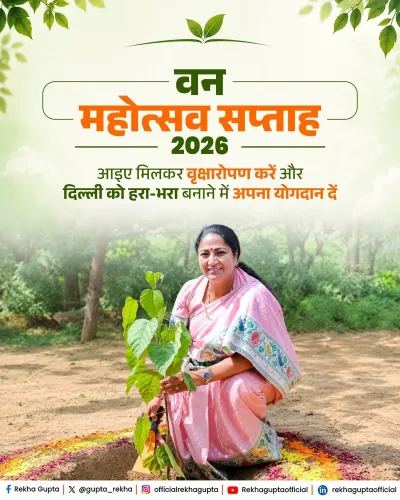
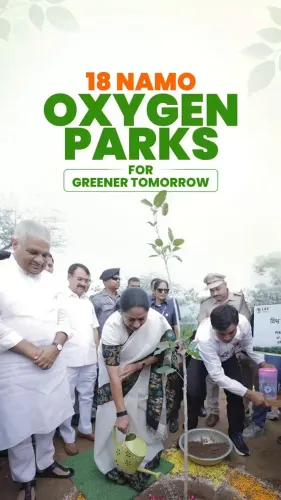
Delhi Chief Minister Rekha Gupta marked her birthday on Sunday, 19 July 2026 by urging residents across the capital to plant a sapling as a gift to her — channelling personal celebration into a public greening appeal tied to the government's stated target of planting 70 lakh trees and plants across Delhi.
What the Chief Minister Said
Writing in Hindi on X, Gupta expressed gratitude for birthday wishes and shifted the focus outward: 'आज मुझे सबसे अनमोल उपहार देना चाहें, तो अपने आसपास एक पौधा अवश्य लगाएं' ('If you wish to give me the most precious gift today, do plant a sapling near you'). She framed each sapling planted by a citizen as 'an invaluable blessing for Delhi's future' and called on residents to collectively work toward a 'green Delhi, developed Delhi, and developed India.'
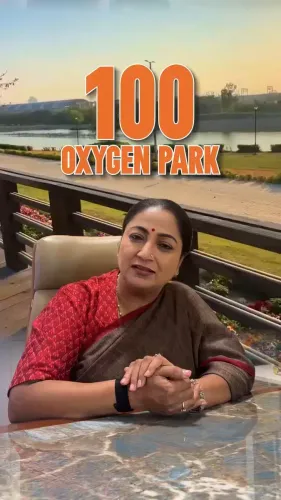
The post, accompanied by a video, drew on the familiar political idiom of turning a personal milestone into a civic moment — a pattern seen across Indian leadership but here given a specific, measurable environmental hook.
Context: Delhi's Greening Challenge
Delhi ranks among the world's most polluted capitals, battling seasonal smog, an urban heat island effect, and shrinking green cover as the city's population and built-up area have expanded. Urban forestry and citizen-led plantation drives have been recurring policy responses across successive administrations.
India's tradition of mass public afforestation dates to the annual Van Mahotsav festival, launched in 1950, which encourages tree planting every monsoon season. The current monsoon window — July through September — is considered the optimal period for establishing new saplings, lending the Chief Minister's appeal practical timing beyond its symbolic value.
Policy Backdrop: The 70-Lakh Tree Pledge
Chief Minister Gupta's post references a government resolve to plant 70 lakh (7 million) trees and plants in Delhi. Large-scale urban plantation targets have become a standard feature of state environmental commitments, aligned with India's broader climate pledges to increase forest and tree cover as part of its nationally determined contributions under international climate agreements.
The Bharatiya Janata Party-led Delhi government has positioned environmental development alongside infrastructure and civic improvement as pillars of its 'Viksit Delhi' (Developed Delhi) agenda, which Gupta explicitly linked in her post to the national 'Viksit Bharat' (Developed India) vision.
Stakeholders and Impact
Delhi's approximately 2 crore residents stand as both the primary audience and the intended participants in the drive. Urban environmental groups have long advocated citizen-led greening as a complement to government plantation programmes, arguing that distributed, neighbourhood-level planting improves survival rates compared to large institutional drives.
The appeal also carries political resonance: by inviting residents to contribute directly to a stated government target, the Chief Minister ties public participation to a measurable outcome, making the pledge easier to track and communicate ahead of future budget or policy cycles.
What to Watch
Attention will turn to whether the government releases progress data on the 70-lakh plantation target as the monsoon season advances, and whether environment allocations in the next Delhi budget session reflect the scale of the stated ambition. Civil society groups and opposition legislators are likely to benchmark any reported numbers against ground-level verification of sapling survival rates — a persistent challenge in urban plantation drives across Indian cities.
Point of View
Rekha Gupta deploys a well-worn but effective political communication device — converting personal visibility into a policy moment with a concrete, trackable number. The 70-lakh tree pledge gives the BJP-led Delhi government a measurable environmental credential at a time when the capital's pollution record remains a persistent political liability. Tying the drive to 'Viksit Bharat' also threads local action into the ruling party's national narrative, reinforcing brand continuity from the municipal to the federal level. The real test will come when independent assessments of sapling survival rates are set against the government's reported plantation figures.
NationPress
19 Oct 2026
Frequently Asked Questions
Why did Delhi CM Rekha Gupta ask people to plant trees on her birthday?
Rekha Gupta asked residents to plant a sapling as her birthday gift, framing it as a contribution to the Delhi government's pledge to plant 70 lakh trees and plants across the capital.
What is Delhi's tree-planting target announced by CM Rekha Gupta?
The Delhi government has set a target of planting 70 lakh (7 million) trees and plants across the city, which Chief Minister Rekha Gupta referenced in her birthday appeal on 19 July 2026.
When is Rekha Gupta's birthday?
Based on her post on X, Rekha Gupta's birthday falls on 19 July, as she marked the occasion on Sunday, 19 July 2026.
What is Van Mahotsav and how does it relate to Delhi's plantation drive?
Van Mahotsav is India's annual tree-planting festival started in 1950 to promote public afforestation. Delhi's monsoon-season plantation campaigns, including Rekha Gupta's birthday appeal, fall within the same tradition of citizen-led greening during the July-September planting window.
What does 'Viksit Delhi' mean in Rekha Gupta's tree-planting post?
'Viksit Delhi' means 'Developed Delhi' and is the BJP-led Delhi government's development framework. Gupta linked the greening drive to this vision and to the broader national 'Viksit Bharat' (Developed India) goal.