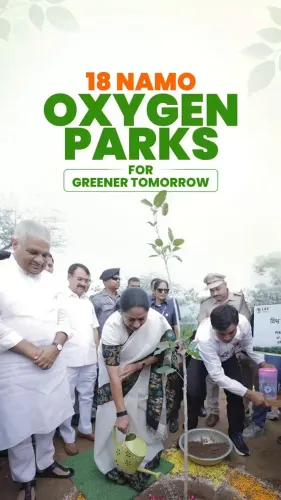
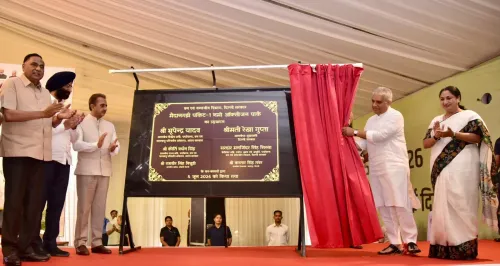
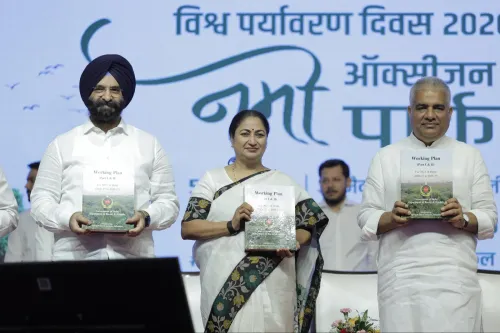
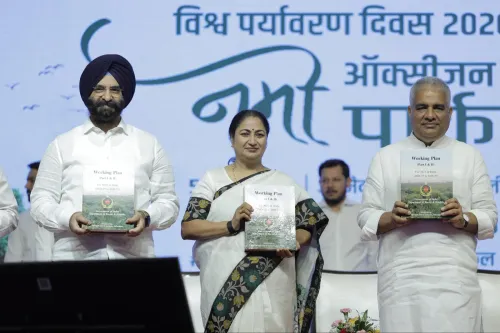
CM Rekha Gupta Launches 18 Namo Oxygen Parks on World Environment Day

Synopsis
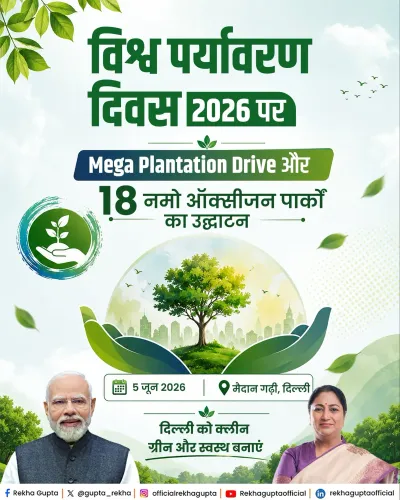
On World Environment Day 2026, Delhi Chief Minister Rekha Gupta announced the start of work on 18 Namo Oxygen Parks, the first phase of a 100-park vision, alongside a pledge to plant 15 lakh trees this year with government-supplied saplings and citizen participation.
Key Takeaways
Work has begun on 18 Namo Oxygen Parks in Delhi as of 5 June 2026 , World Environment Day.
The government's stated long-term target is 100 Oxygen Parks across the capital.
15 lakh trees are to be planted during 2026 under this initiative.
The administration will supply saplings and identify planting locations to enable citizen participation.
The drive is framed as a community movement under the slogan 'My Delhi.
My Responsibility.' The initiative continues a pattern of large-scale plantation drives by successive Delhi governments aimed at addressing chronic air pollution.
Delhi Chief Minister Rekha Gupta announced on Friday, 5 June 2026 — World Environment Day — that work has begun on 18 Namo Oxygen Parks across Delhi, marking the first phase of a stated vision to build 100 Oxygen Parks in the capital. The initiative is accompanied by a pledge to plant 15 lakh trees this year, with the government committing to supply saplings and identify planting locations.
Context
Gupta shared the announcement on X, framing it as a citizen-driven movement under the slogan 'My Delhi. My Responsibility.' She called on residents to join the drive, writing: 'We'll provide the saplings and identify the locations. Join the movement. Plant a tree. Nurture a greener Delhi.' The post was tagged #DelhiGreenWarrior and #WorldEnvironmentDay, signalling an intent to build public participation alongside the government-led rollout.
World Environment Day, observed every year on 5 June, is a globally recognised occasion that Indian governments at the central and state levels have routinely used to launch or accelerate afforestation and green-space programmes.
Policy Backdrop
The Namo Oxygen Parks initiative is positioned as an urban greening scheme designed to improve air quality and increase oxygen generation in a city that consistently ranks among the most polluted in the world. Delhi faces chronic air pollution and urban heat island effects, making large-scale tree cover a recurring policy priority across administrations.
Annual plantation drives under programmes such as Van Mahotsav have been conducted in Delhi since at least the 2010s, and the National Mission for a Green India — launched in 2014 — set a broader framework for expanding forest and tree cover in urban areas. The current push by the BJP-led Delhi government continues and scales that pattern, with the 100-park target framing it as a longer-term infrastructure commitment rather than a single-season drive.
Successive Delhi administrations have announced large tree-planting targets timed to global environment days as part of pollution-control strategies. The 15-lakh tree target for 2026 and the phased park rollout represent the present government's iteration of this approach.
Stakeholders and Impact
Delhi's approximately 2 crore residents stand as the primary stakeholders, both as beneficiaries of improved air quality and as active participants the government is seeking to mobilise. By offering free saplings and pre-identified planting sites, the administration is lowering the barrier for citizen involvement, a model that has shown mixed results in past urban greening campaigns depending on follow-through and maintenance funding.
Municipal corporations in Delhi will be key implementing agencies for park development and sapling distribution logistics. Environmental groups and resident welfare associations are likely to be drawn into the coordination effort, given the community-participation framing of the announcement.
What's Next
The immediate test for the initiative will come during and after the monsoon season of 2026, when survival rates of newly planted saplings will provide an early indicator of on-ground execution. Longer-term scrutiny will focus on whether the Delhi Assembly allocates dedicated budgetary provisions for park construction, sapling procurement, and maintenance of the green spaces beyond the planting phase.
If the government sustains momentum toward the stated goal of 100 Oxygen Parks, the programme could become a signature urban-environment deliverable for CM Rekha Gupta's tenure — but independent monitoring of tree-survival data and park completion timelines will be essential to assess whether the ambition translates into measurable green cover on the ground.
Point of View
Attempting to build a sense of co-ownership over the capital's environment. However, the credibility of the 100-park vision will ultimately rest on post-monsoon tree-survival data and Assembly budget allocations, metrics that past Delhi governments have struggled to sustain beyond announcement cycles. If followed through with transparent monitoring, the programme could set a meaningful benchmark for urban greening in Indian megacities.
NationPress
19 Sept 2026
Frequently Asked Questions
What are Namo Oxygen Parks in Delhi?
Namo Oxygen Parks are proposed urban green spaces in Delhi designed to improve air quality and increase oxygen generation. Delhi CM Rekha Gupta announced on 5 June 2026 that work has begun on the first 18 parks, with a stated goal of building 100 such parks across the capital.
How many trees will be planted in Delhi in 2026?
Delhi Chief Minister Rekha Gupta has announced a target of planting 15 lakh trees in 2026. The government has said it will provide saplings and identify planting locations to support citizen participation.
When did Delhi start the Namo Oxygen Parks project?
Work on the first 18 Namo Oxygen Parks began on 5 June 2026 , World Environment Day, as announced by Chief Minister Rekha Gupta.
How can Delhi residents participate in the tree plantation drive?
According to CM Rekha Gupta's announcement, the Delhi government will supply saplings and identify suitable planting locations. Residents are invited to plant and nurture trees as part of the 'My Delhi. My Responsibility.' campaign under the hashtag #DelhiGreenWarrior.
What is Delhi's air pollution problem and how do Oxygen Parks help?
Delhi faces chronic air pollution and urban heat island effects, making it one of the most polluted cities in the world. Oxygen Parks are intended to increase green cover and oxygen generation, contributing to long-term air quality improvement alongside other pollution-control measures.