CM Rekha Gupta Lays Foundation for Delhi's First Oxygen Park
Synopsis
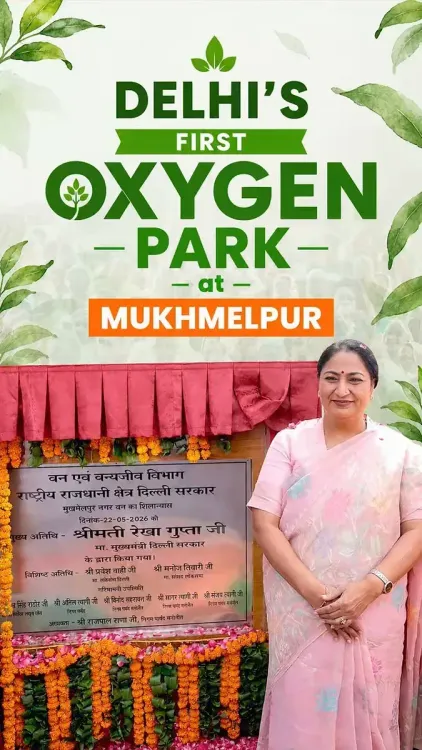
Delhi Chief Minister Rekha Gupta laid the foundation stone for the capital's first Oxygen Park at Mukhmelpur in Burari on 22 May 2026, advancing the BJP government's Viksit Delhi urban greening agenda and addressing the city's chronic air-pollution challenge.
Key Takeaways
Delhi's first Oxygen Park will be built at Mukhmelpur in the Burari constituency of north Delhi.
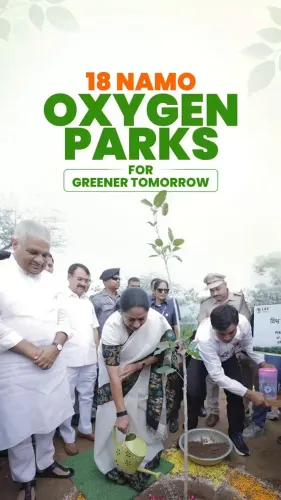
Chief Minister Rekha Gupta laid the foundation stone on 22 May 2026 .
The project is part of the Viksit Delhi urban-development and sustainability initiative.
The Oxygen Park concept emerged nationally after the 2021 COVID-19 oxygen crisis highlighted the importance of urban tree cover.
Burari's relatively open land in north Delhi makes it a strategic site for large-scale green infrastructure.
Project completion timeline, tree-species selection, and air-quality monitoring details are yet to be announced.
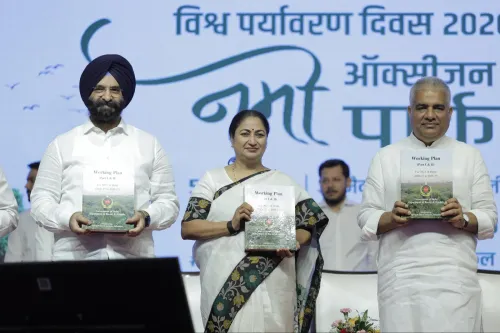
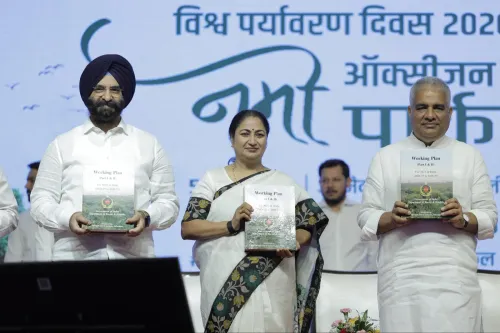
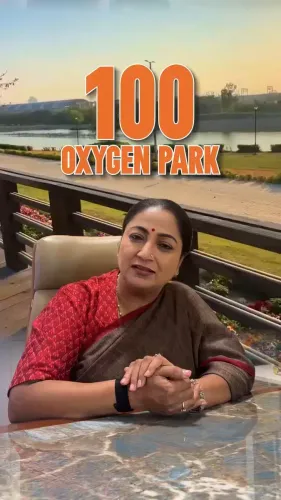
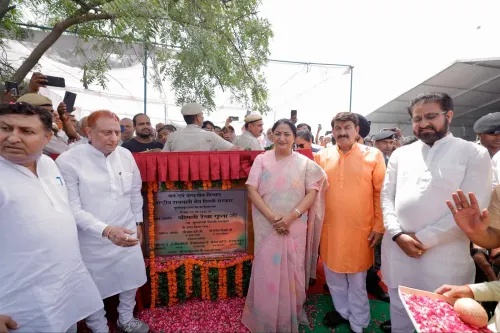
Delhi Chief Minister Rekha Gupta on Friday, 22 May 2026, laid the foundation stone for Delhi's first dedicated Oxygen Park at Mukhmelpur in the Burari constituency of north Delhi, marking a significant step in the capital's urban greening agenda.
Context
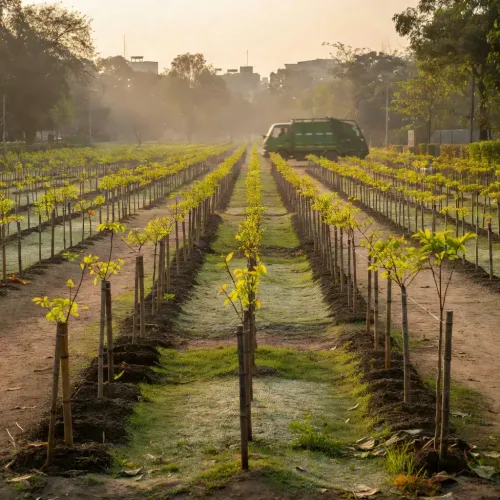
The announcement, made under the #ViksitDelhi banner, positions the Oxygen Park as a flagship environmental initiative of the BJP-led Delhi government. The Mukhmelpur site in Burari — a densely populated north Delhi assembly constituency — was selected to bring dedicated green infrastructure to a part of the city that has historically lacked large public parks.
The Oxygen Park concept gained traction across several Indian states following the devastating 2021 COVID-19 oxygen crisis, which drew public attention to the life-sustaining value of urban tree cover and clean air. Delhi's initiative follows that broader national pattern of converting the crisis into a long-term policy response.
Policy Backdrop
Delhi has grappled with some of the worst air-quality readings among major global cities for over a decade, with the national capital region routinely breaching safe pollution thresholds during winter months. Successive Delhi governments have launched tree-plantation drives and urban-forestry programmes to create what planners call 'green lungs' — zones of dense vegetation that absorb carbon dioxide and release oxygen.
The Viksit Delhi branding ties this local project to the central government's wider Viksit Bharat sustainable-urban-development narrative, signalling that the park is intended as a model replicable across the capital's other constituencies. The choice of Burari — a northern district with significant open land compared to the congested inner city — reflects a deliberate effort to distribute green infrastructure beyond traditional south Delhi parks.
Stakeholders and Impact
The most immediate beneficiaries are Burari residents and the broader population of north Delhi, who currently have limited access to large green recreational spaces. Urban ecologists and public-health advocates have long argued that proximity to green cover reduces respiratory illness and heat-island effects in dense urban neighbourhoods.
The project also carries political significance for the BJP government in Delhi, which has made environmental governance — alongside infrastructure and welfare delivery — a central pillar of its Viksit Delhi platform since assuming office. A visible, landmark green project in a populous constituency reinforces that messaging ahead of future electoral cycles.
What's Next
Key questions now surround the project's execution: the species of trees and plants to be cultivated, the maintenance and funding model, the timeline for the park to become operational, and whether independent air-quality monitoring will be established at the Mukhmelpur site to measure outcomes. If the park delivers measurable improvements in local air quality, it could serve as a template for similar facilities in other under-greened Delhi constituencies, deepening the city's long-term environmental resilience.
Point of View
Photogenic asset in a high-population north Delhi constituency. By anchoring it under the Viksit Delhi brand, the administration is consciously aligning a local green project with the national Viksit Bharat narrative, broadening its political resonance. The site selection in Burari — an area underserved by public parks — also addresses a long-standing equity gap in Delhi's green infrastructure. Whether the park delivers verifiable air-quality gains will determine if it becomes a genuine policy model or remains a symbolic gesture.
NationPress
12 Oct 2026
Frequently Asked Questions
What is the Oxygen Park being built in Delhi?
Delhi's first Oxygen Park is a dedicated green space planned at Mukhmelpur in the Burari constituency of north Delhi, designed to boost urban tree cover and improve local air quality.
Where exactly is Delhi's Oxygen Park located?
The park will be located at Mukhmelpur , a locality within the Burari assembly constituency in north Delhi.
Who laid the foundation stone of Delhi's Oxygen Park?
Delhi Chief Minister Rekha Gupta laid the foundation stone on 22 May 2026 .
Why is an Oxygen Park important for Delhi?
Delhi suffers from severe air pollution year-round. Oxygen Parks create dense zones of vegetation that absorb carbon dioxide, release oxygen, and reduce heat-island effects in densely populated areas.
What is Viksit Delhi?
Viksit Delhi is the BJP-led Delhi government's urban-development branding initiative, aligned with the central government's broader Viksit Bharat sustainable-development agenda.