Yadav inaugurates 18 Namo Oxygen Parks in Delhi on World Environment Day
Synopsis
Union Environment Minister Bhupender Yadav inaugurated 18 Namo Oxygen Parks across Delhi on World Environment Day 2026 at Maidangarhi, alongside Delhi Chief Minister Rekha Gupta, and launched fresh initiatives under PM Modi's Ek Ped Maa Ke Naam campaign to advance urban greening and air-quality improvement in the capital.
Key Takeaways
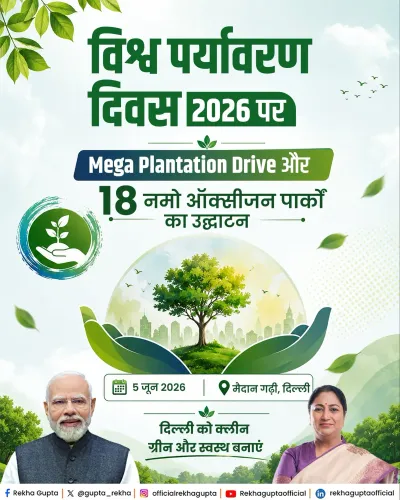
18 Namo Oxygen Parks were inaugurated across Delhi on 5 June 2026 , World Environment Day.
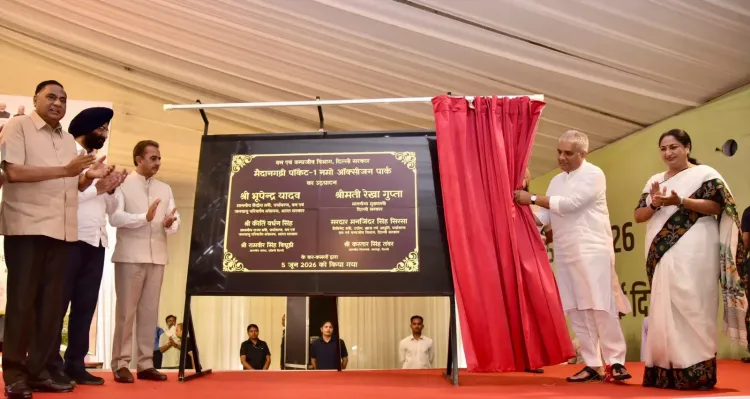
The inauguration ceremony was held at Namo Oxygen Park, Maidangarhi , jointly by Union Minister Bhupender Yadav and Delhi Chief Minister Rekha Gupta .
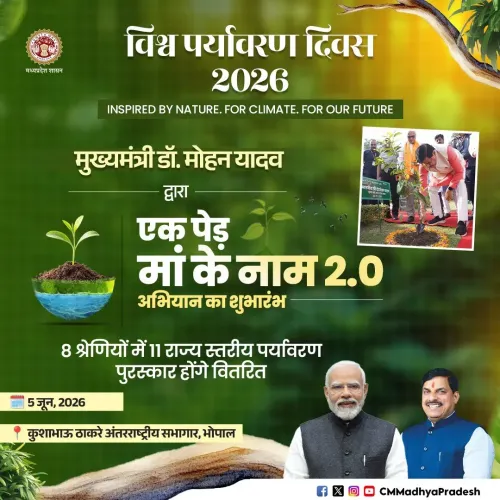
The events were held under the nationwide Ek Ped Maa Ke Naam campaign, initiated by Prime Minister Narendra Modi in 2024.
The parks are aimed at improving urban air quality and fostering community-led environmental stewardship in the National Capital Territory .
The initiative builds on the Nagar Van Yojana (2020) framework and aligns with India's Paris Agreement NDC targets for expanding forest and tree cover.
Yadav urged citizens to not only plant trees but to nurture and protect them for future generations.
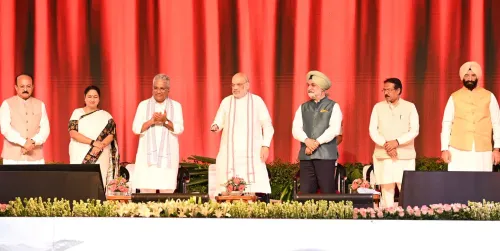
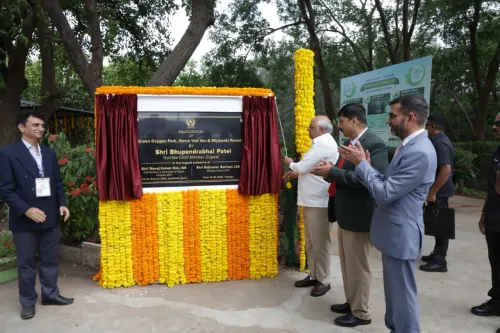
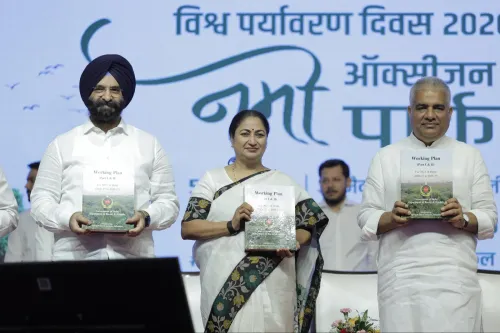
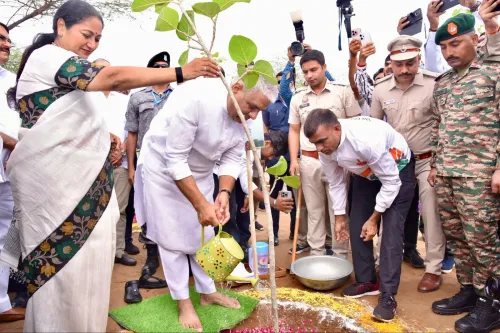
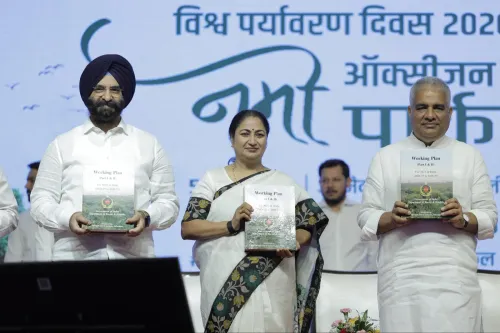
Union Environment Minister Bhupender Yadav on 5 June 2026 inaugurated 18 Namo Oxygen Parks across Delhi and launched a series of environmental initiatives under the nationwide campaign Ek Ped Maa Ke Naam (Plant a Tree in Mother's Name) on the occasion of World Environment Day. The event was held at Namo Oxygen Park, Maidangarhi, in the presence of Delhi Chief Minister Rekha Gupta and Minister of State Shri K.V. Singh.
Context
The inauguration at Maidangarhi marked one of the most visible World Environment Day observances in the National Capital Territory in recent years, bringing together both the Union government and the Delhi government on a single platform. Minister Yadav described the event as 'a significant step towards strengthening urban greening, improving air quality and promoting community-led environmental stewardship.' The parks are designed to function as community environmental hubs, offering green cover in densely populated urban neighbourhoods.
Yadav also used the occasion to urge citizens to go beyond planting: 'I urge all citizens not only to plant trees but also to nurture and protect them for future generations,' he posted on X, invoking the spirit of long-term stewardship at the heart of the campaign.
Policy Backdrop
The Ek Ped Maa Ke Naam campaign was initiated by Prime Minister Narendra Modi on World Environment Day 2024, framing tree plantation as an act of personal gratitude and civic responsibility rather than a mere government target. The campaign has since been positioned as a people's movement, with participation sought from households, schools, and local bodies across the country.
The Namo Oxygen Parks initiative builds on the earlier Nagar Van Yojana (2020), which provided the central framework for creating urban forests and oxygen parks in Indian cities to address air pollution. Delhi's chronic air-quality challenge — managed in part through the Commission for Air Quality Management, established in 2020 — has repeatedly placed urban greening at the centre of mitigation strategies for the capital.
India has also linked large-scale plantation drives to its Nationally Determined Contributions under the Paris Agreement, committing to create an additional carbon sink of 2.5 to 3 billion tonnes of CO₂ equivalent through forest and tree cover by 2030.
Stakeholders and Impact
Delhi residents stand to benefit most immediately, with 18 new green spaces distributed across the capital intended to improve localised air quality and provide recreational green cover. Urban local bodies will be responsible for the ongoing maintenance and community programming at each park. The joint presence of the Union Minister and the Delhi Chief Minister signals a cooperative implementation model for environmental schemes in the NCT, which has historically seen friction between central and state administrations.
The broader Ek Ped Maa Ke Naam campaign targets mass public participation, with citizens encouraged to plant and register trees as a personal tribute. Environmental groups and resident welfare associations are among the non-government stakeholders expected to anchor community stewardship at the park level.
What's Next
Attention will now turn to whether the Namo Oxygen Parks model is replicated in other states during the 2026 monsoon plantation season, which traditionally sees the highest volume of tree-planting activity. The government is also expected to report cumulative plantation figures under Ek Ped Maa Ke Naam as the campaign enters its third year. Sustained maintenance and survival rates of planted trees — a persistent challenge in previous national drives — will be the metric that determines the long-term environmental impact of today's inauguration.
Point of View
The BJP links a Delhi-specific infrastructure rollout to a nationally recognised PM-branded initiative, amplifying its political reach ahead of the monsoon plantation season. The focus on 'nurturing' rather than just planting trees is also a subtle acknowledgement of the poor survival rates that have dogged previous mass plantation drives. Whether the Namo Oxygen Parks model translates into measurable air-quality gains will ultimately determine whether this becomes a durable policy template or a ceremonial milestone.
NationPress
21 Oct 2026
Frequently Asked Questions
What are Namo Oxygen Parks in Delhi?
Namo Oxygen Parks are urban green spaces established across Delhi to improve local air quality and serve as community environmental hubs. 18 such parks were inaugurated on World Environment Day, 5 June 2026 , by Union Environment Minister Bhupender Yadav and Delhi Chief Minister Rekha Gupta .
What is the Ek Ped Maa Ke Naam campaign?
Ek Ped Maa Ke Naam (Plant a Tree in Mother's Name) is a nationwide tree-plantation campaign launched by Prime Minister Narendra Modi on World Environment Day 2024 . It frames tree-planting as a personal act of gratitude and civic responsibility, aiming to make conservation a people's movement.
Where was the World Environment Day 2026 event held in Delhi?
The main event was held at Namo Oxygen Park, Maidangarhi , in Delhi, on 5 June 2026 .
How do Namo Oxygen Parks help Delhi's air quality?
The parks add urban green cover in densely populated areas, which helps absorb pollutants and particulate matter. They build on the Nagar Van Yojana (2020) framework and complement the broader air-quality management efforts overseen by the Commission for Air Quality Management in the NCT.
What is India's tree-cover target under the Paris Agreement?
India has committed under its Nationally Determined Contributions to the Paris Agreement to create an additional carbon sink of 2.5 to 3 billion tonnes of CO₂ equivalent through forest and tree cover by 2030 . Campaigns like Ek Ped Maa Ke Naam are part of the strategy to meet this target.