Owaisi Questions Why Women's Literacy Lags in Rampur

Synopsis
AIMIM president Asaduddin Owaisi posted a pointed question on X asking why women's literacy in Rampur, Uttar Pradesh, lags behind and who is accountable — reviving a debate rooted in the 2006 Sachar Committee findings and ongoing scheme implementation gaps.
Key Takeaways
Asaduddin Owaisi questioned low female literacy in Rampur, Uttar Pradesh in an X post on 19 October 2026 , accompanied by a video.
The Sachar Committee report (2006) had already flagged below-average literacy among Muslim women in districts like Rampur.
Sarva Shiksha Abhiyan (2001) and the National Education Policy 2020 both set universal and full adult literacy as targets, yet Uttar Pradesh has consistently recorded below-national-average female literacy.
Owaisi's post demands accountability, framing the gap as a failure of policy delivery rather than community culture alone.
The next NFHS or UDISE+ district report and Uttar Pradesh's state budget allocations for girls' education will be the next measurable checkpoints.
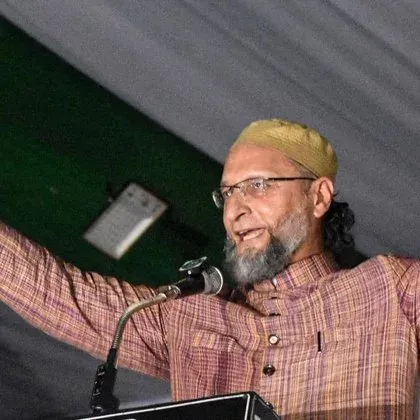
A pointed question about one of Uttar Pradesh's most discussed districts landed on Monday evening — and it came with a demand for accountability. AIMIM president Asaduddin Owaisi, the Hyderabad Lok Sabha MP, took to X on 19 October 2026 to ask: why does female literacy in Rampur remain low, and who bears responsibility for it?
In his post, Owaisi put the question starkly: 'Rampur mein mahilaon ki literacy rate kam kyun hai? Kaun hai iska zimmedar?' ('Why is the women's literacy rate low in Rampur? Who is responsible for it?') The post accompanied a video, signalling a deeper presentation of the data rather than a passing remark.
Rampur's Gender Gap — A Long Paper Trail
Rampur is a Uttar Pradesh district with a substantial Muslim population, and its literacy numbers have trailed national benchmarks through successive survey rounds. The pattern is not new — the landmark Sachar Committee report of 2006 documented lower literacy levels among Muslim women relative to national averages, naming districts like Rampur as flashpoints where policy implementation was falling short.
Since then, two flagship central schemes — Sarva Shiksha Abhiyan, launched in 2001 to achieve universal elementary education with a specific focus on girls, and the National Education Policy 2020, which set a target of 100 percent adult literacy — have framed the ambition. The gap between ambition and ground reality in districts like Rampur is precisely what Owaisi is pointing at.
UP's Persistent Below-Average Female Literacy
Uttar Pradesh has recorded below-national-average female literacy in successive census and survey rounds, despite receiving central allocations under multiple education schemes. Opposition MPs periodically surface district-level data to press state governments on implementation failures — and AIMIM has made minority-specific educational access in north Indian districts a recurring legislative theme.
The accountability question Owaisi raises is deliberately open-ended. Is the shortfall a failure of state administration, of central scheme delivery, of local infrastructure, or of a more entrenched socioeconomic barrier? The video attached to the post suggests he intends to lay out his argument, not merely ask the question.
What the Next Data Round Will Tell
Attention will now turn to the next NFHS or UDISE+ district-level report on female literacy, and to whether Uttar Pradesh's state budget carves out targeted allocations for girls' education in districts with persistent gaps. Owaisi's post raises a question that census data has asked for two decades — the answer, when it comes, will arrive in numbers.
Point of View
He widens the potential audience beyond Muslim constituencies to include all voters concerned with girls' education. The move keeps Uttar Pradesh — heading toward future electoral cycles — in the national spotlight on a development indicator where the ruling dispensation is vulnerable. Whether the question triggers a legislative or administrative response will depend on how much traction the video evidence behind the post generates.
NationPress
19 Oct 2026
Frequently Asked Questions
Why is female literacy low in Rampur, Uttar Pradesh?
Rampur has recorded persistently below-average female literacy across successive surveys, a pattern linked to limited school infrastructure, socioeconomic barriers, and implementation gaps in central schemes like Sarva Shiksha Abhiyan in the district.
What did the Sachar Committee say about Muslim women's literacy?
The Sachar Committee report of 2006 documented that Muslim women had lower literacy levels compared to national averages, specifically naming districts with large Muslim populations in north India as areas where educational access was falling short.
What schemes target female literacy in Uttar Pradesh?
Sarva Shiksha Abhiyan (launched 2001) and the National Education Policy 2020 both include targeted provisions for girls' and women's education, but Uttar Pradesh has continued to record below-national-average female literacy in successive survey rounds.
Why did Owaisi raise the Rampur literacy issue?
AIMIM president Asaduddin Owaisi raised the issue on 19 October 2026 to demand accountability for the persistent gender gap in literacy in Rampur, framing it as a policy delivery failure and attaching a video to support the argument.
What is the National Education Policy 2020 literacy target?
The National Education Policy 2020 sets a goal of achieving 100 percent adult literacy across India, including full female literacy — a benchmark that districts like Rampur in Uttar Pradesh are still far from reaching.