Owaisi warns both BJP and Congress will lose from beard-alliance
Synopsis
AIMIM chief Asaduddin Owaisi posted a cryptic Hindi metaphor on 16 November 2026, warning that an alliance of 'the bearded and moustached' will hurt both 'clean-shaved' and 'clean-headed' political formations — a veiled commentary on how a new coalition could fracture national electoral arithmetic.
Key Takeaways
Owaisi posted on 16 November 2026 using a metaphor about beards, moustaches, and clean shaves to comment on electoral alliance dynamics.
The remark is widely read as suggesting a minority-community-anchored alliance could split votes and damage both the BJP and Congress blocs.
AIMIM has historically argued that Muslim voters are taken for granted by mainstream coalitions.
Owaisi is the Lok Sabha MP from Hyderabad and has led AIMIM since 2004 , contesting elections in Telangana, Maharashtra, Bihar and beyond.
The specific alliance referenced in the post is unconfirmed; the broader vote-split argument is consistent with AIMIM's long-standing electoral critique.
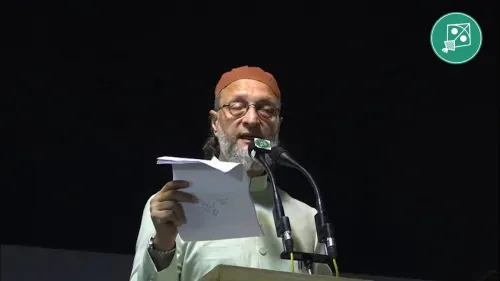
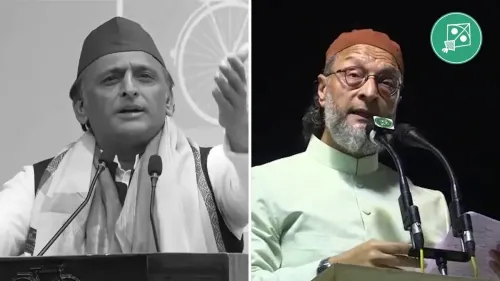
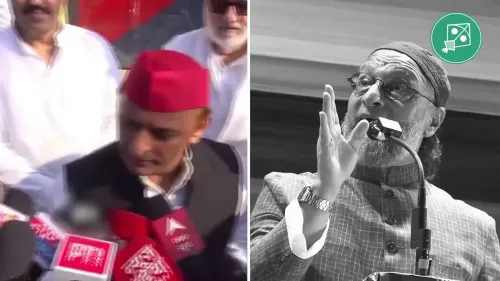
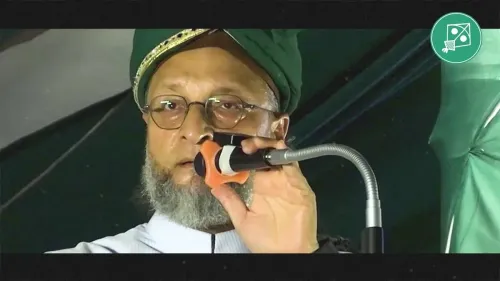
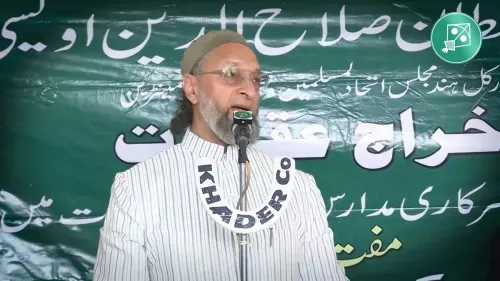
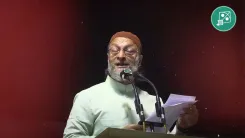
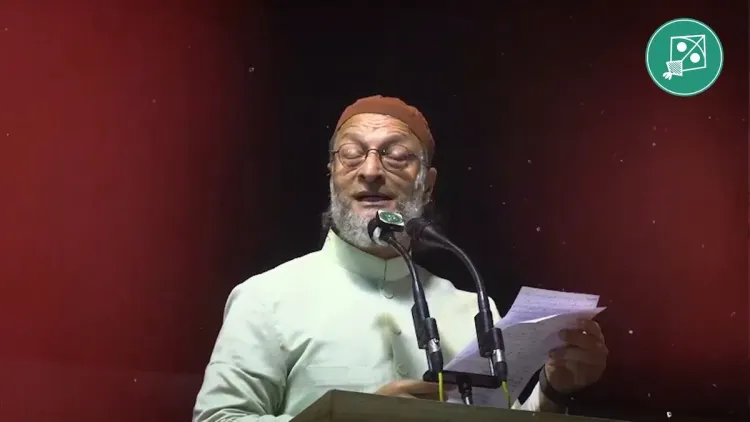
A cryptic metaphor — but every Indian political observer knew exactly who AIMIM president Asaduddin Owaisi was talking about when he posted on Monday, 16 November 2026. In a sharp, compressed observation, Owaisi argued that an alliance of 'those with beards and moustaches' would end up hurting both the 'clean-shaved' and the 'clean-headed' — coded language that cut through the noise of a busy election season.
The original Hindi reads: 'दाढ़ी और मूंछ वालों के गठबंधन से Clean Shave और Clean Head दोनों को नुकसान होगा' — loosely translated: 'An alliance of the bearded and the moustached will harm both the clean-shaved and the clean-headed.' The remark, accompanied by a video, is widely understood as a commentary on a new or rumoured electoral coalition and its knock-on effect on rival formations.
Decoding the metaphor in Indian political shorthand
Indian political Twitter has long used physical appearance as stand-in for party identity, and Owaisi — a sharp parliamentary debater — is no stranger to the device. The 'clean-shaved' and 'clean-headed' labels are broadly read as references to the two dominant national formations: the BJP and the Congress, or their respective alliance blocs. The 'bearded and moustached' grouping is taken to mean a third-front or minority-community-anchored coalition.
Owaisi's argument, in essence, is a classic vote-split thesis: when a new alliance consolidates a specific voter base — particularly Muslim voters — it fractures the electoral arithmetic that both larger parties had been counting on, leaving neither better off. It is the kind of calculation that has animated AIMIM's own electoral strategy across Telangana, Maharashtra, Bihar and beyond.
AIMIM's long-running critique of alliance politics
AIMIM, founded in Hyderabad and led by Owaisi since 2004, has consistently argued that Muslim voters are taken for granted by mainstream coalitions. Owaisi regularly uses social media to flag what he sees as the unintended — or intended — consequences of alliance-making on minority representation. His posts in the run-up to state and general elections have often framed third-force politics not as spoiler behaviour but as leverage.
Whether this post is a warning, a prediction, or a quiet endorsement of that disruption is left deliberately open. That ambiguity is the point.
The specific alliance Owaisi is referencing has not been independently confirmed — but the warning is clear: in a triangular contest, the two giants may find the ground shifting beneath them.
Point of View
He forces both national blocs to engage with AIMIM's core thesis — that a consolidated minority vote is a swing factor, not a footnote. It slots into a wider pattern of third-force parties using social media to shape pre-election narrative before formal alliance announcements. The post also signals that AIMIM intends to stay in the conversation as a credible disruptor, not a bystander, in whatever electoral cycle is approaching in late 2026.
NationPress
16 Nov 2026
Frequently Asked Questions
What did Asaduddin Owaisi mean by 'beard and moustache alliance'?
Owaisi's Hindi post used physical appearance as coded political shorthand. The 'bearded and moustached' grouping is widely interpreted as referring to a minority-community or third-front coalition, while 'clean-shaved' and 'clean-headed' allude to the two dominant national political blocs. He argued this alliance would hurt both.
Which parties is Owaisi referring to in his 16 November 2026 post?
Owaisi did not name any party explicitly. The metaphors are read by observers as references to the BJP and Congress alliances as the parties that stand to lose, with the 'beard-and-moustache' bloc understood as a minority-focused or regional third-front grouping.
What is AIMIM's position on electoral alliances?
AIMIM, led by Owaisi, has long argued that mainstream parties take Muslim voters for granted. The party has contested elections independently in Telangana, Maharashtra and Bihar, positioning itself as a vehicle for genuine Muslim political representation rather than a junior ally in larger coalitions.
Is Asaduddin Owaisi a member of parliament?
Yes, Owaisi is the Lok Sabha MP from Hyderabad and has served in that role for multiple consecutive terms. He is also the national president of AIMIM, a party he has led since 2004.
What is the vote-split theory Owaisi is referencing?
The vote-split theory holds that when a third party consolidates a specific bloc of voters — in this case, potentially Muslim voters — it reduces the share available to both major formations, making neither the clear beneficiary. Owaisi's post argues this dynamic will play out against both blocs if the described alliance materialises.