Jal Shakti Minister Paatil hoists flag with Surat police
Synopsis
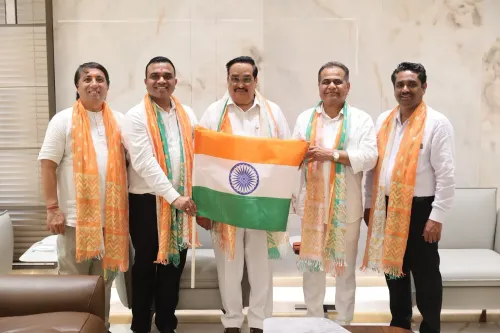
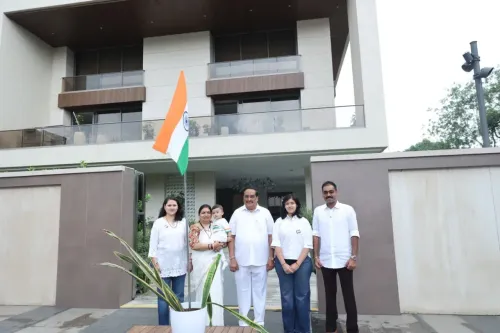
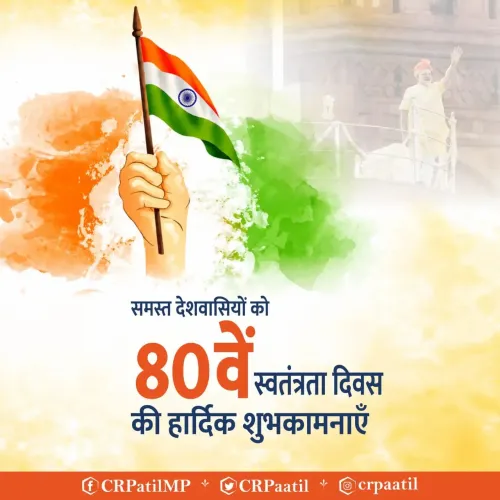
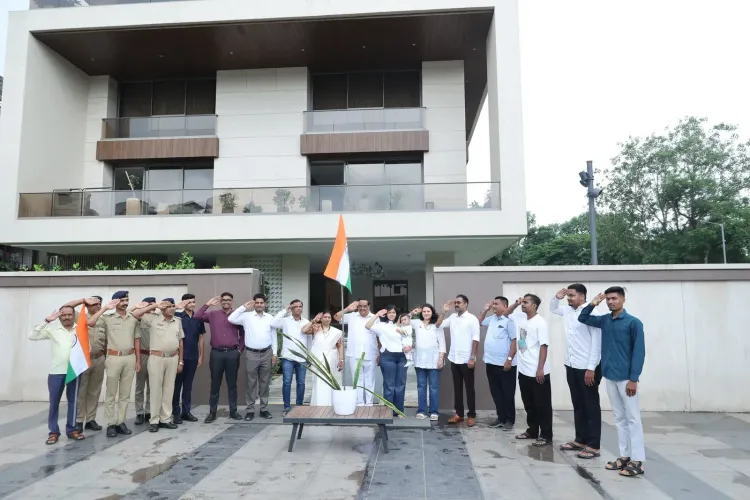
Union Jal Shakti Minister C. R. Paatil marked Independence Day on 15 August by hoisting the national flag with police personnel and Surat office staff, calling the tricolour a constant inspiration for dutiful national service.
Key Takeaways
Paatil , Union Minister of Jal Shakti, conducted a flag-hoisting ceremony at his Surat office on 15 August .
The event included police personnel and office staff, whom Paatil specifically acknowledged for their role in public service and national security.
Paatil described the tricolour as not just a symbol of freedom but a 'constant inspiration' to serve the nation with dedication.
He closed with the national salutes Vande Mataram and Bharat Mata Ki Jai .
The Surat ceremony reflects Paatil's long-standing connection to the city, which he represented as an MP before joining the Union Cabinet.
Under the tricolour at Surat on Independence Day, 15 August, Union Jal Shakti Minister C. R. Paatil stood shoulder to shoulder with police personnel and office staff to salute the national flag — a moment he called a special source of pride and renewed duty.
Posting in Gujarati, the minister wrote: 'તિરંગો માત્ર આપણી સ્વતંત્રતાનું પ્રતીક નથી, પરંતુ દેશ માટે નિષ્ઠાપૂર્વક કર્તવ્ય નિભાવવાની સતત પ્રેરણા પણ છે' — 'The tricolour is not merely a symbol of our freedom; it is a constant inspiration to serve the nation with dedication.' He closed with the twin salutes that anchor every Independence Day address: Vande Mataram and Bharat Mata Ki Jai.
Surat's flag-post and what it signals
Paatil has deep roots in Surat — the city he represented as a Member of Parliament for multiple terms before joining the Union Cabinet, and where he served as a dominant organisational force during his tenure as Gujarat BJP state president. Conducting the flag-hoisting ceremony at his Surat office rather than exclusively in New Delhi underscores his consistent practice of staying connected to his home constituency even from a central ministerial post.
Police at the centre of the celebration
The minister specifically highlighted the presence of police personnel, describing the celebration with those 'ceaselessly engaged in public service and national security' as a particularly meaningful moment. It is a framing that elevates a routine ceremonial occasion into a public acknowledgement of the force's year-round duty — one that resonates especially on a day when security deployments across the country are at their highest.
Central ministers routinely hold or attend flag-hoisting events at their offices and home constituencies on 15 August, but Paatil's emphasis on the police contingent and the explicit invocation of duty — 'rashtradhvajni chhayama kartavyano sankalp', a resolve of duty under the shadow of the national flag — gives the post a tone of institutional solidarity rather than mere festivity. The tricolour, he wrote, must remain glorious and India's head must always remain held high.
Point of View
He frames national security forces as co-celebrants of freedom, a messaging choice that reinforces the party's law-and-order identity. The post is ceremonial in nature but fits a broader pattern of senior ministers using Independence Day to project both institutional solidarity and constituency loyalty simultaneously.
NationPress
30 Sept 2026
Frequently Asked Questions
Where did C. R. Paatil hoist the flag on Independence Day 2026?
C. R. Paatil hoisted the national flag at his Surat office on 15 August 2026, alongside police personnel and office staff.
What did C. R. Paatil say about the tricolour on Independence Day?
Paatil said the tricolour is not merely a symbol of India's freedom but a constant inspiration to serve the nation with dedication and sincerity.
Who is C. R. Paatil?
C. R. Paatil is the Union Minister of Jal Shakti, a senior BJP leader, and former president of the BJP's Gujarat state unit.
Why did Paatil celebrate Independence Day in Surat?
Surat is Paatil's long-standing political constituency, which he represented as an MP for multiple terms before joining the Union Cabinet, making it a natural base for his Independence Day observance.
What is the significance of Independence Day flag hoisting by Union ministers?
Central ministers routinely conduct flag-hoisting ceremonies at their offices and home constituencies on 15 August as part of the national Independence Day observance, reinforcing both institutional duty and public connection.