Paatil Meets New Navsari Municipal Corporation Officials
Synopsis
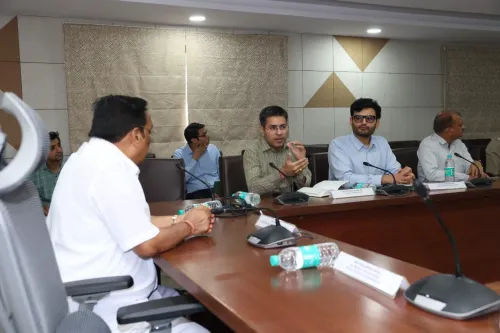
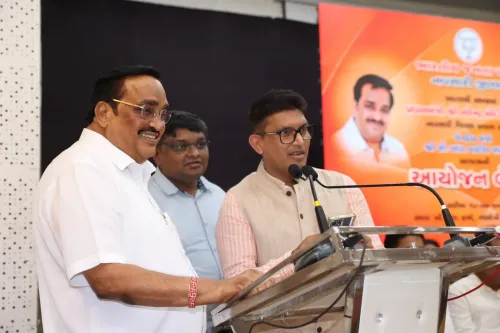
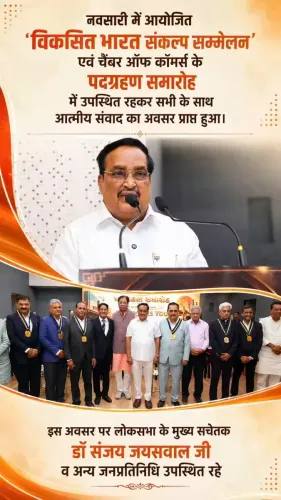
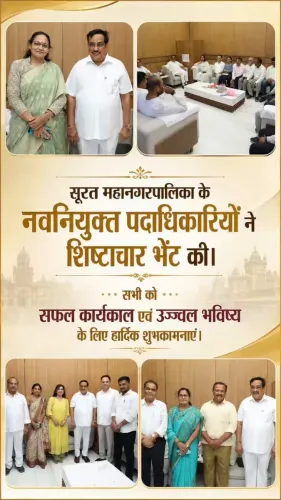
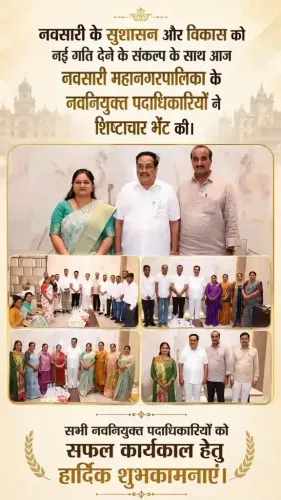
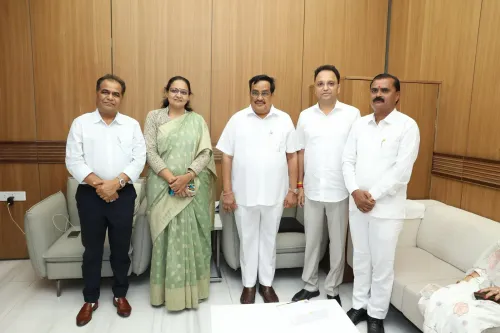
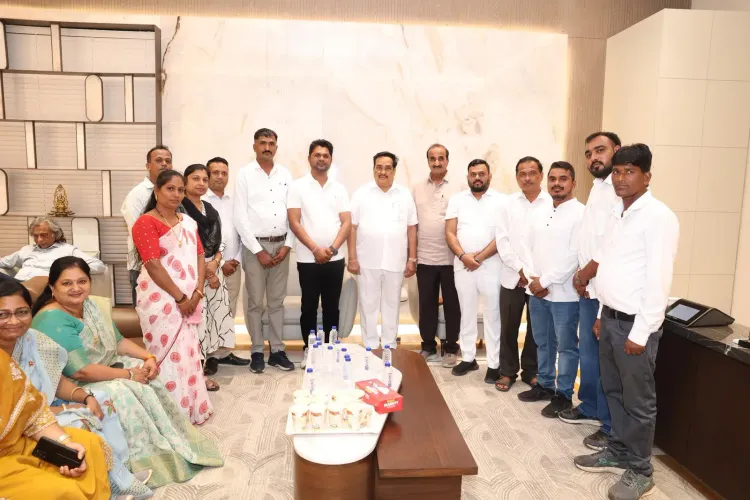
Union Jal Shakti Minister C. R. Paatil met newly inducted Navsari Municipal Corporation office-bearers on 28 May 2026, calling for stronger urban governance, cleaner infrastructure and improved citizen services in the southern Gujarat city.
Key Takeaways
Union Jal Shakti Minister C.
Paatil received a courtesy visit from newly appointed Navsari Municipal Corporation office-bearers on 28 May 2026 .
Paatil called for renewed focus on urban infrastructure, cleanliness, civic amenities and citizen welfare in Navsari.
He expressed confidence that the new municipal team will set 'new benchmarks in development, good order and citizen convenience.' The engagement reflects a broader pattern of central ministers from Gujarat coordinating with home-constituency civic bodies on national urban schemes.
As Union Minister of Jal Shakti, Paatil oversees AMRUT 2.0 and related water-sanitation missions that directly fund cities like Navsari.
Progress on central scheme allocations and the city's Swachh Survekshan ranking will be early indicators of the new team's performance.
Union Jal Shakti Minister C. R. Paatil on Thursday, 28 May 2026, received a courtesy call from the newly appointed office-bearers of the Navsari Municipal Corporation, pledging renewed momentum to the city's governance and development journey.
Posting in Gujarati on X, Paatil wrote that the newly inducted functionaries called on him 'with the resolve to give further impetus to Navsari's good governance and development journey.' He added that all stakeholders are committed to more effective work in the areas of urban infrastructure, cleanliness, civic amenities and citizen welfare, keeping public service at the centre.
Context
Navsari, a city in southern Gujarat, is the constituency that Paatil has represented in Parliament for multiple terms, making it a political and personal priority for him. The Navsari Municipal Corporation is the statutory urban local body responsible for civic services ranging from water supply and sanitation to road maintenance and public health across the city.
The meeting follows the induction of a new set of office-bearers into the corporation, a routine transition that typically prompts outreach from senior political figures to align local administration with broader development goals. Paatil expressed confidence that 'under the guidance of the new team, the city will establish new benchmarks in development, good order and citizen convenience.'
Policy Backdrop
Urban local bodies in India derive their constitutional mandate from the 74th Constitutional Amendment Act, 1992, which devolved responsibilities for urban planning, water supply, sanitation and infrastructure to elected municipal institutions. Since then, successive central governments have channelled funding to cities through targeted missions.
The emphasis on infrastructure, cleanliness and citizen welfare in Paatil's post aligns closely with the priorities of centrally sponsored urban programmes, including AMRUT 2.0 (Atal Mission for Rejuvenation and Urban Transformation), which focuses on universal water supply and sewerage coverage in cities such as Navsari. As Union Minister of Jal Shakti, Paatil oversees the ministry that drives water and sanitation schemes at the national level, giving his engagement with Navsari's civic body an added policy dimension.
Stakeholders and Impact
The primary beneficiaries of improved municipal governance are Navsari's residents, who stand to gain from better roads, reliable water supply, cleaner public spaces and more responsive civic services. Newly appointed municipal office-bearers now carry the expectation — publicly articulated by a Union Minister — of delivering tangible improvements on these fronts.
The meeting also signals a coordination channel between the central government's urban and water missions and city-level execution, a pattern common among Gujarat-based central ministers who maintain close links with their home constituencies. For the corporation, access to a minister who controls national water and sanitation funding could translate into faster project clearances and additional allocations.
What's Next
Observers will watch whether Navsari receives enhanced allocations or accelerated project approvals under AMRUT 2.0 or related central schemes in the months ahead. The new municipal team's performance on infrastructure and cleanliness indices — including the annual Swachh Survekshan rankings — will serve as an early test of the commitments made at this courtesy meeting.
Paatil's public endorsement of the incoming team sets a clear accountability benchmark: any visible improvement in Navsari's urban services will be read as a vindication of this renewed political-administrative partnership.
Point of View
His visible endorsement of the incoming team creates a direct accountability loop between central scheme delivery and local civic performance. The meeting fits a well-established pattern in BJP-governed Gujarat, where senior central figures actively bridge the gap between national missions and municipal execution. The real test will be whether this political momentum translates into measurable improvements in Navsari's infrastructure and cleanliness rankings over the next year.
NationPress
22 Oct 2026
Frequently Asked Questions
Who are the newly appointed Navsari Municipal Corporation office-bearers?
The exact names and portfolios of the newly inducted office-bearers have not been officially confirmed in public records; C. R. Paatil's post refers to them collectively as newly appointed functionaries who called on him on 28 May 2026.
What is C. R. Paatil's connection to Navsari?
C. R. Paatil is the Union Minister of Jal Shakti and a senior BJP leader who has represented Navsari as a Member of Parliament for multiple terms, making the city both his political base and a personal development priority.
What is AMRUT 2.0 and how does it affect Navsari?
AMRUT 2.0 (Atal Mission for Rejuvenation and Urban Transformation) is a central government scheme focused on universal water supply and sewerage coverage in urban areas; Navsari, as an eligible city, can receive funding for water and sanitation infrastructure under this mission.
What powers do Indian municipal corporations have under the Constitution?
The 74th Constitutional Amendment Act of 1992 empowered urban local bodies with responsibilities for urban planning, water supply, sanitation, public health and infrastructure development within their jurisdictions.
What is Swachh Survekshan and why does it matter for Navsari?
Swachh Survekshan is an annual cleanliness survey conducted by the central government that ranks cities on sanitation and waste management; a higher ranking signals better civic governance and can influence future central funding allocations for a city like Navsari.