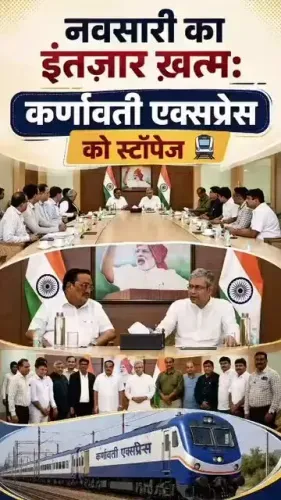
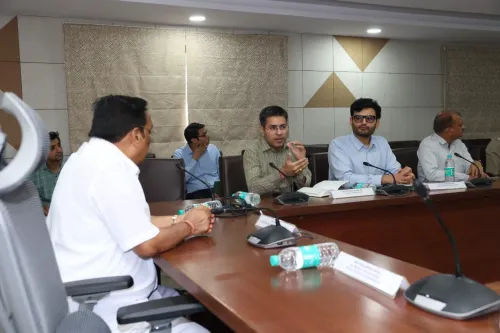
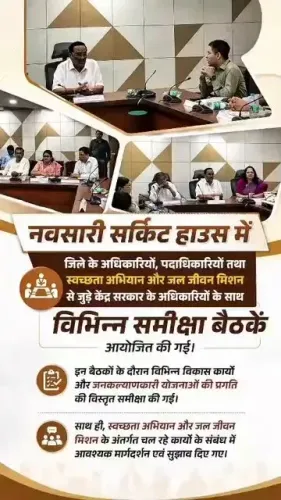
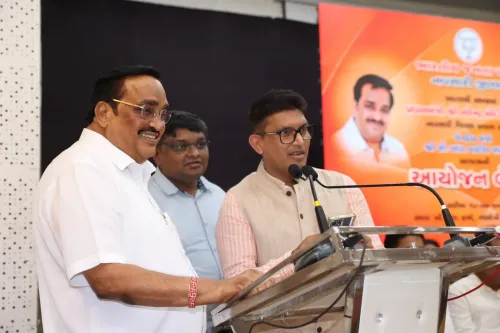
Jal Shakti Minister Paatil meets Rail Minister on Navsari-Surat demands
Synopsis
Union Jal Shakti Minister C. R. Paatil led a delegation from Navsari and Surat to Rail Bhavan on 9 July 2026, presenting rail facility demands to Minister Ashwini Vaishnaw, who assured full cooperation. The meeting reflects Gujarat's push for expanded rail modernisation under the national infrastructure drive.
Key Takeaways
Paatil , Union Jal Shakti Minister and Navsari MP, met Rail Minister Ashwini Vaishnaw at Rail Bhavan, New Delhi on 9 July 2026 .
A joint delegation from Navsari and Surat districts presented multiple public demands related to railway services.
Rail Minister Vaishnaw listened to all issues and assured 'every possible cooperation,' according to Paatil's post.
The meeting aligns with the Amrit Bharat Station Scheme (2023), targeting redevelopment of over 1,300 stations nationwide, including in Gujarat.
Surat 's rapid industrial growth and Navsari 's connectivity needs make the southern Gujarat corridor a priority watch for upcoming rail project announcements.
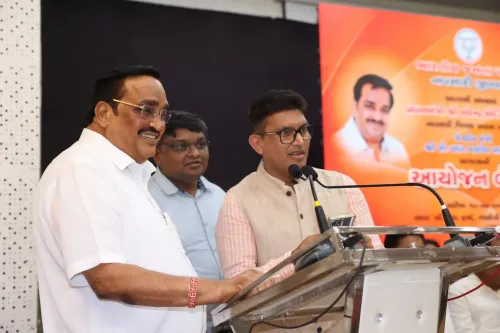
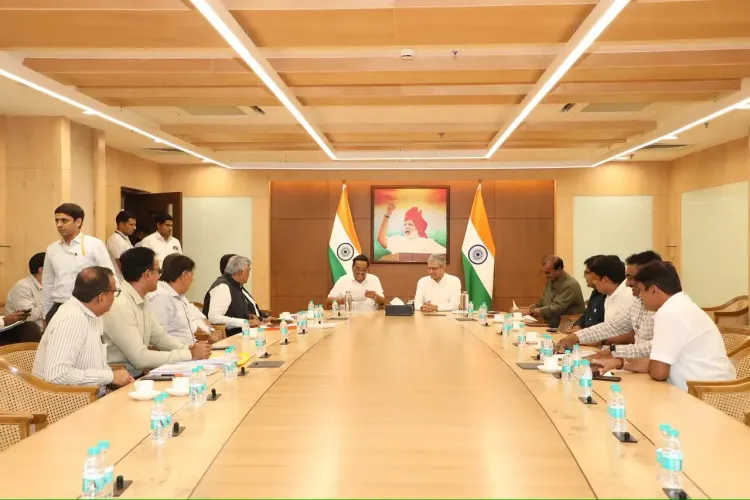
Union Jal Shakti Minister C. R. Paatil met Union Railways Minister Ashwini Vaishnaw at Rail Bhavan, New Delhi, on 9 July 2026, leading a delegation of representatives from Navsari and Surat districts of Gujarat to press for improved rail facilities in the region.
Context
Paatil, who represents the Navsari constituency in the Lok Sabha, presented multiple public demands related to railway services before Vaishnaw. The post states that the Rail Minister 'dhairyapoorvak suna' (listened patiently) to all issues and assured 'every possible cooperation.' The exact demands raised by the delegation have not been made public.
The meeting was attended by representatives from both Navsari and Surat districts, signalling a coordinated push from southern Gujarat for better rail connectivity and infrastructure.
Policy Backdrop
The meeting comes against the backdrop of a broad national railway modernisation drive under the Narendra Modi government. The Amrit Bharat Station Scheme, launched in 2023, targets the redevelopment of more than 1,300 railway stations across India with upgraded passenger amenities, and Gujarat stations are among those in scope.
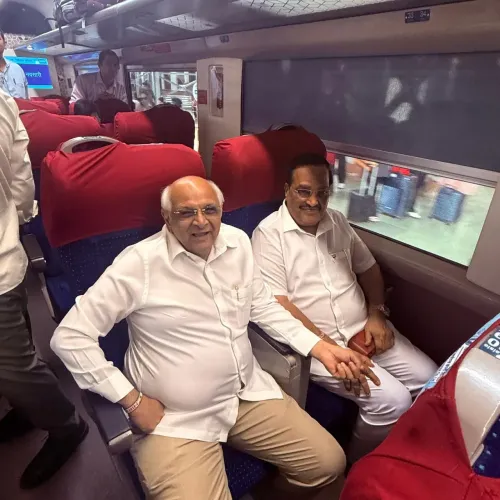
Vande Bharat Express services, introduced in 2019 as flagship semi-high-speed trains, have expanded to corridors passing through Gujarat, raising passenger expectations for further frequency and coverage in the state. Paatil's post underscored this trajectory, noting that under Prime Minister Modi's 'visionary leadership,' Indian Railways is 'continuously becoming modern, people-centric and development-oriented.'
Stakeholders and Impact
Surat is one of India's fastest-growing industrial cities, generating heavy demand for both passenger and freight rail services. Congestion on existing corridors and the need for new connections have been longstanding concerns for local businesses and daily commuters alike.
Navsari, a smaller neighbouring district, has historically sought better connectivity to larger urban centres. A combined delegation from both districts amplifies the political weight of the demands and increases the likelihood of formal follow-up within the Ministry of Railways.
What's Next
Rail Minister Vaishnaw's assurance of 'every possible support' is a standard ministerial commitment at such meetings; concrete outcomes — new rail lines, station upgrades, or additional train services — would typically surface in a Railway Budget presentation, parliamentary questions, or a formal ministry announcement. Observers of western India rail corridors should watch for any project sanction or survey order linked to the Surat–Navsari belt in the coming months.
The meeting reinforces the pattern of BJP legislators using direct ministerial access to channel constituency-level infrastructure demands into the national railway modernisation pipeline, a practice that has accelerated ahead of state and general election cycles in Gujarat.
Point of View
Making it harder for the ministry to defer action on southern Gujarat's rail needs. Set against the Amrit Bharat Station Scheme and Vande Bharat expansion, the meeting fits a deliberate pattern of pre-emptive outreach ahead of budget cycles. Whether Vaishnaw's assurance translates into sanctioned projects will be the real test of this coordination.
NationPress
8 Oct 2026
Frequently Asked Questions
Why did C. R. Paatil meet Ashwini Vaishnaw at Rail Bhavan?
Paatil met Rail Minister Vaishnaw on 9 July 2026 to present railway facility demands from Navsari and Surat districts, leading a joint delegation of local representatives seeking improved rail services for the region.
What demands did the Navsari-Surat delegation raise with the Rail Minister?
The specific demands have not been made public, but the meeting focused on railway facilities and public-interest issues affecting residents of Navsari and Surat districts in Gujarat.
What did Rail Minister Ashwini Vaishnaw say at the meeting?
According to Paatil's post, Vaishnaw listened patiently to all issues raised and assured the delegation of every possible cooperation from the Ministry of Railways.
What is the Amrit Bharat Station Scheme and does it cover Gujarat?
The Amrit Bharat Station Scheme, launched in 2023, aims to redevelop more than 1,300 railway stations across India with modern passenger amenities, and Gujarat stations are among those included in the programme.
What is the significance of Surat for Indian Railways?
Surat is one of India's fastest-growing industrial cities with high passenger and freight rail traffic, making it a key node for railway capacity expansion and connectivity upgrades in western India.