Jal Shakti Minister CR Paatil Reviews Surat Flood Relief
Synopsis
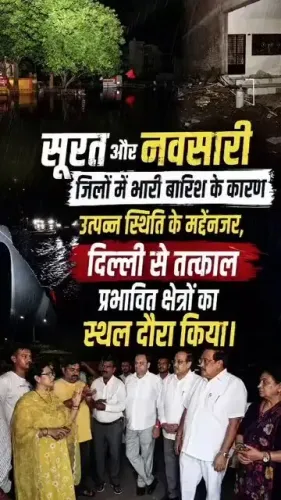
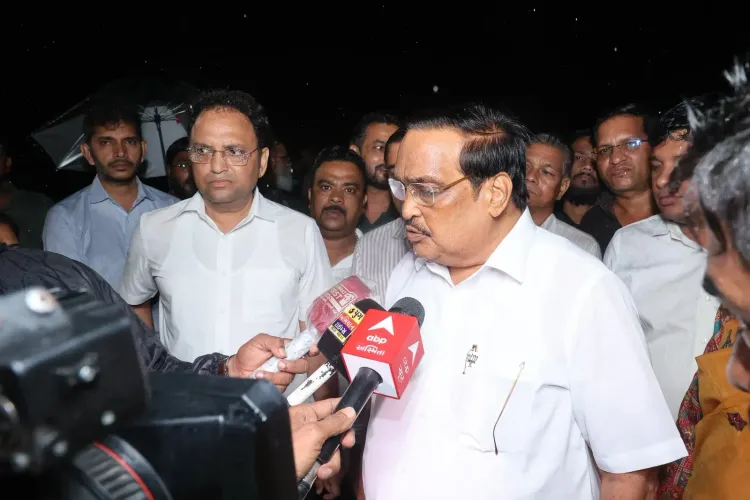
Union Jal Shakti Minister C. R. Paatil visited flood-affected areas in Surat on 25 July 2026, reviewing relief operations with local corporators and directing officials to accelerate drainage and sanitation work to restore normalcy quickly.
Key Takeaways
Paatil , Union Jal Shakti Minister, visited Surat on 25 July 2026 to inspect rain-affected areas.
Areas inspected included Rishivihar, Kangaroo Circle, and Parvat Patiya .
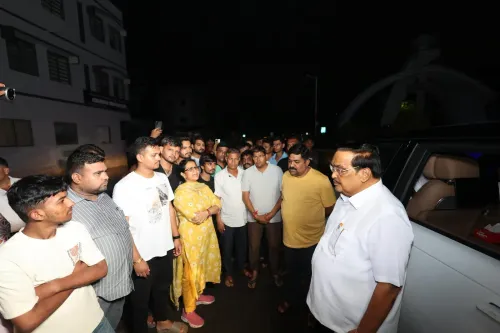
The minister reviewed relief and restoration work alongside local corporators .
Officials were directed to speed up water drainage and sanitation operations.
The stated goal is to restore normal life in affected neighbourhoods as swiftly as possible.
The visit reflects the Jal Shakti Ministry's broader mandate of coordinating flood response with state and local bodies.
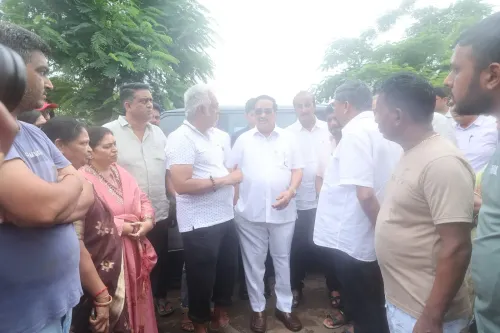
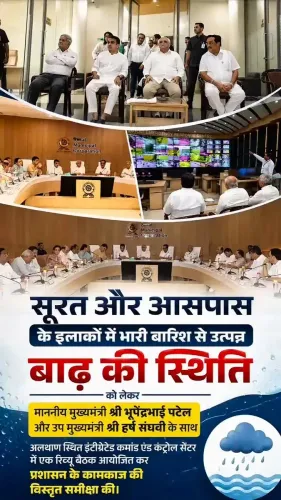
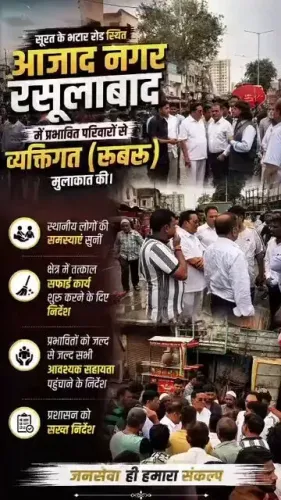
Union Jal Shakti Minister C. R. Paatil on Saturday, 25 July 2026, personally visited rain-affected areas in Surat, Gujarat, including Rishivihar, Kangaroo Circle, and Parvat Patiya, to assess ground conditions and direct relief operations. The minister reviewed restoration work with local corporators and issued instructions to officials to accelerate drainage, cleaning, and other essential services to restore normalcy swiftly.
Context
Paatil, posting in Gujarati on X, stated that he inspected rain-hit localities — ઋષિવિહાર, કાંગારૂ સર્કલ અને પર્વત પાટિયા (Rishivihar, Kangaroo Circle, and Parvat Patiya) — and reviewed relief and rehabilitation efforts alongside local representatives. He directed concerned officials to speed up water drainage and sanitation work so that 'life returns to normal as quickly as possible,' the post reads.
Surat, a major industrial and commercial hub situated on the Tapi river in southern Gujarat, is recurrently impacted by monsoon flooding that disrupts urban infrastructure and daily life in densely populated neighbourhoods.
Policy Backdrop
The Jal Shakti Ministry, created in 2019, consolidated water resources, river development, and flood management coordination under a single central body to improve state-centre synergy during monsoon emergencies. The ministry's mandate includes working with state governments and urban local bodies to ensure faster disaster response and drainage upgrades in flood-prone cities.
Central ministers conducting on-site inspections of flood-affected urban areas during the monsoon season has become an established pattern of direct oversight, integrating with national urban infrastructure programmes designed to build climate resilience in high-density industrial centres.
Stakeholders and Impact
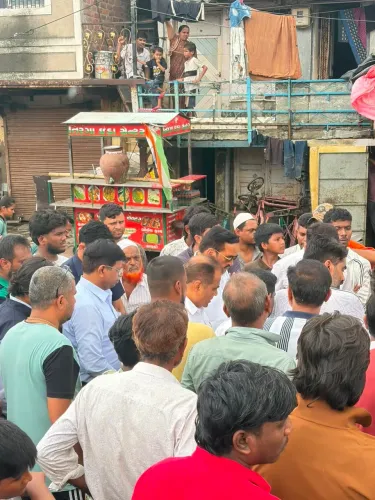
Residents of Rishivihar, Kangaroo Circle, and Parvat Patiya — among the areas cited by the minister — are among those most immediately affected by waterlogging and disruption to essential services. Municipal officials and local corporators were present during the review, indicating coordination between the central government and city administration.
Such high-level visits typically prompt faster mobilisation of municipal machinery for pumping out stagnant water, clearing debris, and restoring road access, reducing the economic downtime that flooding causes in a city of Surat's commercial significance.
What's Next
Attention will now turn to whether Paatil's visit translates into formal announcements of central assistance for long-term drainage infrastructure upgrades in Surat. State-central coordination meetings on monsoon preparedness and any allocation of funds under urban flood-resilience programmes will be closely watched. The pace at which normalcy is restored in the affected neighbourhoods will also serve as a measure of the effectiveness of the instructions issued on the ground.
Point of View
Particularly ahead of or during politically sensitive periods. As a former Gujarat BJP state president and the sitting MP from Navsari — which neighbours Surat — Paatil carries both political and administrative weight in the region, making his presence a signal of the party's attentiveness to urban distress. The Jal Shakti Ministry's involvement also underscores the Centre's intent to position itself as a direct stakeholder in urban flood response, not merely a funding conduit. The key test will be whether this visit catalyses durable infrastructure investment in Surat's drainage network or remains a one-cycle monsoon response.
NationPress
23 Oct 2026
Frequently Asked Questions
Why did CR Paatil visit Surat in July 2026?
C. R. Paatil , Union Jal Shakti Minister, visited Surat on 25 July 2026 to personally inspect rain-affected areas and review relief and restoration operations following monsoon flooding.
Which areas in Surat were affected by rain and visited by the minister?
The minister visited Rishivihar, Kangaroo Circle, and Parvat Patiya , among other rain-affected localities in Surat.
What instructions did CR Paatil give to officials in Surat?
Paatil directed concerned officials to accelerate water drainage and sanitation work and to take all necessary steps to restore normal life in the affected areas as quickly as possible.
What is the role of the Jal Shakti Ministry in flood management?
The Jal Shakti Ministry , formed in 2019 , consolidates water resources and flood management coordination, working with state governments and urban local bodies to improve disaster response and drainage infrastructure.
Is Surat frequently affected by monsoon flooding?
Yes, Surat , located on the Tapi river in Gujarat, is recurrently impacted by monsoon flooding that disrupts urban infrastructure and daily life in its densely populated and commercially active neighbourhoods.