Jal Shakti Minister CR Paatil Reviews Flood Relief in Surat

Synopsis
Union Jal Shakti Minister C. R. Paatil visited rain-hit areas of Surat on July 25, 2026, inspecting conditions at Rishivihar, Kangaroo Circle and Parvat Patia. He reviewed relief operations with local corporators and directed officials to accelerate restoration and normalise civic life at the earliest.
Key Takeaways
Paatil , Union Jal Shakti Minister, personally visited flood-affected localities in Surat on July 25, 2026 .
Areas inspected included Rishivihar , Kangaroo Circle , and Parvat Patia , all impacted by heavy monsoon rainfall.
The minister held a review with local corporators on the progress of relief and rehabilitation work.
Officials were directed to accelerate restoration operations and restore normal civic life at the earliest.
The visit reflects the Jal Shakti Ministry's involvement in urban flood management alongside state and municipal bodies.
Paatil's prior role as BJP Gujarat state president underscores his close ties with the state's administrative network.
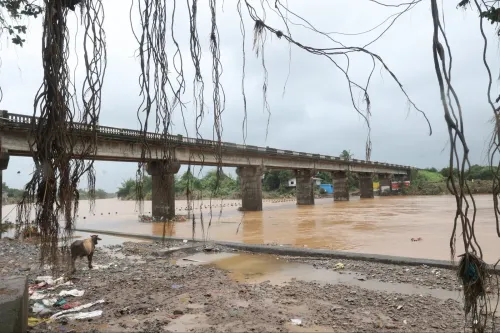
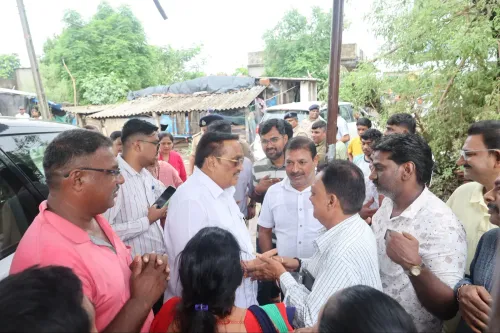
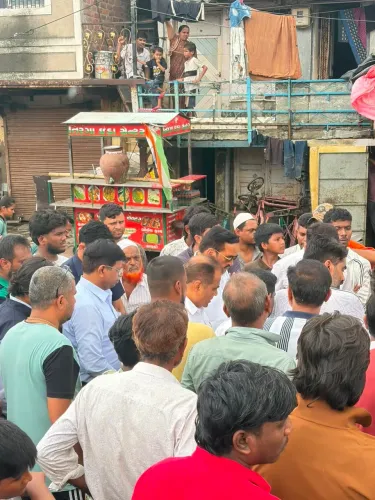
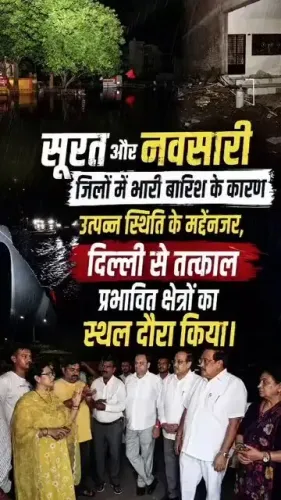
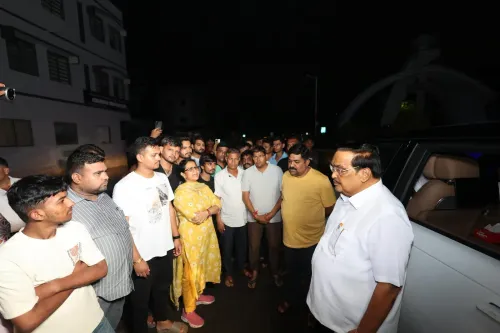
Union Jal Shakti Minister C. R. Paatil on Friday, July 25, 2026, visited rain-affected localities in Surat, Gujarat, to assess ground conditions and review ongoing relief and restoration efforts. The minister personally inspected areas including Rishivihar, Kangaroo Circle, and Parvat Patia, which have been impacted by heavy monsoon rainfall.
What the Minister Did
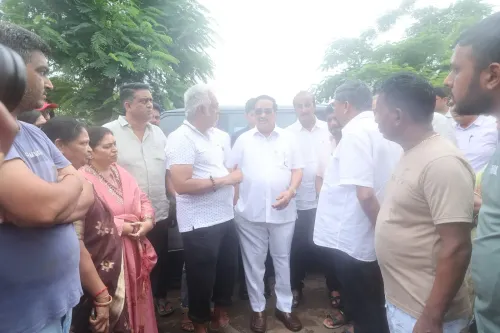
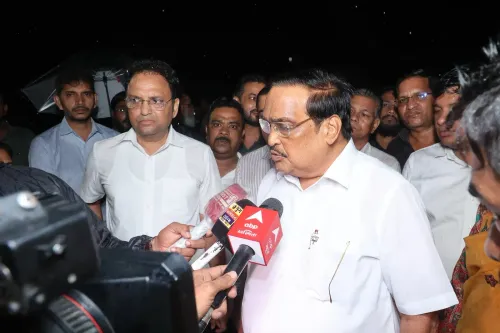
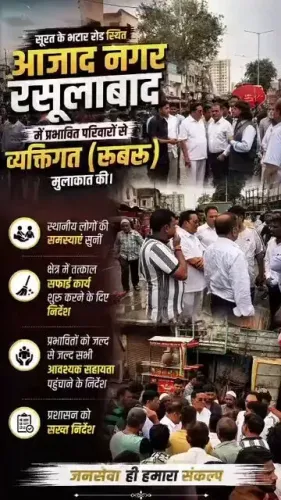
Paatil shared on X that he 'aajey Suratna Rishivihar, Kangaroo Circle ane Parvat Patia sahit varsadthi asargrast vistaarono mulakat lai paristhitinu nirikshan karyu' — translated: 'Today visited rain-affected areas of Surat including Rishivihar, Kangaroo Circle and Parvat Patia and inspected the situation.' He held a review meeting with local corporators to assess the pace of relief and rehabilitation work on the ground.
The minister also issued directions to concerned officials to accelerate necessary operations in the affected areas and to restore normal civic life at the earliest. The post was accompanied by three videos documenting conditions in the visited localities.
Context
Surat, a major commercial hub in Gujarat known for its textile and diamond industries, has historically been vulnerable to monsoon flooding. Heavy rainfall during the 2026 monsoon season has disrupted normal life in several parts of the city, prompting intervention from both municipal bodies and senior political leadership.
Paatil, who previously served as BJP Gujarat state president, retains close ties with the state's administrative machinery. His personal visit signals the central government's active engagement in monitoring the monsoon situation at the city level.
Policy Backdrop
The Ministry of Jal Shakti, formed in May 2019 by merging the Ministry of Water Resources, River Development and Ganga Rejuvenation with the Ministry of Drinking Water and Sanitation, has a mandate that spans urban water management and flood mitigation alongside drinking water supply. Central ministers visiting state-level disaster sites reflects a broader pattern of coordination between New Delhi and BJP-governed states during extreme weather events.
Urban flooding has increasingly drawn the attention of the Jal Shakti Ministry as changing monsoon patterns put pressure on city drainage infrastructure. Surat's municipal administration and the state government of Gujarat are the primary agencies responsible for on-ground relief, with central coordination playing a supporting role.
Stakeholders and Impact
Flood-affected residents of Rishivihar, Kangaroo Circle, and Parvat Patia are among the most immediate stakeholders, with disruptions to daily life, mobility, and local commerce reported across these neighbourhoods. Local corporators and municipal officials are at the front line of delivering relief and coordinating restoration of civic services.
The diamond and textile trade clusters in Surat are also sensitive to prolonged disruption, given the city's economic significance to Gujarat and to India's export economy.
What's Next
Following the minister's directives, local officials are expected to expedite drainage clearance, infrastructure repair, and relief distribution in the identified areas. Further announcements on central government support — including possible funding for flood mitigation projects in Gujarat — may follow as the monsoon season progresses.
The pace of restoration in Surat's affected localities will be closely watched as a measure of the effectiveness of central-state coordination in urban disaster response.
Point of View
Such visits reinforce the Jal Shakti Ministry's expanding role beyond rural drinking water into urban flood management. The directive to local officials to 'accelerate' work also serves a political function, publicly holding municipal machinery accountable. As extreme monsoon events grow more frequent, the optics and logistics of central-state coordination in urban disaster response will only become more consequential.
NationPress
23 Oct 2026
Frequently Asked Questions
Why did CR Paatil visit Surat?
C. R. Paatil , Union Jal Shakti Minister, visited Surat on July 25, 2026 , to inspect rain-affected areas including Rishivihar, Kangaroo Circle and Parvat Patia, and to review relief and restoration operations with local officials.
Which areas of Surat were flooded in 2026?
Areas including Rishivihar , Kangaroo Circle , and Parvat Patia were among the localities in Surat affected by heavy monsoon rainfall in July 2026, as highlighted during Paatil's visit.
What is the Jal Shakti Ministry's role in flood relief?
The Ministry of Jal Shakti , formed in May 2019 , oversees water resources and urban water management. While primary flood relief responsibility lies with state and municipal bodies, central ministers coordinate and monitor response, particularly in major events.
What instructions did CR Paatil give after the Surat flood visit?
Paatil directed concerned officials to accelerate restoration work in flood-hit areas and to ensure that normal civic life is restored at the earliest, following his review meeting with local corporators.
Is Surat prone to monsoon flooding?
Yes, Surat in Gujarat has historically been vulnerable to monsoon flooding due to its geography and the pressure heavy rainfall puts on the city's drainage infrastructure.