Pakistan auctions Afghan traders' goods at Karachi Port amid border closure
Synopsis
With the Pakistan-Afghanistan border sealed since October 2025, Islamabad has reportedly begun auctioning hundreds of Afghan traders' stranded containers at Karachi Port — citing unpaid fees and storage charges. Afghan commerce bodies call it a breach of international trade law, and with alternate routes through Iran also compromised, landlocked Afghanistan is running out of options.
Key Takeaways
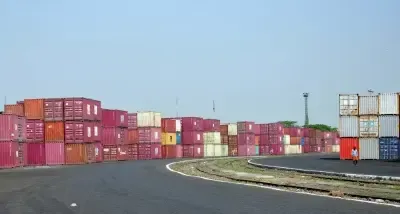
Pakistan has reportedly initiated the auction of hundreds of Afghan traders' containers at Karachi Port , citing unpaid taxes and storage fees.
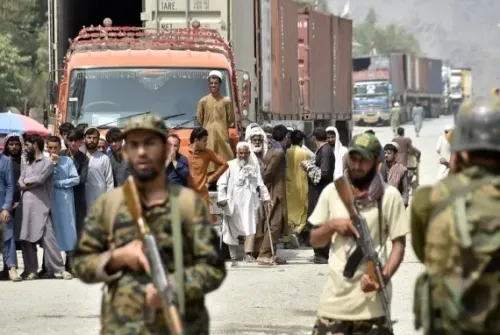
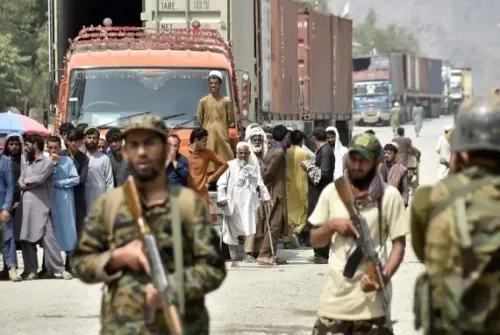
The Torkham and Spin Boldak border crossings have been shut since October 2025 following armed skirmishes between Pakistan and the Taliban regime.
The Afghanistan Chamber of Commerce has described Pakistan's action as contrary to regional and international trade law.
Around 15,000 containers were initially at risk; more than 60 per cent have since been returned or rerouted, according to the Afghanistan-Pakistan Joint Chamber of Commerce .
Alternate routes via Iran's Chabahar and Bandar Abbas ports have also been disrupted by the West Asia crisis , leaving Afghan traders with few options.
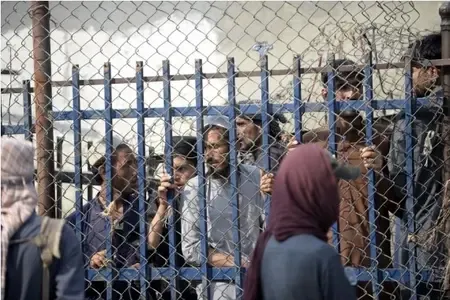
The closure has triggered spiralling prices for perishables, restricted medical travel, and damaged livelihoods on both sides of the border.
Pakistan has reportedly put hundreds of containers carrying Afghan traders' goods up for auction at Karachi Port, exploiting a year-long border shutdown triggered by armed skirmishes with the Taliban regime. The move, confirmed by trade officials and media reports, has drawn sharp criticism from Afghan commerce bodies who say it violates regional and international trade norms.
What Is Happening at Karachi Port
Pakistani customs authorities cited mounting unpaid taxes, storage charges, and prolonged administrative delays as justification for initiating the auction of stranded consignments. According to reports quoting Pajhwok Afghan News, the auction began a few days ago, shortly after the closure of key trade and transit routes between the two countries. Officials from the Afghanistan Chamber of Commerce have formally described Pakistan's action as contrary to both regional and international trade law.
Earlier this year, Pakistani authorities had allowed Afghan traders to either reclaim stranded goods or redirect shipments to other destinations. At that stage, the Afghanistan Chamber of Commerce and Industries warned that around 15,000 containers and consignments belonging to Afghan traders were at risk of being auctioned. According to the Afghanistan-Pakistan Joint Chamber of Commerce, more than 60 per cent of those goods have since been returned to their countries of origin or rerouted to Iran's Chabahar and Bandar Abbas ports. The remaining consignments, however, remain trapped in a cycle of unpaid fees and bureaucratic hurdles that traders say they cannot resolve.
The Border Closure and Its Origins
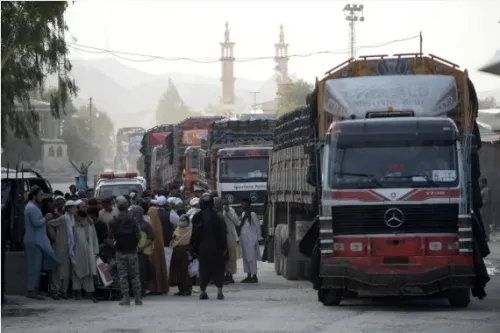
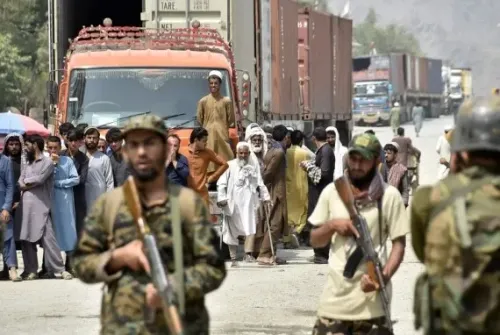
The Torkham and Spin Boldak crossings — two of the most critical land routes between the two countries — have remained closed since October 2025 following intermittent armed skirmishes, causing significant economic losses on both sides. Pakistan reportedly informed traders that these crossings would remain shut indefinitely, and separately ordered Karachi Port to suspend loading of goods belonging to Afghan traders 'until further notice.'
The border tensions have deep historical roots, with Kabul long contesting the Durand Line as a colonial imposition that arbitrarily divided Pashtun communities. Relations deteriorated sharply after the Taliban regained control of Afghanistan in 2021, with Islamabad repeatedly accusing Kabul of harbouring militant groups — particularly the Tehreek-e-Taliban Pakistan (TTP) and ISIS-K — responsible for cross-border attacks. Afghanistan has consistently denied sheltering such elements and argues that Pakistan is holding it accountable for what it calls Pakistan's own internal security failures.
Economic Fallout on Both Sides
The prolonged closure has inflicted severe collateral damage. Trade in perishable goods such as fruits and vegetables was among the first casualties, with prices spiralling on both sides of the border. Restricted medical travel has compounded humanitarian concerns. Livelihoods dependent on cross-border commerce have been severely disrupted.
Taliban authorities in Kabul have urged Afghan businesses to seek alternative trade routes. However, the Iranian border — which grants Afghanistan access to Chabahar Port — has itself been affected by the broader West Asia crisis, narrowing the options available to Afghan traders further.
Pakistan's Position and the Bigger Picture
Reports quoting Pakistan's Foreign Ministry noted that Pakistan remains Afghanistan's largest transit trade and connectivity partner, with border crossings such as Torkham and Chaman playing a central role in commerce. Islamabad's diplomatic and commercial authorities have emphasised that transit arrangements through Pakistani ports are critical for Afghanistan's access to international markets and trade links with Central Asia.
Critics argue, however, that the auction of stranded goods amounts to profiting from a crisis Pakistan itself has helped create. This is not the first time the trade corridor has been weaponised in the context of bilateral tensions — but the scale of the current disruption, and the formal auctioning of goods, marks a significant escalation in the use of economic leverage. How the Taliban government responds — and whether third-country mediation is sought — will likely determine the next phase of this bilateral standoff.
Point of View
Yet simultaneously closes the very crossings that make that claim credible — then profits from the resulting backlog. The contradiction is hard to miss. What is also under-reported is the cumulative humanitarian cost: landlocked Afghanistan now faces a pincer, with the Pakistani route blocked and the Iranian corridor strained by the West Asia crisis. The Taliban government's call to diversify trade routes sounds strategic, but the infrastructure alternatives do not yet exist at scale. The real question is whether any regional or international body will push for a trade normalisation framework — or whether Afghan traders will continue to bear the cost of a geopolitical dispute they have no vote in.
NationPress
26 Oct 2026
Frequently Asked Questions
Why is Pakistan auctioning Afghan traders' goods at Karachi Port?
Pakistan's customs authorities have cited unpaid taxes, mounting storage charges, and prolonged trade disruptions as the basis for auctioning hundreds of containers belonging to Afghan traders at Karachi Port. The auctions reportedly began a few days ago following the continued closure of the Torkham and Spin Boldak border crossings since October 2025.
When did the Pakistan-Afghanistan border close and why?
The major border crossings between Pakistan and Afghanistan, including Torkham and Spin Boldak, have been closed since October 2025 following intermittent armed skirmishes between Pakistani forces and Taliban-aligned groups. Pakistan has accused Afghanistan of harbouring militant outfits such as the TTP and ISIS-K, which Kabul denies.
How many Afghan containers are affected by the Karachi Port dispute?
The Afghanistan Chamber of Commerce and Industries warned earlier this year that around 15,000 containers and consignments belonging to Afghan traders were at risk of being auctioned. According to the Afghanistan-Pakistan Joint Chamber of Commerce, more than 60 per cent of those have since been returned or rerouted, but the remainder remain stuck in unpaid-fee disputes.
What alternative trade routes does Afghanistan have?
The Taliban government in Kabul has urged Afghan businesses to explore alternatives, including routes through Iran's Chabahar and Bandar Abbas ports. However, those corridors have also been disrupted by the broader West Asia crisis, significantly limiting Afghanistan's options for accessing international markets.
What has the Afghanistan Chamber of Commerce said about Pakistan's actions?
Officials from the Afghanistan Chamber of Commerce have described Pakistan's decision to auction stranded goods as contrary to both regional and international trade laws. They argue the move amounts to profiting from a crisis that the border closure — which Pakistan imposed — directly created.