Afghanistan trade shift: Pakistan's KP border economy hit as containers crash 89%
Synopsis
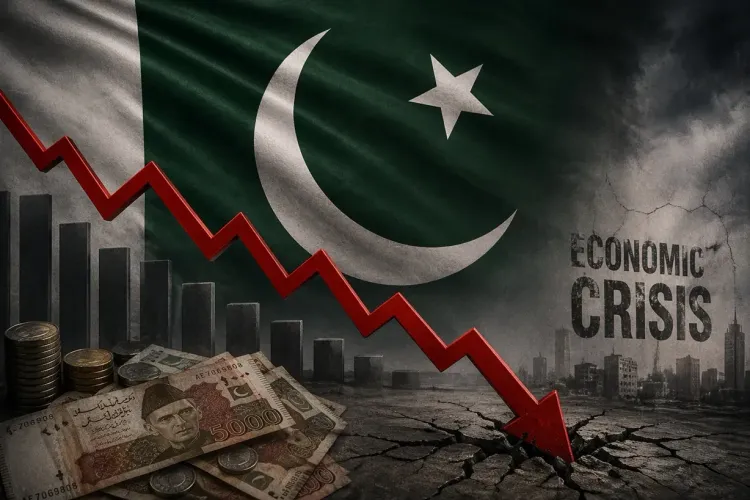
Afghanistan's transit trade through Pakistan has fallen by 89% in just three years — from over a lakh containers in FY23 to barely 11,592 in FY26. With Iran now supplying nearly half of Afghan imports and Central Asian routes gaining ground, Pakistan's KP border economy faces a structural, not cyclical, blow.
Key Takeaways
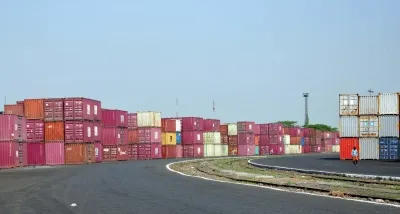
Afghan transit container traffic through Pakistan fell from 1,02,886 units ($6.7 billion) in FY23 to 11,592 units ($367 million) in FY26 — an 89% drop.
Afghan exports transiting through Pakistan to third countries collapsed from $454 million in FY25 to just $7 million in FY26 .
Iran accounted for 31.3% of Afghan imports in FY25; combined direct and Iran-transit imports reached 48.6% of Afghanistan's total, per the World Bank's Afghanistan Economic Monitor .
Pakistan's border restrictions introduced in October 2025 accelerated, but did not cause, the decline.
Industries in Khyber Pakhtunkhwa (KP) — already under pressure from high energy and transport costs — face weakening demand and disrupted supplies of industrial inputs including Afghan coal .
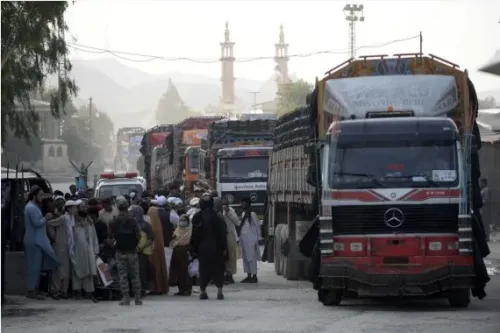
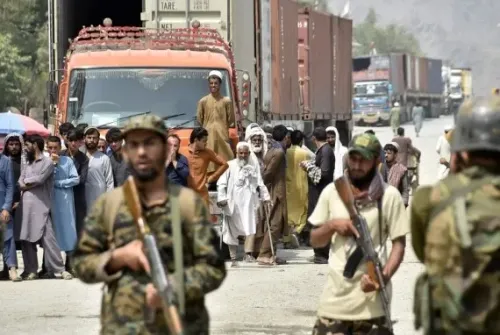
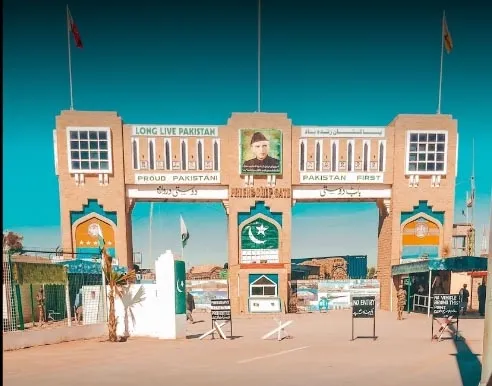
Afghanistan's trade ties with Pakistan are undergoing a sweeping realignment, with customs data revealing a dramatic collapse in transit container volumes — from a record 1,02,886 containers worth $6.7 billion in FY23 to just 11,592 containers valued at $367 million in FY26, an 89% decline in three years. The shift is hitting businesses in Khyber Pakhtunkhwa (KP), particularly in Peshawar, as Afghanistan increasingly routes trade through Iran and Central Asia, according to a report published in Dawn.
The Scale of the Decline
The contraction in Afghan transit trade through Pakistan has been steep and sustained. Container traffic fell from 1,02,886 units in FY23 to 54,114 in FY24, then further to 42,959 in FY25, before collapsing to 11,592 in FY26. The figures, drawn from customs data cited in the report, indicate that Pakistan's border restrictions introduced in October 2025 did not initiate the downturn — they accelerated a trend already well under way.
Afghan exports transiting through Pakistan to third countries also cratered, plunging from $454 million in FY25 to just $7 million in FY26, according to the same customs data.
Iran and Central Asia Fill the Gap
The World Bank's Afghanistan Economic Monitor notes that Iran has emerged as the backbone of Afghanistan's import supply chain. In FY25, Iran accounted for 31.3% of Afghan imports, while direct imports from Iran and goods transiting through Iran together represented 48.6% of Afghanistan's total imports. Central Asian corridors are also gaining traction as alternative routes, further reducing Kabul's dependence on the Pakistan gateway.
This comes five years after the Taliban returned to power in Kabul, a period during which Islamabad and Kabul have maintained a tense and frequently disrupted bilateral relationship.
KP Industries Under Pressure
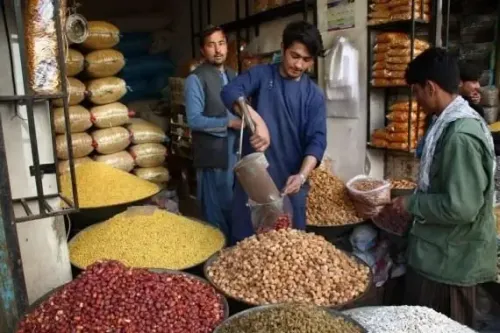
For decades, Afghan demand provided a steady market for manufacturers, wholesalers, transporters, clearing agents, and warehouse operators across Pakistan — particularly in KP. Products such as cement, food items, pharmaceuticals, textiles, and consumer goods have traditionally found buyers across the border.
'When that flow contracts, the damage travels far beyond the customs post,' the Dawn report noted. Industries in KP are already grappling with high energy, financing, and transport costs; the weakening of a key export market compounds those pressures significantly.
Industrial Inputs at Risk
The disruption is not limited to exports. Reduced imports of industrial inputs — including Afghan coal, which feeds several KP industries — risk pushing up production costs at a time when businesses can least afford it. Reduced orders are threatening supply chains across multiple sectors, with cascading effects on employment and logistics.
What Comes Next
Analysts warn that if the current trajectory continues, Pakistan risks losing not only transit revenues but the entire commercial ecosystem that Afghan trade once supported. Whether Islamabad can negotiate a course correction with Kabul — or develop alternative trade arrangements — will determine how much of that ecosystem can be salvaged.
Point of View
But the data suggest Afghanistan had already built the off-ramps. KP's industrial base — cement, textiles, pharmaceuticals — was quietly dependent on Afghan demand, and that dependency was never adequately stress-tested. The harder question is whether this is reversible at all, or whether Pakistan is watching a permanent rerouting of a trade corridor it once took for granted.
NationPress
9 Oct 2026
Frequently Asked Questions
How much has Afghanistan's transit trade through Pakistan declined?
Afghan transit container traffic through Pakistan fell from a record 1,02,886 containers worth $6.7 billion in FY23 to just 11,592 containers valued at $367 million in FY26 — a decline of roughly 89% in three years, according to customs data.
Why is Afghanistan shifting its trade routes away from Pakistan?
Afghanistan has been redirecting trade towards Iran and Central Asia, with Iran alone accounting for 31.3% of Afghan imports in FY25 and nearly 48.6% when transit-through-Iran goods are included, per the World Bank's Afghanistan Economic Monitor. Strained Pakistan-Afghanistan relations and repeated border disruptions have accelerated this shift.
Did Pakistan's October 2025 border restrictions cause the trade collapse?
No. Customs data indicate the decline was already under way well before Pakistan introduced border restrictions in October 2025. Those measures accelerated an existing trend rather than triggering it.
Which industries in Pakistan are most affected?
Industries in Khyber Pakhtunkhwa (KP), particularly around Peshawar, are most exposed. Sectors including cement, food processing, pharmaceuticals, textiles, and consumer goods traditionally relied on Afghan demand. Reduced Afghan coal imports are also raising production costs for KP manufacturers.
What does the World Bank say about Afghanistan's new trade patterns?
The World Bank's Afghanistan Economic Monitor notes that Iran has become the backbone of Afghanistan's import supply chain, with Central Asian corridors also gaining importance. The monitor's data show Iran-linked imports — direct and in-transit — accounted for 48.6% of Afghanistan's total imports in FY25.