Indian traders in Kandahar seek alternate routes for Afghan dried fruit amid border closures
Synopsis
With the Afghanistan-Pakistan border effectively shut since October 2025, Indian traders are now physically travelling to Kandahar and routing dried-fruit shipments to New Delhi through third Asian countries — a workaround that keeps trade alive but at far higher cost. Afghanistan's exports via Pakistan to India have collapsed from $454 million to just $7 million in a single year.
Key Takeaways
Indian traders, including one identified as Anand , have travelled to Kandahar to buy dried fruit and are exporting it to New Delhi via alternative Asian routes.
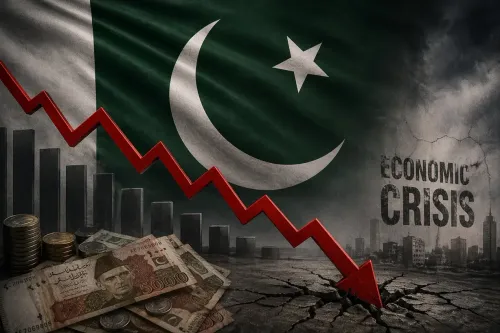
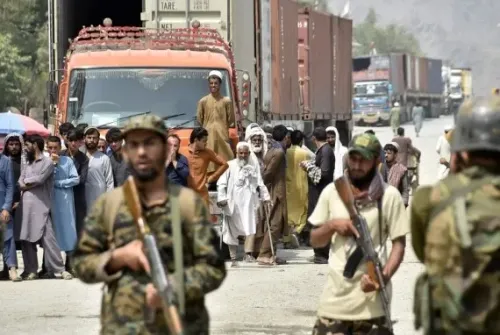
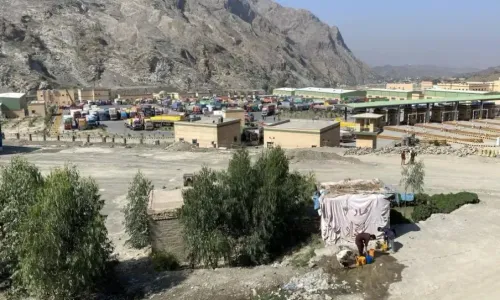
The Afghanistan-Pakistan border was closed in October 2025 following a military skirmish, devastating transit trade.
Container traffic through Pakistan fell to just 11,592 containers worth $367 million in 2025–26 , down from a peak of 102,886 containers worth $6.7 billion in 2022–23 .
Afghanistan's exports via Pakistan to India collapsed from $454 million in 2024–25 to $7 million in 2025–26.
Despite the disruption, India-Afghanistan bilateral trade reached $907.85 million in 2025–26 , sustained by Chabahar Port , Central Asian rail corridors, and air freight.
Rising air freight costs and the West Asia conflict are adding further pressure on alternative trade routes.
A group of Indian traders has travelled to Kandahar to purchase Afghan dried fruit and is now exploring alternative export routes to New Delhi, as land border closures and surging air freight costs continue to squeeze Afghanistan-India trade, according to reports from Kabul. The development underscores the mounting pressure on Afghan exporters who are struggling to reach global markets through viable, affordable corridors.
Traders on the Ground in Kandahar
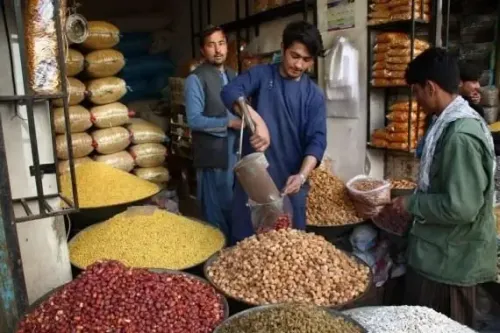
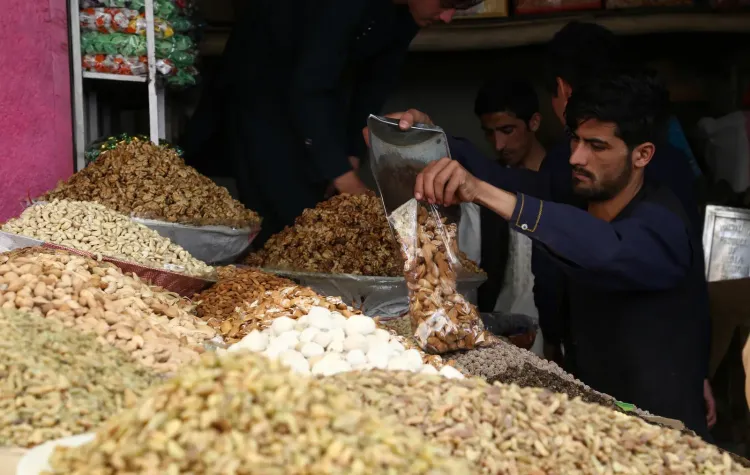
One of the visiting traders, identified as Anand, described the situation to an Afghan news outlet: 'We have been here for three or four days buying dried fruit, and then we send it to New Delhi through other Asian countries. This is our trade with Afghanistan.' The traders' presence in Kandahar highlights the lengths to which buyers are going to keep commerce alive despite the disruption of traditional routes.
Kandahar's growers noted that the province's well-known golden raisins — locally called Abjosh raisins, made from a grape variety known as Aita — were previously exported directly to India via overland routes that now remain closed. Farmers dip the grapes in a special solution before spreading them on prepared grounds for seven days to produce the distinctive golden variety. Much of Kandahar's fresh and dried fruit also reaches neighbouring, Arab, and European countries, but the recent spike in air freight costs has raised fresh concerns among traders.
The Collapse of the Pakistan Transit Route
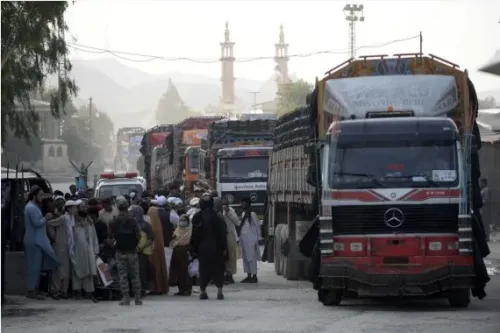
The closure of the Afghanistan-Pakistan border in October 2025, following a fierce skirmish, has proven catastrophic for bilateral trade flows. According to customs figures, container traffic through Pakistan plummeted to just 11,592 containers worth $367 million in 2025–26, down sharply from a peak of 102,886 containers valued at $6.7 billion in 2022–23.
The decline accelerated further in the most recent period: Afghanistan's exports via Pakistan to India and other countries collapsed from $454 million in 2024–25 to just $7 million in 2025–26, according to reports citing official data. Notably, even before the border closure turned lethal, Islamabad had periodically blocked goods of Indian origin destined for Afghanistan — making the Pakistan corridor an unreliable artery long before the current crisis.
Alternative Routes: Costlier but Increasingly Critical
Afghan traders have reportedly begun relying on a combination of Iran's Chabahar Port, expanded rail corridors through Uzbekistan and Turkmenistan, and direct air freight links to India. These alternatives provide resilience but come at significantly higher costs and carry their own geopolitical risks, particularly given the ongoing conflict in West Asia, which has further driven up air freight rates.
Despite these headwinds, India remains one of Afghanistan's largest trading partners. Bilateral trade reached $907.85 million in 2025–26, even as the Pakistan route effectively shut down. India primarily imports dry fruits, saffron, and spices from Afghanistan, while exporting pharmaceuticals, machinery, and food products in return.
A Decade of Trade in Context
The trajectory of Afghanistan-Pakistan transit trade offers a stark picture of how sharply conditions have deteriorated. Container traffic via Pakistan had grown from roughly 60,500 containers in 2016–17 to nearly 89,000 in 2020–21, just before the Taliban returned to power. After an initial post-Taliban recovery — reaching the 2022–23 peak — volumes fell to 42,959 containers worth $1.36 billion in 2024–25, before the October 2025 closure delivered the final blow.
The situation reflects a broader fragmentation of Afghanistan's trade connectivity, with no single alternative route yet capable of replacing the scale and cost-efficiency of the overland Pakistan corridor. As Indian traders adapt by routing shipments through third Asian countries, the long-term viability of Afghanistan-India commerce will depend on how quickly and affordably alternative infrastructure can be scaled up.
Point of View
In practice, a multi-country supply chain crisis — one that India, Iran, and Central Asian states are scrambling to absorb. The $907.85 million bilateral trade figure sounds resilient, but it masks a structural vulnerability: alternative routes via Chabahar and Central Asian rail are costlier, slower, and geopolitically exposed. Until those corridors achieve scale and reliability, Afghan exporters and Indian importers alike are paying a hidden tax on every kilogram of saffron and every crate of raisins that moves between the two countries.
NationPress
24 Oct 2026
Frequently Asked Questions
Why are Indian traders travelling to Kandahar to buy dried fruit?
Indian traders are visiting Kandahar directly because traditional overland trade routes through Pakistan have been closed since October 2025, forcing buyers to source goods in person and route them to India via alternative Asian countries. The closure has made direct procurement and rerouting through third nations the most practical option for keeping trade alive.
What are Abjosh or golden raisins from Kandahar?
Abjosh raisins are Kandahar's well-known golden raisins, made from a grape variety called Aita. Farmers dip the grapes in a special solution and then spread them on prepared grounds for seven days to produce the golden variety, which was previously exported directly to India before border closures disrupted the route.
How has the Afghanistan-Pakistan border closure affected trade?
The closure of the Afghanistan-Pakistan border in October 2025 caused container traffic via Pakistan to collapse to just 11,592 containers worth $367 million in 2025–26, down from a peak of 102,886 containers valued at $6.7 billion in 2022–23. Afghanistan's exports via Pakistan to India specifically fell from $454 million in 2024–25 to just $7 million in 2025–26.
What alternative trade routes is Afghanistan using to reach India?
Afghan traders have reportedly turned to Iran's Chabahar Port, expanded rail corridors through Uzbekistan and Turkmenistan, and direct air freight links to India as alternatives to the closed Pakistan route. These corridors provide connectivity but at higher costs and with added geopolitical risks, particularly given ongoing tensions in West Asia.
What is the current state of India-Afghanistan bilateral trade?
Despite the Pakistan border closure, India-Afghanistan bilateral trade reached $907.85 million in 2025–26. India primarily imports dry fruits, saffron, and spices from Afghanistan, while exporting pharmaceuticals, machinery, and food products. However, rising air freight costs and the West Asia conflict continue to pressure the remaining trade corridors.