Pakistan's terror denial at UN contradicted by evidence of ongoing militant links
Synopsis
Even as Pakistan's Prime Minister told the United Nations his country had tamed its terror problem, photographs of senior Pakistani officials with UN-designated militant figures, the continued free movement of Hafiz Saeed and Masood Azhar, and a trail linking Pakistan's soil to attacks from Mumbai to Manhattan tell a starkly different story — one that Islamabad's civilian leadership may be structurally incapable of changing.
Key Takeaways
Pakistan PM Shehbaz Sharif told the United Nations that his country once harboured terrorists but had since brought them under control.
Defence Minister Khawaja Asif admitted earlier that Pakistan supported terrorists for 30 years , days after the Pahalgam massacre of 22 April 2025 killed 26 civilians .
Photographs from roughly four months ago showed Senator Rana Sanaullah Khan , a senior government official, interacting with Hafiz Talha Saeed , son of globally designated terrorist Hafiz Saeed .
Hafiz Saeed and Masood Azhar remain at large inside Pakistan; Lakhvi and Syed Salahuddin are reportedly free and active.
In June 2026 , LeT deputy chief Saifullah Kasuri appeared publicly at a funeral in Pakistan, photographed alongside other militant-linked figures.
Defence scholar Owen L.
Sirrs has documented that Pakistan's ISI is effectively controlled by the Army Chief , not the elected Prime Minister.
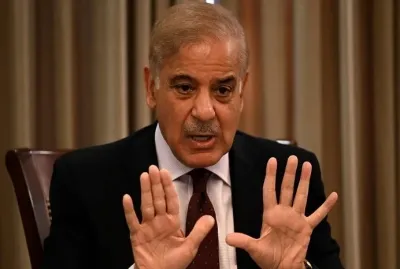
Pakistani Prime Minister Shehbaz Sharif used the floor of the United Nations to declare that his country once harboured terrorists but had since brought them under control — a claim that credible ground reports, historical patterns, and recent photographic evidence flatly contradict. The statement follows an admission earlier this year by Pakistan's Defence Minister Khawaja Asif that successive Pakistani governments had supported terrorist outfits for 30 years — remarks that came days after the Pahalgam massacre in Jammu and Kashmir on 22 April 2025, in which 26 civilians were killed.
A Pattern of Admissions Without Accountability
In the same interview in which he acknowledged three decades of state-backed terror support, Defence Minister Khawaja Asif attempted to distance Pakistan from the Lashkar-e-Taiba (LeT), saying, 'Lashkar is a name from the past. It does not exist' — this even as the Resistance Front, widely regarded as an LeT offshoot, had claimed responsibility for the Pahalgam attack. The dissonance between the admission and the denial, within the same breath, captures the central contradiction at the heart of Pakistan's counter-terror posture.
Barely four months ago, photographs emerged showing Senator Rana Sanaullah Khan — the Prime Minister's Advisor on Political Affairs and Federal Minister for Inter-Provincial Coordination — interacting with Hafiz Talha Saeed, son of LeT founder Hafiz Saeed, who is a globally designated terrorist. The images drew sharp international attention and remain unaddressed by Islamabad.
Designated Terrorists Operating Openly
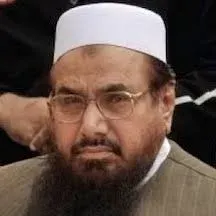
Hafiz Saeed, the architect of the 2008 Mumbai attacks that killed 166 people including foreign nationals, is a United Nations-designated terrorist. Despite this, he has continued to appear at public rallies inside Pakistan and reportedly retains influence over extremist networks. According to recent reports, Pakistan's intelligence agency ISI has placed him under enhanced security — not custody — in a fortified safe house in Lahore, following multiple assassination attempts.
Similarly, Masood Azhar, founder of Jaish-e-Mohammed (JeM) — the group behind the 2001 Indian Parliament attack and the 2019 Pulwama suicide bombing — reportedly remains sheltered within Pakistan despite sustained international pressure for his prosecution.
Notably, LeT operations commander Zaki-ur-Rehman Lakhvi and Hizbul Mujahideen commander Syed Salahuddin are also reported to operate freely, addressing gatherings and continuing to mobilise support.
The Army's Shadow Over Civilian Authority
A structural explanation for the civilian government's limitations lies in the well-documented dominance of the Pakistani Army — headquartered in the garrison city of Rawalpindi — over the elected administration in Islamabad. Army Chief General Syed Asim Munir has visibly led on international affairs and domestic security matters that ordinarily fall within civilian jurisdiction. Prime Minister Sharif's government is widely seen as constrained in its ability to act independently of military preferences.
Defence scholar Owen L. Sirrs, author of Pakistan's Inter-Services Intelligence Directorate: Covert Action and Internal Operations, has written that the ISI is 'owned by the Army Chief (and) not the Prime Minister' — framing the intelligence apparatus as an instrument of military, not civilian, authority.
A Long Trail of Global Terror Links
The record extends well beyond South Asia. The 2005 London bombings were linked to individuals who had received training in Pakistan. The 2010 Times Square bombing attempt was traced to networks operating from Pakistani territory. The 2003 capture of Khalid Sheikh Mohammed — the operational planner of the September 11, 2001 attacks that killed nearly 3,000 people — took place in Rawalpindi, tying the country directly to al-Qaeda's core leadership. Most damning, perhaps, was the discovery of Osama bin Laden in Abbottabad in 2011, living in close proximity to Pakistan's premier military academy.
The 2002 killing of Wall Street Journal reporter Daniel Pearl in Pakistan, while he was investigating links between Pakistani extremists and international terror networks, remains among the starkest illustrations of the operational freedom enjoyed by militant groups on Pakistani soil. His captors were members of Harkat-ul-Mujahideen and militants linked to al-Qaeda.
Terror Leaders at Public Events
As recently as June 2026, leaders associated with designated terror organisations were photographed at the funeral of the brother of former Pakistan cricketer Shoaib Akhtar. Among those identified in images that circulated widely were Saifullah Kasuri, the LeT deputy chief and the alleged mastermind of the April 2025 Pahalgam attack, and Inam-ur-Rehman Kamboh, president of the Pakistan Markazi Muslim League (PMML) — widely described as LeT's political front. Their public presence at a high-profile social event underscores the degree to which designated militant figures remain embedded in Pakistani public life.
Against this backdrop, assurances from Islamabad about turning a corner on terrorism will continue to face credibility deficits — domestically and on the world stage — for as long as UN-designated terror figures remain free on Pakistani soil.
Point of View
And that calculus has not fundamentally changed. The photographs of Senator Rana Sanaullah with Hafiz Talha Saeed are not an anomaly; they are a window into a political ecosystem where designated terror figures move in mainstream social circles. Until the army's relationship with these groups is addressed — not just by Islamabad's elected faces but by Rawalpindi itself — every UN speech will remain precisely what this one appears to be: performance without structural change.
NationPress
23 Sept 2026
Frequently Asked Questions
What did Pakistan PM Shehbaz Sharif say at the United Nations about terrorism?
Prime Minister Shehbaz Sharif declared at the United Nations that Pakistan once harboured terrorists but had since brought them under control, implying this was achieved through targeted encounters. The claim has drawn scepticism given persistent evidence of militant figures operating freely inside Pakistan.
What was the Pahalgam massacre and how does it connect to Pakistan?
The Pahalgam massacre occurred on 22 April 2025 in Jammu and Kashmir, killing 26 civilians. The Resistance Front, widely seen as an offshoot of Pakistan-based Lashkar-e-Taiba, claimed responsibility. Pakistan's own Defence Minister Khawaja Asif admitted shortly after that successive Pakistani governments had supported terrorist groups for 30 years.
Why is Hafiz Saeed still free in Pakistan despite being a UN-designated terrorist?
Hafiz Saeed, the LeT founder and alleged architect of the 2008 Mumbai attacks that killed 166 people, remains at large inside Pakistan. According to reports, Pakistan's ISI has placed him under enhanced security — not detention — in a fortified safe house in Lahore, following assassination attempts against him.
Who is Senator Rana Sanaullah and why were photographs of him controversial?
Senator Rana Sanaullah Khan serves as Prime Minister Sharif's Advisor on Political Affairs and Federal Minister for Inter-Provincial Coordination. Photographs that surfaced roughly four months before this report showed him interacting with Hafiz Talha Saeed — son of globally designated terrorist Hafiz Saeed — raising serious questions about the government's commitment to isolating militant networks.
Does Pakistan's elected government control its counter-terrorism policy?
Analysts and scholars, including defence expert Owen L. Sirrs, argue that Pakistan's ISI — the primary intelligence and covert action agency — operates under the authority of the Army Chief rather than the elected Prime Minister. This structural reality limits the civilian government's ability to act independently on counter-terrorism, particularly where the military views certain groups as strategic assets.