Vaishnaw hails Parliament passing exam anti-cheat Amendment Bill
Synopsis
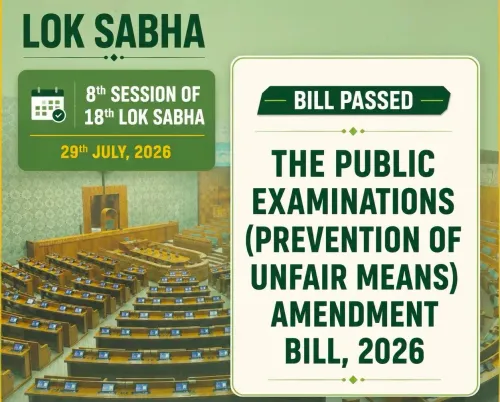
Parliament has passed the Public Examinations (Prevention of Unfair Means) Amendment Bill, 2026, Union Minister Ashwini Vaishnaw announced. The bill amends the 2024 anti-cheating law that introduced up to ten years' imprisonment for exam fraud, following the NEET-UG and UGC-NET paper-leak crises.
Key Takeaways
Parliament passed the Public Examinations (Prevention of Unfair Means) Amendment Bill, 2026 on 30 July 2026 .
The bill amends the original Public Examinations (Prevention of Unfair Means) Act, 2024 , which imposed penalties of up to ten years' imprisonment and fines of up to one crore rupees for organised exam malpractice.
The 2024 law was enacted in response to high-profile paper-leak scandals in NEET-UG and UGC-NET examinations.
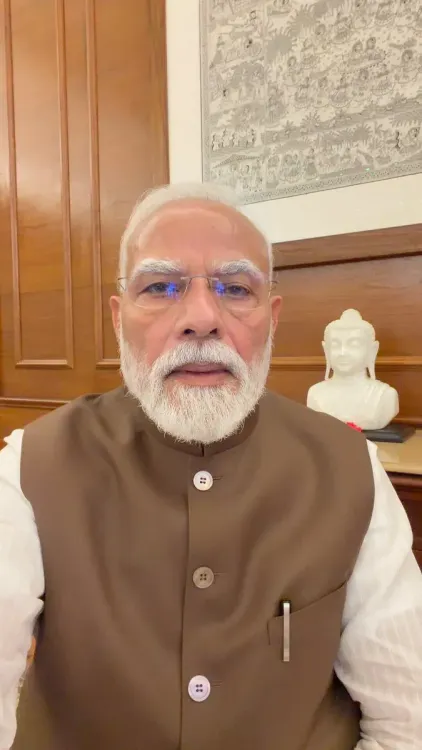
Union Minister Ashwini Vaishnaw called the passage 'a major step towards a fair, transparent and secure examination system.' Specific amended provisions are yet to be notified; enforcement changes will be watched ahead of major 2027 recruitment cycles .
India's war on exam fraud just got a significant new weapon. Union Minister Ashwini Vaishnaw announced on Thursday, 30 July 2026, that Parliament has passed the Public Examinations (Prevention of Unfair Means) Amendment Bill, 2026 — a legislative upgrade to the country's flagship anti-cheating law, aimed at making competitive examinations fairer, more transparent, and harder to corrupt.
Building on the 2024 law that drew a hard line on paper leaks
The amendment builds on the Public Examinations (Prevention of Unfair Means) Act, 2024, which Parliament passed in the wake of a string of high-profile examination scandals — most notably the NEET-UG and UGC-NET paper-leak crises that shook public confidence in national-level recruitment and entrance tests. That original statute already carried serious teeth: penalties of up to ten years' imprisonment and fines of up to one crore rupees for organised malpractice, including impersonation and paper leaks. The 2026 amendment extends that regulatory architecture with updated provisions, though the specific changes are yet to be notified by the nodal ministry.Why millions of aspirants are watching closely
For the crores of students who spend years preparing for Union Public Service Commission exams, Staff Selection Commission tests, medical entrance rounds, and central university admissions, the integrity of the examination system is not an abstraction — it is the difference between a career and a wasted decade. Every leak, every impersonation racket, every organised cheating syndicate that goes unpunished corrodes that trust. The 2024 law signalled that the state was serious; the 2026 amendment signals it intends to stay serious. With major 2027 recruitment cycles on the horizon, the timing of this legislative push is deliberate. Minister Vaishnaw described the passage as 'a major step towards a fair, transparent and secure examination system' — framing it squarely as a governance commitment, not merely a legislative formality. The bill's passage through both Houses of Parliament gives it the weight of broad legislative consensus.Point of View
The ruling dispensation is attempting to convert a political liability — the NEET-UG and UGC-NET crises badly damaged its credibility on merit and governance — into a governance credential ahead of an election-heavy calendar. The bill also reflects a broader pattern of using criminal deterrence, rather than administrative reform alone, as the primary instrument for restoring institutional trust. Whether enforcement mechanisms on the ground keep pace with legislative intent will be the real test.
NationPress
14 Sept 2026
Frequently Asked Questions
What is the Public Examinations (Prevention of Unfair Means) Amendment Bill, 2026?
It is a parliamentary amendment to the Public Examinations (Prevention of Unfair Means) Act, 2024, which criminalised paper leaks, impersonation, and organised cheating in public recruitment and entrance examinations. The 2026 bill updates and extends those provisions.
What were the penalties under the original 2024 exam anti-cheat law?
The Public Examinations (Prevention of Unfair Means) Act, 2024 prescribed penalties of up to ten years' imprisonment and fines of up to one crore rupees for organised unfair means in public examinations.
Why was the exam anti-cheat law introduced in India?
The law was introduced following a series of paper-leak scandals in high-stakes national examinations, most notably NEET-UG and UGC-NET in 2024, which severely damaged public confidence in the integrity of competitive exams.
Which ministry oversees the Public Examinations (Prevention of Unfair Means) Act?
The Ministry of Education is the nodal ministry for examination-related legislation, though Union Minister Ashwini Vaishnaw, who holds the Electronics and Information Technology portfolio, announced the bill's passage given its relevance to digital and secure examination infrastructure.
When will the 2026 amendment come into effect?
The bill has been passed by Parliament as of 30 July 2026. The specific amended provisions and enforcement rules are yet to be formally notified by the nodal ministry.