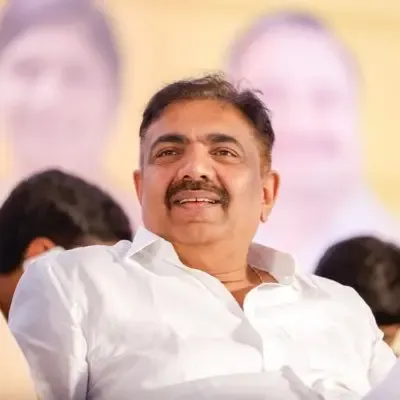
NCP(SP) Leader Jayant Patil Critiques Maharashtra's Trillion Dollar Goals
Synopsis
In a recent budget discussion, Jayant Patil of NCP(SP) sharply criticized the Maharashtra government's ambitious fiscal plan, labeling it a 'document of deception' and warning of a potential liquidity crisis. Patil's analysis raises critical questions about the state's economic future.
Key Takeaways
Jayant Patil criticizes the Maharashtra budget as misleading.
The state's goal of a $5 trillion economy by 2047 is deemed unrealistic.
Debt has escalated significantly, stressing financial management.
Budget cuts affect crucial sectors like agriculture and education.
Patil raises alarms over the impact of AI on job security.
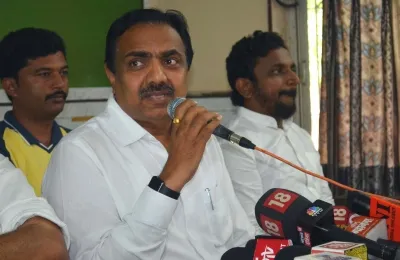
Mumbai, March 10 (NationPress) In a pointed critique during the budget discussion of the Legislative Assembly, senior legislator from NCP (SP) and former Finance Minister Jayant Patil vehemently criticized the fiscal strategy of the state government, calling the 2026-27 budget a “document of deception.”
Patil contended that the government’s ambitious claim of transforming Maharashtra into a $5 trillion economy by 2047 is mathematically unfeasible given the current growth rates. He cautioned that the state is on the brink of a “liquidity crisis.”
He particularly questioned the government’s goal of achieving a $5.5 trillion economy (around Rs 450 lakh crore) by 2047, dismissing it as an unrealistic illusion.
“The numbers simply do not support this claim, as the current state GDP is only $0.55 trillion (Rs 50 lakh crore). To reach the target, the state would require a consistent growth rate of 11.5 percent over the next 21 years. Last year, growth was only 7.3 percent, with a projected 7.9 percent for 2025-26,” stated Patil.
“There exists a significant divide between promises and reality,” Patil remarked, noting that Maharashtra has dropped from first to fourth place in growth among major states, falling behind Karnataka, Gujarat, and Tamil Nadu.
The former Finance Minister expressed deep concern over the state's escalating debt and increasing revenue deficit.
State debt surged from Rs 5.76 lakh crore in 2021-22 to over Rs 11 lakh crore currently. The state is burdened with an annual interest payment of Rs 70,000 crore, translating to Rs 13.31 lakh every minute.
Patil claimed that while the projected revenue deficit was reported as Rs 37,000 crore, actual liabilities exceeded this figure, uncovering a shortfall of Rs 1.90 lakh crore.
“What happened to the additional Rs 1.13 lakh crore? The government failed to allocate funds to various departments, effectively ‘cheating’ the rural administration,” he charged.
Despite assertions of prioritizing farmers, Patil pointed out severe budget reductions.
Funding for schemes like PM Crop Insurance, Namo Shetkari Sanman, and animal husbandry has experienced drastic cuts, he noted.
Patil criticized the Rs 2 lakh loan waiver as stagnant, emphasizing that while state debt has tripled, the relief for farmers remains unchanged since 2019. He urged an extension of the deadline for “honest” loan payers from March 9 to March 31 to ensure equitable benefit distribution.
He accused the government of prioritizing “contractor-driven” infrastructure projects over investments in human capital. Funding for foreign scholarships was reduced from Rs 40 crore to Rs 15 crore, and technical education funding plummeted from Rs 1,600 crore to Rs 300 crore.
Patil asserted that the health budget faced a 12.5 percent cut compared to the revised estimates of the previous year. Additionally, departments focused on Tribals and Social Justice utilized less than 50 percent of their allocated budgets, attributing this to the Finance Department withholding funds.
He condemned the budget for neglecting the potential impact of Artificial Intelligence (AI) on the state's service-heavy economy. Referencing research from Anthropic, he warned that roles like IT engineers, financial analysts, and customer service positions—which are vital to Maharashtra’s GSDP—are at significant risk.
“With entry-level job opportunities diminishing and layoffs occurring without notice, why is there no discussion of a transition plan in the 'Viksit Maharashtra' vision?” he queried.
Patil criticized the ruling coalition's uneven fund distribution, revealing a skewed allocation of funds.
“BJP portfolios received 58.86 percent of the budget, while Shiv Sena (Eknath Shinde) portfolios accounted for 22.14 percent and NCP (Ajit Pawar) portfolios only 19.20 percent.”
Reciting a poignant Urdu couplet, he warned junior coalition partners that by aligning too closely with the “big sea” (BJP), they risk losing their unique identity entirely.
“This budget lacks both 'Artha' (meaning/wealth) and 'Sankalp' (resolve). It is a budget crafted for and by contractors,” Patil concluded.
Point of View
Jayant Patil's critique of the Maharashtra government's financial strategy highlights significant concerns about fiscal management and economic projections that warrant public attention and scrutiny.
NationPress
6 Sept 2026
Frequently Asked Questions
What did Jayant Patil say about the Maharashtra budget?
Jayant Patil criticized the Maharashtra budget as a 'document of deception' and claimed that the government's goal of a $5 trillion economy by 2047 is unrealistic.
How much has Maharashtra's debt increased?
Maharashtra's debt has risen from Rs 5.76 lakh crore in 2021-22 to over Rs 11 lakh crore currently.
What are the cuts mentioned by Patil?
Patil highlighted severe budget cuts in crucial areas such as PM Crop Insurance, Namo Shetkari Sanman, and animal husbandry.
What did Patil say about the impact of AI?
Patil warned that roles essential to Maharashtra's economy, like IT engineers and financial analysts, are at high risk due to the rise of Artificial Intelligence.
What was the budget allocation distribution?
Patil revealed that BJP portfolios received 58.86% of the budget, while Shiv Sena and NCP portfolios received 22.14% and 19.20%, respectively.