India as South Korea's manufacturing hub: Experts outline strategy
Synopsis
South Korean trade experts are making a formal case for India as a global export base — not just a consumer market. With 20 MoUs signed, a new joint industrial committee launched, and CEPA talks revived, the Korea-India economic relationship is shifting from aspiration to architecture.
Key Takeaways
South Korean experts on 11 May called India a key manufacturing and export hub amid global supply chain shifts.
India's 1.4 billion population and GDP exceeding $4 trillion underpin its appeal, though infrastructure and regulatory complexity remain barriers.
Experts proposed a dedicated industrial complex in India to ease entry for Korean firms.
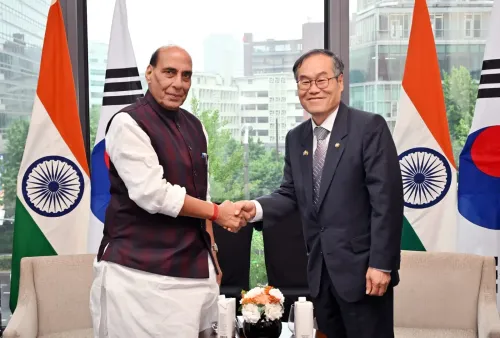
Industry Minister Kim Jung-kwan and Commerce Minister Piyush Goyal agreed to form a joint industrial cooperation committee during last month's state visit.
Trade Minister Yeo Han-koo and Goyal signed a joint statement to advance CEPA negotiations.
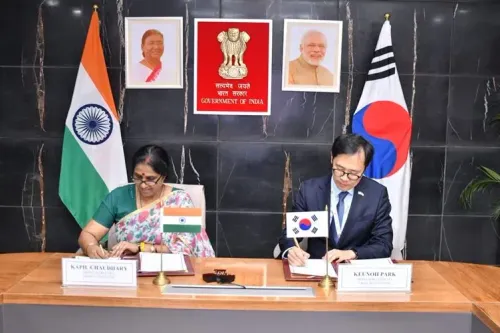
20 MoUs were signed between Korean and Indian companies in steel , shipbuilding , and energy sectors.
India can serve as a key manufacturing and export hub for South Korea amid sweeping shifts in global supply chains, experts at major South Korean economic research institutes and trade agencies said on Monday, 11 May. The assessment came as Seoul moves to deepen its economic ties with the world's most populous nation.
What Experts Said
In a meeting with Industry Minister Kim Jung-kwan, experts called for a detailed strategy to help Korean companies expand their footprint in the Indian market. The gathering was convened by the Ministry of Trade, Industry and Resources to explore ways to expand economic cooperation with India in response to shifting global supply chains and rising trade protectionism among major economies.
The experts highlighted that India — with a population of approximately 1.4 billion and a gross domestic product (GDP) exceeding $4 trillion — is rapidly emerging as a global manufacturing destination. However, they acknowledged that infrastructure gaps and a complex regulatory environment have historically made India a difficult market for Korean firms to penetrate.
Key Proposals on the Table
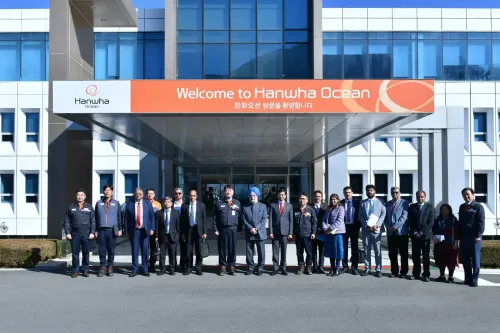
Among the most concrete suggestions was the creation of a dedicated industrial complex for Korean companies in India, which experts said could significantly lower the operational burden for firms already present or looking to enter the market. They also urged a strategic pivot: while Korean companies in India currently focus on importing intermediate goods to manufacture products for the domestic Indian market, experts called for efforts to transform India into a global export base for Korean goods as well.
Diplomatic Momentum Behind the Push
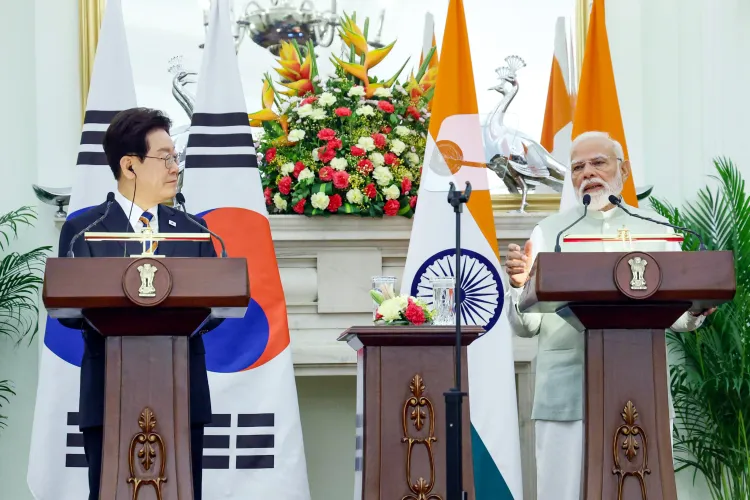
The expert discussions build on recent high-level diplomatic activity. During a visit to India last month, Industry Minister Kim Jung-kwan and his Indian counterpart, Commerce and Industry Minister Piyush Goyal, agreed to establish a joint committee to promote industrial cooperation between the two countries. Separately, Trade Minister Yeo Han-koo signed a joint statement with Goyal to facilitate negotiations aimed at improving the bilateral Comprehensive Economic Partnership Agreement (CEPA).
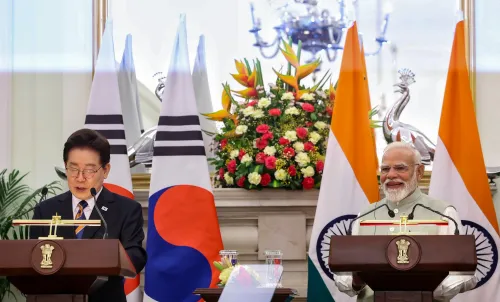
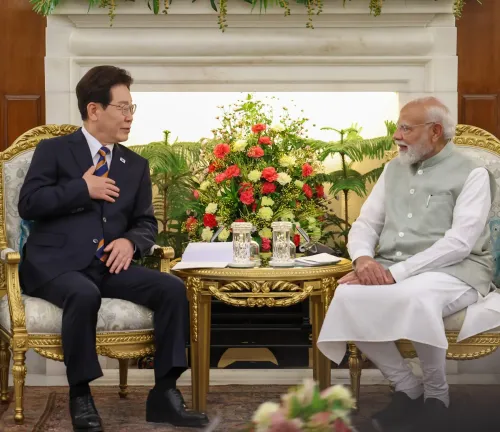
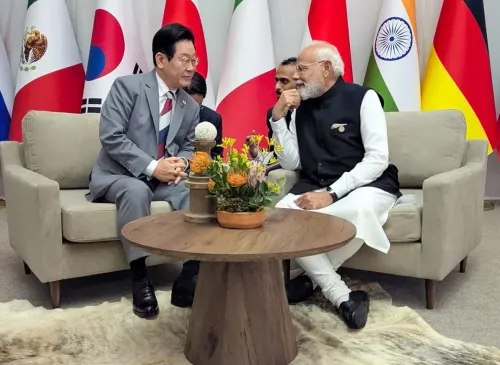
These agreements were reached during President Lee Jae Myung's state visit to India for a leaders' summit, where both sides agreed to cooperate on energy supply chains and expand bilateral trade and investment. The summit also saw 20 memorandums of understanding (MoUs) signed between Korean and Indian companies, spanning sectors including steel, shipbuilding, and energy.
Why This Matters for India and Korea
This comes amid a broader global realignment of supply chains, accelerated by US trade protectionism and the reconfiguration of China-dependent manufacturing networks. India's scale and growing industrial capacity make it an attractive alternative, while South Korea's technology-intensive industries stand to benefit from lower-cost production and export diversification. Notably, the push for a Korean industrial complex in India mirrors similar moves by Japan and Taiwan, which have established dedicated zones to ease market entry for their companies. With diplomatic groundwork now laid and institutional frameworks taking shape, the pace of Korean investment into India could accelerate meaningfully over the next few years.
Point of View
And India is the chosen hedge. But the proposal for a dedicated Korean industrial complex is an implicit admission that India's regulatory and infrastructure environment remains a structural deterrent — one that bilateral goodwill alone cannot fix. The CEPA revision talks have been stalled for years; whether the fresh political momentum from President Lee's state visit translates into a substantive agreement, or another round of joint statements, will be the real test of this partnership's depth.
NationPress
24 Sept 2026
Frequently Asked Questions
Why do South Korean experts want India to be a manufacturing hub?
South Korean experts believe India's large population of 1.4 billion and GDP exceeding $4 trillion make it an ideal manufacturing and export base, especially as global supply chains shift away from over-reliance on China. They see India as a strategic alternative amid rising trade protectionism in major economies.
What is the proposed Korean industrial complex in India?
Experts suggested creating a dedicated industrial zone in India exclusively for Korean companies, aimed at reducing regulatory and operational barriers that have historically made India a difficult market to enter. No specific location has been publicly announced yet.
What agreements were signed during President Lee Jae Myung's India visit?
During President Lee Jae Myung's state visit to India, both countries agreed to set up a joint industrial cooperation committee, advance CEPA negotiations, cooperate on energy supply chains, and signed 20 MoUs between Korean and Indian companies in steel, shipbuilding, and energy sectors.
What is the India-South Korea CEPA?
The Comprehensive Economic Partnership Agreement (CEPA) is a bilateral trade pact between India and South Korea. Trade Minister Yeo Han-koo and Commerce Minister Piyush Goyal signed a joint statement to facilitate negotiations to improve and update the existing agreement.
What challenges do Korean companies face in India?
According to the South Korean Ministry of Trade, Industry and Resources, Korean firms have found India a difficult market due to inadequate infrastructure and a complex regulatory system. Experts called for targeted policy interventions, including a dedicated industrial zone, to address these barriers.