Five Sentenced to Life for the 1994 Patori Massacre: What Took So Long?

Synopsis
After a staggering 31-year legal battle, justice has been served in the Patori massacre case as a court in Darbhanga sentences five individuals to life imprisonment. This shocking case reminds us of the long fight for justice amidst community conflict stemming from a land dispute.
Key Takeaways
The Patori massacre occurred on August 8, 1994, resulting in two fatalities.
Five individuals were sentenced to life imprisonment after a lengthy trial.
The incident stemmed from a land dispute among neighbors.
The legal proceedings took over three decades to reach a conclusion.
Victims' families have finally received justice through the court ruling.
Patna, Jan 31 (NationPress) After a lengthy 31-year wait, a district court in Darbhanga has condemned five individuals to life imprisonment for their involvement in the Patori massacre that occurred on August 8, 1994. This tragic event claimed the lives of two individuals and left eight others injured.
The residents of Darbhanga still remember the incident with a sense of sorrow.
It was not a clash between rival factions but rather a confrontation among neighbors, ignited by a land disagreement that spiraled into unforeseen violence.
According to Public Prosecutor Amarendra Narayan Jha, the incident unfolded around 6–7 PM when a group of 10–12 farmers from Patori village was on their way home after grazing their cattle.
“They paused to hydrate their livestock at Gunsar Pond, close to the village, when a group of armed assailants from Basant village emerged with axes, spears, and firearms and launched an attack,” Jha recounted.
He detailed how the attackers encircled the farmers, attempting to seize their cattle. When the farmers resisted, the assailants resorted to indiscriminate gunfire.
This assault left ten individuals with severe gunshot injuries. Ramkripal Chaudhary and Rampukar Chaudhary, both from Patori, suffered multiple wounds and were rushed to Darbhanga Medical College and Hospital (DMCH).
Unfortunately, Ramkripal succumbed shortly after arriving, while Rampukar passed away a few days later. Eight others received treatment at DMCH, with many still bearing bullet scars, as noted by the prosecutor.
The police filed an FIR on August 9, 1994, against 13 identified suspects and 10–12 unknown individuals.
During the trial, the court determined that Kausar Imam Hashmi, Ambar Imam Hashmi, Qamar Imam Hashmi (now deceased), and Raja Hashmi were directly implicated in the crime.
Public Prosecutor Amarendra Narayan Jha informed the court of one accused, Rangdar Hashmi, who had fled. “A chargesheet was prepared for the remaining 12 suspects. Two additional accused went missing during the trial, and five died while the case was pending. Ultimately, five were found guilty,” he stated.
On January 31, 2026, the judgment was delivered by Third Additional District and Sessions Judge Suman Kumar Diwakar at the Darbhanga Civil Court.
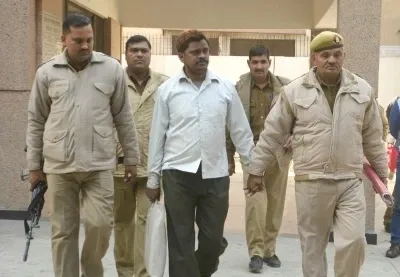
The convicted individuals include Ambar Imam Hashmi (a notable lawyer), Anjar Imam Hashmi, Raja Imam Hashmi, Mobin Hashmi, and Kausar Imam Hashmi (a former public prosecutor).
Each of the five received a sentence of life imprisonment and a fine of Rs 5 lakh. Should they fail to pay the fine, an additional year of imprisonment will be imposed.
After a drawn-out legal battle spanning over three decades, the families of the victims have finally attained justice through this court ruling.
Point of View
It is essential to acknowledge that the Patori massacre case serves as a stark reminder of the community tensions rooted in land disputes. The lengthy pursuit of justice illustrates the systemic challenges within our legal framework, and it is crucial for society to reflect on how such tragedies can be prevented in the future.
NationPress
22 Sept 2026
Frequently Asked Questions
What was the Patori massacre?
The Patori massacre was a violent incident that occurred on August 8, 1994, in which a group of farmers was attacked, resulting in two deaths and multiple injuries.
Why did it take 31 years for justice?
The legal process was prolonged due to various factors, including absconding suspects, lengthy trials, and the complexity of gathering evidence.
What was the verdict?
The court sentenced five accused individuals to life imprisonment and imposed a fine of Rs 5 lakh each.
What was the motive behind the massacre?
The conflict was triggered by a land dispute among neighbors, which escalated into violence.
How has the community responded to the verdict?
The community continues to reflect on the tragic events of the past, and the verdict has brought a sense of closure to the victims' families.