Pilot backs Gen Z dissenters, warns against 'anti-national' label
Synopsis
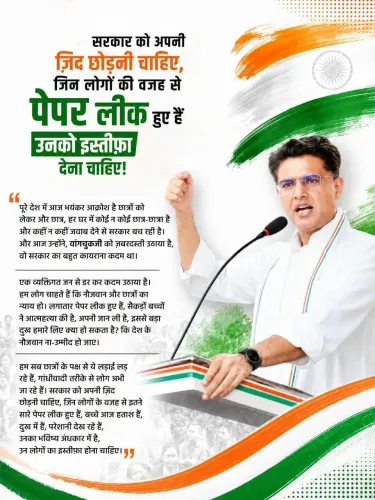
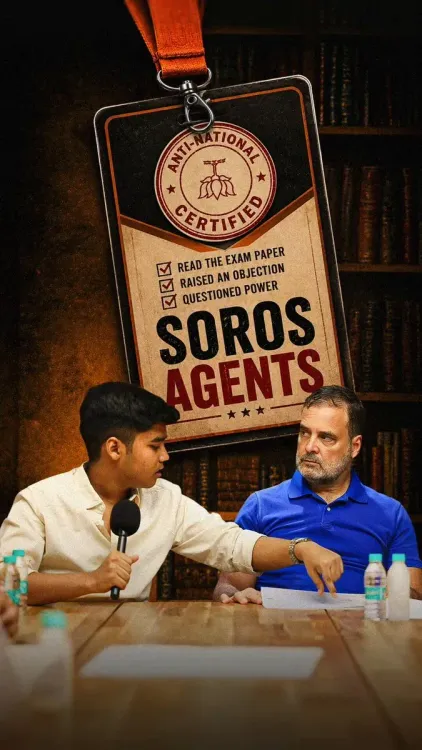
Congress general secretary Sachin Pilot on 1 June 2026 backed young activist Vedant and peers, calling Gen Z India's future and warning that branding them 'anti-national' or 'agents' will not silence their legitimate questions. Rahul Gandhi was tagged in the post.
Key Takeaways
Congress leader Sachin Pilot posted on 1 June 2026 in support of a youth activist named Vedant and his associates.
Pilot warned that labelling young dissenters 'anti-national' or 'agents' will not silence them.
The post was tagged to senior INC leader Rahul Gandhi , signalling a coordinated party message.
The move follows a pattern established during the 2019–2020 CAA protests , when Congress publicly defended students against disloyalty charges.
The identity of Vedant and the specific trigger for the post have not been independently confirmed.
The statement is seen as part of Congress's broader effort to court Gen Z voters ahead of upcoming state assembly elections.
Congress leader Sachin Pilot on Sunday, 1 June 2026, publicly backed a group of young activists led by a person identified only as Vedant, praising their willingness to ask 'difficult but necessary questions' and pushing back against attempts to brand them as 'anti-national' or 'agents.' The post, addressed jointly to the young activists and tagged to senior party leader Rahul Gandhi, signals the party's continued effort to position itself as a defender of youth dissent.
Context
Pilot's post reads: 'Our Gen Z is the pride and future of the country. They know to call a spade, a spade — and they are not afraid to ask difficult but necessary questions. Calling them 'anti-national' or 'agents' will not silence them. Best wishes to Vedant and his friends. Keep up your brave fight and continue to speak truth.' The message does not specify the issue Vedant and his associates raised, but the framing — countering labels of disloyalty — points to a pattern that has recurred across student-led movements in recent years.
The identity of Vedant and the precise trigger for the post have not been independently confirmed. What is clear is that Pilot chose to amplify the group's stand on a national platform, lending the weight of a senior party office-bearer to their cause.
Policy Backdrop
The use of the term 'anti-national' against student protesters and young critics of government policy became a flashpoint during the 2019–2020 CAA agitation, when Congress leaders, including Rahul Gandhi, publicly defended demonstrators who were characterised as disloyal by ruling party figures. That episode established a template the party has returned to repeatedly: frame youth questioning of policy as legitimate democratic participation, and frame the counter-label as an attempt to silence dissent.
Pilot, as INC general secretary and Chhattisgarh in-charge, has built a reputation for youth outreach within the party. His decision to tag Gandhi in the post is consistent with the party's practice of projecting a unified leadership voice on free-speech issues, particularly when the subject involves young citizens.
Stakeholders and Impact
The immediate beneficiaries of the post are Vedant and the unnamed group of young activists, whose cause gains national visibility through Pilot's platform. More broadly, the statement is directed at a Gen Z audience — voters who came of age during a period of heightened political polarisation and who are increasingly active on social media as a space for political expression.
For the Indian National Congress, the post reinforces a brand identity centred on civil liberties and the right to question authority. It also draws an implicit contrast with the ruling dispensation's approach to dissent, without naming any specific individual or party. Student organisations and youth wings across the political spectrum are likely to respond to the framing, either endorsing or contesting the characterisation of the 'anti-national' label.
What's Next
With several state assembly elections on the horizon, Congress is likely to intensify its outreach to first-time and young voters, using social media interventions of this kind to build momentum. Pilot's post may also foreshadow parliamentary or public interventions on free speech protections and the legal or administrative use of sedition-adjacent framing against activists. Whether Vedant's specific case draws further political attention will depend on how widely the story circulates and whether other leaders amplify it.
The broader question — how India's political establishment responds to an assertive, digitally connected Gen Z that is unwilling to accept labels without challenge — is one that will shape electoral politics well beyond any single post.
Point of View
Attach a senior leader's credibility, and force the ruling side to either defend the 'anti-national' label or retreat from it. By tagging Rahul Gandhi, the party ensures the message reads as a leadership-level position rather than a lone voice. The intervention is timed for maximum resonance with digitally active Gen Z voters who distrust top-down nationalism narratives. Whether it translates into electoral capital depends on whether Vedant's story gains enough traction to become a sustained news cycle.
NationPress
20 Sept 2026
Frequently Asked Questions
Why did Sachin Pilot call Gen Z the future of India?
Pilot used the phrase to affirm the value of young people who ask critical questions about government policy, framing their dissent as a democratic virtue rather than a threat.
Who is Vedant that Sachin Pilot mentioned?
Vedant is identified in Pilot's post as a young activist and his specific identity and the cause he is associated with have not been independently confirmed as of the date of the post.
What does 'anti-national' mean in Indian politics?
'Anti-national' is a term used in Indian political discourse to describe individuals or groups accused of acting against the interests of the nation; critics argue it is often applied to silence legitimate dissent, particularly against students and activists.
How has Congress responded to 'anti-national' labels before?
During the 2019–2020 CAA protests, Congress leaders including Rahul Gandhi publicly defended student demonstrators who were labelled anti-national by ruling party figures, establishing a pattern the party has continued since.
What is Sachin Pilot's current role in Congress?
Sachin Pilot is the Indian National Congress general secretary and Chhattisgarh in-charge; he previously served as Deputy Chief Minister of Rajasthan and is known for his focus on youth engagement within the party.