Sachin Pilot meets Territorial Army Officiating DG at TA HQ
Synopsis
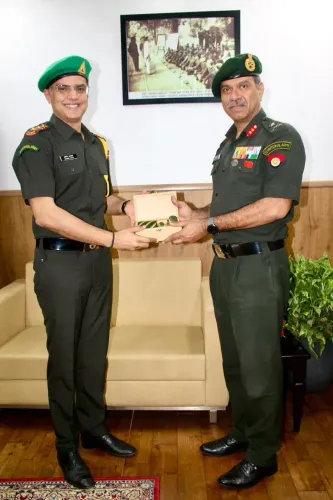
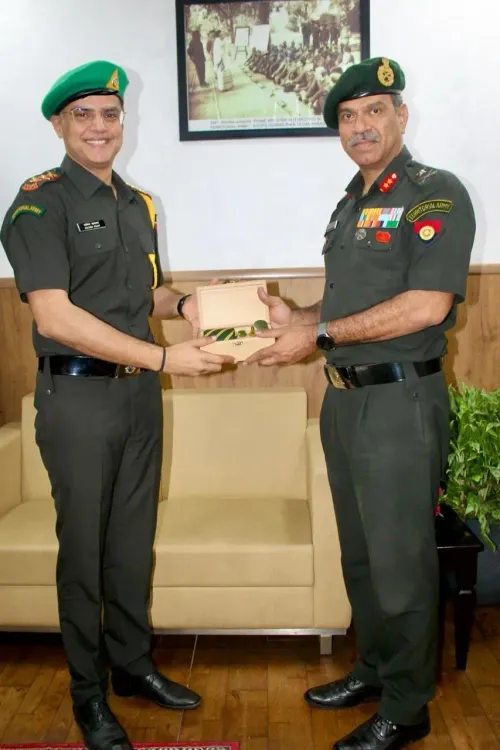
Congress leader Sachin Pilot met Major General Sujeet Patil, Officiating Director General of the Territorial Army, at TA Headquarters in New Delhi on June 9, 2026. They discussed Pilot's unit — the 124 Sikh Battalion — and the reserve force's upcoming events and functioning.
Key Takeaways
Sachin Pilot met Major General Sujeet Patil, AVSM , Officiating Director General of the Territorial Army, at TA HQ, New Delhi on June 9, 2026 .
Discussions centred on Pilot's unit — the 124 Sikh Battalion — as well as the TA's developments, functioning, and upcoming events.
Pilot holds a commission in the Territorial Army, making him one of a small number of active politicians with a formal reserve-force affiliation.
The Territorial Army was established on 9 October 1949 under the Territorial Army Act, 1948 as a citizen-soldier supplement to the regular army.
The TA operates primarily in internal security, border guarding, and disaster-response roles rather than frontline combat.
Congress leader and Territorial Army officer Sachin Pilot met Major General Sujeet Patil, AVSM, Officiating Director General of the Territorial Army, at TA Headquarters, New Delhi, on Tuesday, June 9, 2026. The meeting covered the functioning and upcoming events of the reserve force, with particular focus on Pilot's own unit — the 124 Sikh Battalion.
Context
Sachin Pilot holds a commission in the Territorial Army, a distinction that sets him apart from most elected politicians. His unit, the 124 Sikh Battalion, is one of several infantry battalions under the TA's order of battle. The visit to TA Headquarters reflects his continued engagement with the force beyond ceremonial affiliation.
Pilot described the meeting as 'a good discussion' covering developments, functioning, and upcoming events related to the Territorial Army. Such interactions between commissioned political figures and senior TA leadership are part of routine civil-military engagement within the reserve force structure.
Policy Backdrop
The Territorial Army was raised on 9 October 1949 under the Territorial Army Act, 1948, as a citizen-soldier force designed to supplement the regular army during emergencies and assist civil administration in disaster response. It operates primarily in a supplementary capacity — covering internal security, border guarding, and disaster relief — rather than frontline combat roles.
Indian political figures across party lines have historically held TA commissions to maintain visible civil-military linkages. These commissions require officers to undergo periodic training and remain operationally affiliated with their designated units, making the Headquarters visit a standard part of that obligation.
Stakeholders and Impact
Territorial Army units benefit from sustained attention from commissioned political office-holders, as such engagement can translate into legislative awareness of the force's resource and modernisation needs. For the 124 Sikh Battalion specifically, the commanding officer and unit personnel gain direct visibility with senior TA leadership through such interactions.
For Pilot, the meeting reinforces a public identity that straddles civilian politics and military service — a combination that carries symbolic weight in constituencies with strong armed-forces traditions, including parts of Rajasthan.
What's Next
Upcoming Territorial Army training camps and exercises are expected to be scheduled in the months ahead, with commissioned officers including Pilot likely to participate in line with their service obligations. Any parliamentary debate on expanding the TA's sanctioned strength or accelerating its modernisation could draw on the kind of ground-level discussions held at such headquarters meetings.
The broader question of how India leverages its reserve and territorial forces in an evolving security environment remains a live policy conversation, one in which commissioned legislators are uniquely positioned to contribute both insight and advocacy.
Point of View
Yet it carries political texture: few active politicians maintain such formal military affiliations, and Pilot has consistently used his TA commission to project a service-oriented identity. The meeting with the Officiating Director General signals that this engagement goes beyond ceremonial — it involves substantive discussions on unit activities and force-level developments. In a broader policy arc where India is re-examining the role of reserve and auxiliary forces, having a senior Opposition leader with firsthand TA experience could shape legislative conversations on modernisation and sanctioned-strength expansion. The optics also matter in Rajasthan, a state with deep armed-forces roots and a constituency that responds to visible civil-military commitment.
NationPress
23 Oct 2026
Frequently Asked Questions
Does Sachin Pilot serve in the Indian Army?
Sachin Pilot holds a commission in the Territorial Army, India's part-time volunteer reserve force, and is affiliated with the 124 Sikh Battalion. He is not a regular army officer but fulfils periodic service and training obligations as a commissioned TA officer.
What is the 124 Sikh Battalion?
The 124 Sikh Battalion is a unit of the Territorial Army, the Indian Army's citizen-soldier reserve force. Sachin Pilot serves as an officer in this battalion.
What is the Territorial Army of India?
The Territorial Army is a part-time volunteer reserve force raised under the Territorial Army Act, 1948, and formally established on 9 October 1949. It supplements the regular army during emergencies and assists civil administration in disaster response and internal security.
Who is Major General Sujeet Patil?
Major General Sujeet Patil, AVSM, is the Officiating Director General of the Territorial Army. He met Congress leader Sachin Pilot at TA Headquarters in New Delhi on June 9, 2026.
Why do politicians hold Territorial Army commissions?
Indian political figures across parties have historically held Territorial Army commissions to maintain civil-military linkages. The commissions require periodic training and unit affiliation, and they allow legislators to engage directly with reserve-force leadership on matters of policy and operations.