Pilot condemns Meenakshi Natarajan RS nomination rejection
Synopsis
Congress leader Sachin Pilot has condemned the rejection of Meenakshi Natarajan's Rajya Sabha nomination from Madhya Pradesh as a BJP conspiracy against democratic process. Senior Congress leaders including K.C. Venugopal, Bhupesh Baghel, and Jairam Ramesh staged a dharna at the Election Commission office in New Delhi on June 9, 2026.
Key Takeaways
Sachin Pilot strongly condemned the rejection of Meenakshi Natarajan 's Rajya Sabha nomination from Madhya Pradesh on June 9, 2026 .
Pilot called the rejection a BJP conspiracy to 'murder the democratic process' and an attempt to defame Congress.
He dismissed allegations of errors or concealment in Natarajan's nomination papers as 'baseless.' The Congress party formally lodged its objection with the Election Commission of India .
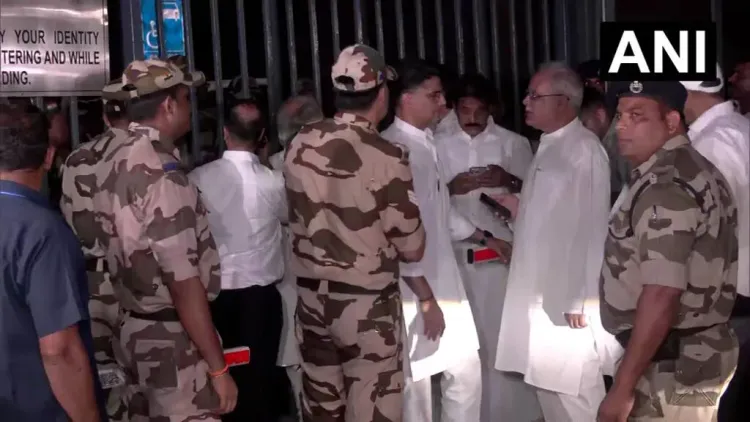
Venugopal , Bhupesh Baghel , and Jairam Ramesh joined Pilot in a dharna outside the Election Commission office in New Delhi .
Congress has signalled it will pursue all available legal remedies , including potential court petitions, to challenge the rejection order.
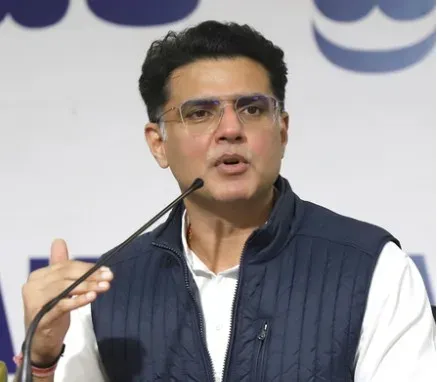
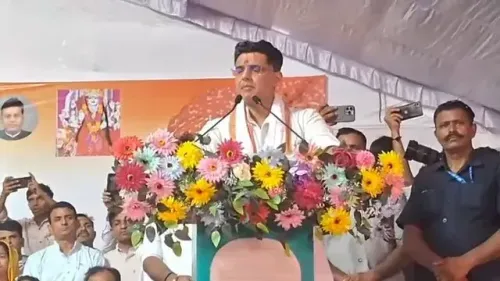
Congress leader Sachin Pilot, the party's general secretary and Chhattisgarh in-charge, on Tuesday, June 9, 2026, strongly condemned the rejection of Meenakshi Natarajan's nomination for the Rajya Sabha seat from Madhya Pradesh, calling it a conspiracy by the BJP to undermine democratic processes. Pilot also announced that senior Congress leaders staged a dharna (sit-in protest) outside the Election Commission of India office in New Delhi the same evening.
What Pilot Said
In his post, Pilot wrote: 'मध्यप्रदेश से राज्यसभा उम्मीदवार मीनाक्षी नटराजन जी के नामांकन को रद्द करने की मैं कड़ी निन्दा करता हूँ' — 'I strongly condemn the cancellation of the nomination of Rajya Sabha candidate Meenakshi Natarajan from Madhya Pradesh.' He flatly rejected allegations of errors or concealment of information in her nomination papers, calling such charges 'baseless.' Pilot further alleged that the BJP had 'hatched a conspiracy to murder the democratic process' and that the rejection was 'an attempt to defame Congress.'
Pilot stated that the Congress party has formally lodged its objection with the Election Commission of India. He added that the party's leadership is clear that 'this conspiracy to weaken the democratic process will be exposed and every possible legal action will be taken against it.'
Context
Meenakshi Natarajan is a Congress leader and former Lok Sabha MP from the Mandsaur constituency in Madhya Pradesh, who has held significant organisational roles within the party. Her nomination for the Rajya Sabha biennial election from Madhya Pradesh was rejected by the returning officer, triggering the Congress protest. Under the Representation of the People Act, returning officers are empowered to scrutinise and reject nomination papers for procedural or substantive defects — a power the Congress alleges was misused in this instance.
The dharna outside the Election Commission office on the evening of June 9 was led by AICC general secretary K.C. Venugopal, former Chhattisgarh Chief Minister Bhupesh Baghel, and Rajya Sabha MP and senior party spokesperson Jairam Ramesh, alongside Pilot.
Policy Backdrop
Disputes over nomination rejections in Rajya Sabha elections are not new to Indian politics. Opposition parties have, on multiple occasions over the past decade, approached the Madhya Pradesh High Court and the Supreme Court of India challenging returning officer decisions. The Election Commission of India, as a constitutional body, holds superintendence over the conduct of such elections, and formal complaints to it are a standard first step before legal escalation.
Indian opposition parties have periodically staged protests outside the Election Commission's headquarters in New Delhi alleging procedural unfairness — a pattern seen during the 2019 and 2024 general election cycles as well. Congress's decision to combine a formal complaint with a public dharna signals it intends to pursue the matter on both institutional and political tracks simultaneously.
Stakeholders and Impact
The rejection directly affects Meenakshi Natarajan's prospects of entering the Rajya Sabha, which would have strengthened Congress's presence in the upper house from Madhya Pradesh — a state where the party is in opposition. For the broader Congress organisation, the episode provides a rallying point around institutional fairness, with K.C. Venugopal, Bhupesh Baghel, and Jairam Ramesh lending national visibility to the protest. The BJP has not yet publicly responded to the specific allegations made by Pilot and other Congress leaders.
What's Next
Congress has indicated it will pursue 'every possible legal avenue,' pointing toward a likely writ petition in the Madhya Pradesh High Court or the Supreme Court of India challenging the nomination rejection order. The party's formal complaint to the Election Commission will be the immediate procedural test of how the constitutional body responds to opposition allegations of partisan application of nomination rules. The outcome will be closely watched as a signal of the institutional space available to opposition parties ahead of future legislative elections.
Point of View
Baghel, Ramesh, and Pilot together, the party signals organisational unity while maximising political optics ahead of what could become a protracted legal battle. The episode fits a broader pattern in which opposition parties use Election Commission protests as both a pressure tactic and a narrative tool to contest the neutrality of electoral administration. How the Commission responds to the formal complaint will be an important indicator of institutional credibility in a politically charged election cycle.
NationPress
23 Oct 2026
Frequently Asked Questions
Why was Meenakshi Natarajan's Rajya Sabha nomination rejected?
The returning officer rejected Meenakshi Natarajan's Rajya Sabha nomination from Madhya Pradesh citing alleged errors or concealment of information in her nomination papers. Congress has denied these allegations as baseless and called the rejection politically motivated.
Who is Meenakshi Natarajan?
Meenakshi Natarajan is a Congress leader and former Lok Sabha MP from the Mandsaur constituency in Madhya Pradesh. She has held organisational roles within the Congress party and was the party's Rajya Sabha candidate from Madhya Pradesh in the June 2026 biennial election.
What action has Congress taken against the nomination rejection?
Congress has formally lodged an objection with the Election Commission of India and senior leaders including Sachin Pilot, K.C. Venugopal, Bhupesh Baghel, and Jairam Ramesh staged a dharna outside the Election Commission office in New Delhi on June 9, 2026. The party has also indicated it will pursue legal remedies including potential court petitions.
Can a Rajya Sabha nomination rejection be challenged in court?
Yes. Under Indian law, decisions by returning officers on Rajya Sabha nomination papers can be challenged through writ petitions in the relevant High Court or the Supreme Court of India. Congress has signalled it intends to pursue all available legal avenues.
What is Sachin Pilot's role in the Congress party?
Sachin Pilot is a general secretary of the All India Congress Committee (AICC) and serves as the party's in-charge for Chhattisgarh. He is also a former Deputy Chief Minister of Rajasthan.