Pilot Targets AAP Govt as Punjab Police Test Positive for Drugs

Synopsis
Congress general secretary Sachin Pilot attacked Punjab CM Bhagwant Mann's AAP government on 31 October 2026 after reports of police personnel testing positive for drugs, calling into question the credibility of the state's much-touted anti-narcotics drive.
Key Takeaways
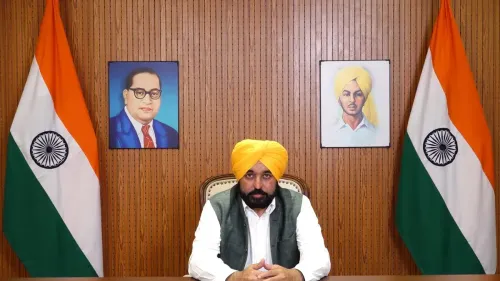
Sachin Pilot publicly attacked CM Bhagwant Mann 's AAP government on 31 October 2026 over Punjab's drug crisis.
Pilot cited reports of Punjab police personnel testing positive for drug use as evidence of systemic failure.
AAP had campaigned in the 2022 Punjab elections on a promise to deliver a time-bound elimination of the drug trade.
Allegations of police complicity in Punjab's drug networks have persisted across multiple governments for over a decade.
Pilot tagged both @INCIndia and @INCPunjab , indicating a coordinated Congress offensive rather than an individual remark.
The AAP government had not issued a public response to the specific incidents at the time of this report.
When the officers meant to fight the drug menace are themselves testing positive for drug use, the credibility of the entire anti-narcotics machinery collapses — and Congress leader Sachin Pilot made sure that point landed hard on Saturday, 31 October 2026.
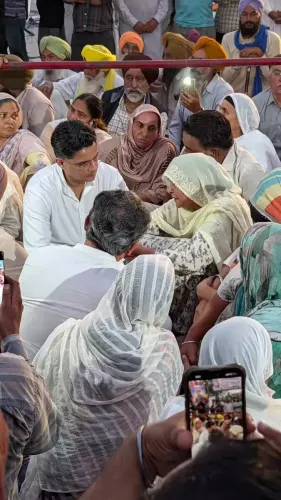
Pilot, Congress general secretary and the party's Punjab in-charge, posted a sharp broadside at Chief Minister Bhagwant Mann's Aam Aadmi Party government, stating: 'While the AAP government may make tall claims, such incidents expose the reality on the ground. Those entrusted with enforcing the law are themselves testing positive for drug use, raising serious questions about the effectiveness of the state's fight against drugs. There is no credibility left in the government or in the very system entrusted with fighting this menace.'
AAP's 2022 Pledge — and What Punjab Police Tests Now Reveal
AAP swept to power in Punjab in 2022 on an election manifesto that promised a time-bound elimination of the drug trade and a robust rehabilitation drive. The party's campaign leaned heavily on the failure of its predecessors — Congress and Akali governments alike — to break the supply networks that had devastated a generation of Punjab's youth. That pledge was, in many ways, AAP's most potent political weapon in the state.
Four years on, Pilot's attack zeroes in on the sharpest possible contradiction: personnel within the very force tasked with enforcing anti-narcotics law are themselves found to be drug users. He did not name specific incidents — the details of the cases he references remain unverified — but the political charge is structural, not anecdotal. If the enforcers are compromised, the entire edifice of enforcement becomes suspect.
A Decade-Long Pattern of Police Complicity Allegations
Punjab's drug crisis has dominated state politics for well over a decade. Successive governments since the 2000s have launched special anti-narcotics cells and crackdowns, yet independent surveys and successive drug seizures have continued to indicate persistent, deep-rooted supply networks. Allegations of police complicity — from low-level personnel to senior officers — have surfaced repeatedly across multiple administrations and have never been fully resolved.
Opposition parties have routinely wielded this issue precisely because it carries the weight of ground-level experience for millions of Punjab families. Congress, now in opposition in the state, is using the same template — but with a specific new arrow: drug tests on serving police officers. The moment a uniformed law-enforcer tests positive, the 'we are cleaning up' narrative fractures.
What the Mann Government Must Answer Next
The AAP government in Chandigarh has not, at the time of this report, issued a public response to the specific incidents Pilot cited. The pressure, however, is concrete: release the latest narcotics seizure data, clarify the scope and findings of any drug-testing programme for police personnel, and detail what disciplinary action — if any — has followed positive tests. Silence on each of those questions will be read, politically, as confirmation of the charge.
Pilot tagged both @INCIndia and @INCPunjab in the post, signalling this is a coordinated party offensive, not a solo remark — and that Congress intends to keep the pressure sustained rather than episodic.
Punjab's anti-drug battle has buried political careers before. For the AAP government, the real test now is not another announcement — it is accountability.
Point of View
Akali, or AAP — has ever fully resolved. For Congress, keeping this issue alive in a state it lost badly in 2022 is essential groundwork for the next electoral cycle.
NationPress
31 Oct 2026
Frequently Asked Questions
Why is Sachin Pilot attacking the AAP government over drugs in Punjab?
Pilot cited incidents of Punjab police personnel testing positive for drugs, arguing this exposes the hollowness of AAP's claims of running an effective anti-narcotics drive in the state.
What did AAP promise on drugs in the 2022 Punjab election?
AAP's 2022 Punjab election manifesto promised a time-bound elimination of the drug trade along with rehabilitation measures for affected individuals.
Has Punjab police been accused of drug involvement before?
Yes. Allegations of police complicity in Punjab's drug supply networks have surfaced repeatedly across multiple governments — Congress, Akali, and now AAP — for well over a decade.
What has the Bhagwant Mann government said in response?
As of the time of this report, the AAP government had not issued a public response to the specific incidents Pilot referenced in his post.
What is Sachin Pilot's role in Congress?
Sachin Pilot is a Congress general secretary who also serves as the party's Punjab in-charge, making him the key figure coordinating Congress strategy in the state.