Piyush Goyal at India-Egypt Business Forum: 300+ firms, one room
Synopsis
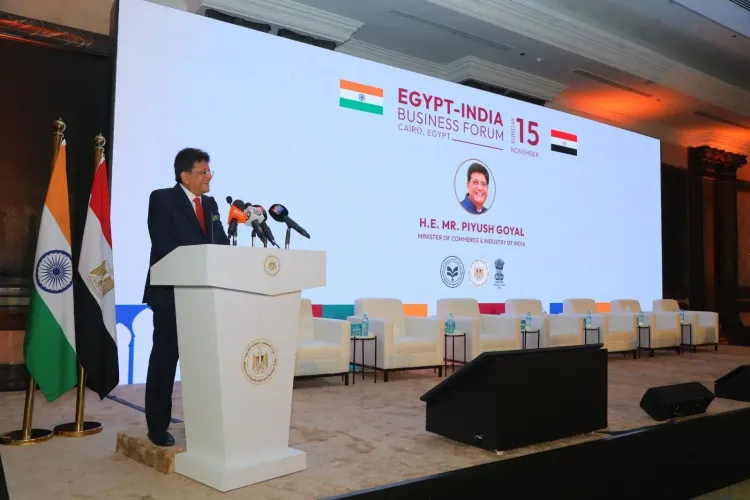
Union Commerce Minister Piyush Goyal addressed the India-Egypt Business Forum on November 15, 2026, where over 300 companies from both nations gathered to explore trade, manufacturing, healthcare, education, and technology partnerships — pairing India's consumer market scale with Egypt's strategic Suez Canal location.
Key Takeaways
Over 300 companies from India and Egypt participated in the India-Egypt Business Forum on November 15, 2026 .
Union Commerce Minister Piyush Goyal addressed the forum, highlighting India's large consumer market as a complement to Egypt's strategic geographic location.
Sectors discussed include trade and investment, education, healthcare, engineering, manufacturing, and technology solutions .
India and Egypt share diplomatic ties dating back to 1947 ; this forum represents a newer, deal-focused phase of that relationship.
Egypt's control of the Suez Canal positions it as a gateway between Europe, Africa, and Asia — a key asset in India's export diversification strategy.
Follow-up MOUs, joint ventures, and revised bilateral trade targets will be the benchmark for whether forum momentum translates into concrete outcomes.
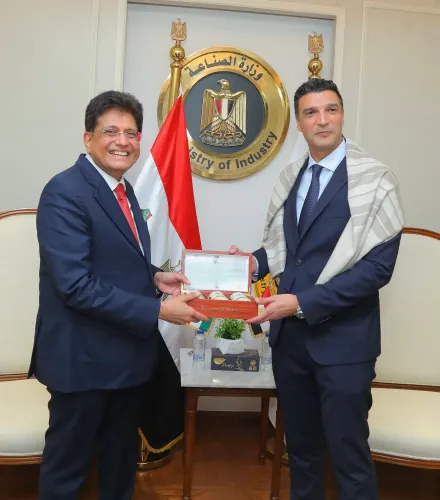
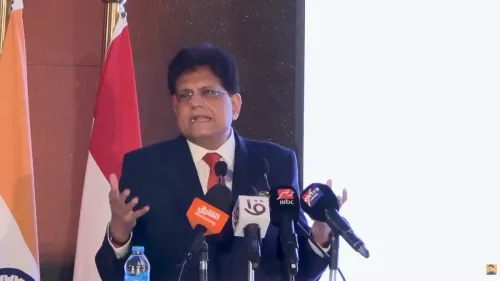
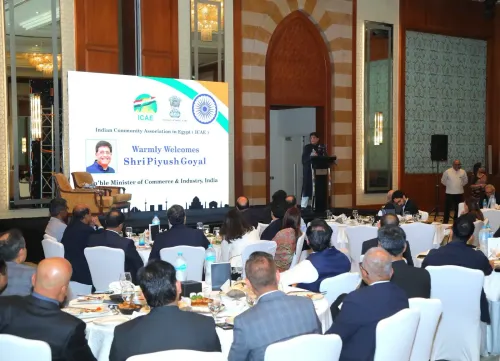
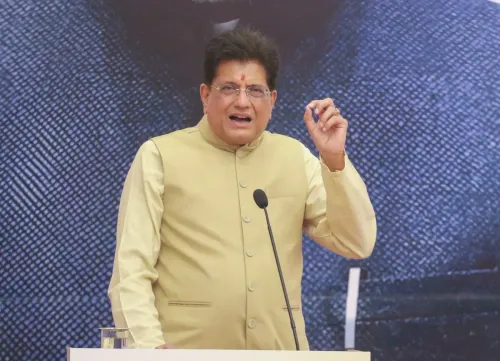
Three hundred companies, two countries, one room — and a shared conviction that the gap between India's industrial scale and Egypt's gateway geography is a commercial opportunity hiding in plain sight. Union Commerce and Industry Minister Piyush Goyal addressed the India-Egypt Business Forum on Sunday, November 15, 2026, calling the turnout a direct signal of the appetite both sides have for deeper economic partnership.
What brought 300 firms under one roof
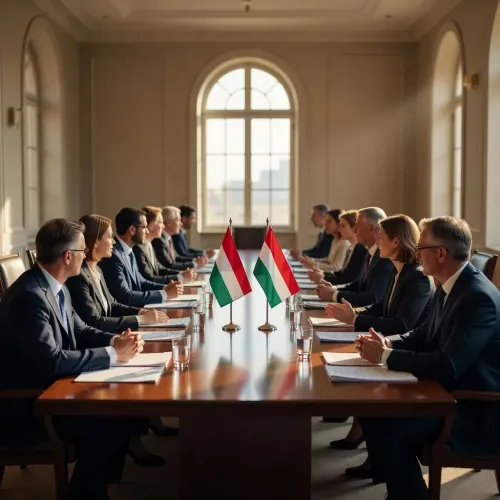
The forum brought together companies from India and Egypt spanning sectors as varied as trade and investment, education, healthcare, engineering, manufacturing, and technology solutions. Goyal framed the gathering not as a diplomatic formality but as a live demonstration of business enthusiasm. 'Over 300 companies from India and Egypt across sectors met under one roof,' he posted, adding that it 'reflects the enthusiasm for the possibilities and the potential that our partnership can unlock.'
The minister spoke directly to what each side brings to the table. India's robust consumer market — the backbone of the world's fifth-largest economy — can be paired with Egypt's command of the Suez Canal corridor, a chokepoint that sits at the crossroads of Europe, Africa, and Asia. Put those two assets together, Goyal argued, and the resulting supply-chain logic almost writes itself.
India's export push meets Egypt's geographic edge
India has spent the last several years methodically building bilateral trade platforms with African and Middle Eastern partners, aiming to embed Indian exporters — especially in engineering goods, pharmaceuticals, and IT services — into regional value chains beyond their traditional Western destinations. Egypt has emerged as a natural anchor for that westward pivot: its Suez Canal position makes it both a logistics hub and a re-export springboard into North Africa and the European market.
Diplomatic ties between the two countries stretch back to 1947, but government-led business delegations of this scale represent a newer, more transactional phase of that relationship — one focused on converting decades of goodwill into signed deals and joint ventures. The India-Egypt Business Forum is precisely that kind of conversion mechanism: not a photo opportunity but a structured matchmaking exercise.
Sectors in the spotlight — and what comes next
Goyal highlighted an unusually wide spread of sectors, from the tangible — manufacturing, engineering, healthcare — to the future-facing: technology solutions and education. That breadth suggests both governments are deliberately keeping the conversation open-ended, letting market players identify the strongest fits rather than pre-selecting winners from above.
The real test, however, will arrive in the weeks and months that follow. Business forums generate momentum; it is the MOUs, joint ventures, and revised bilateral trade targets that convert momentum into measurement. Parliamentary and ministry updates on the sectors highlighted Sunday will be the first place to look for signals that the room's enthusiasm translated into ink on paper.
India and Egypt are betting that geography and scale, combined deliberately, can produce outcomes neither could generate alone. Whether Sunday's forum becomes a footnote or a turning point depends on what gets signed next.
Point of View
Government-facilitated business engagement rather than purely diplomatic channels. By framing Egypt as a 'strategic location' complement to India's 'scale,' Goyal is essentially marketing India as a production powerhouse in search of distribution nodes — and Egypt as the most logical one on the Africa-Europe axis. The 300-company turnout is a credible signal of private-sector interest, but the forum's true value will only be legible once follow-up agreements materialise. For the BJP government, sustained commercial outcomes from such forums are also a domestic narrative asset, reinforcing the 'trade diplomacy as economic nationalism' message ahead of an increasingly competitive export environment.
NationPress
15 Nov 2026
Frequently Asked Questions
What is the India-Egypt Business Forum?
The India-Egypt Business Forum is a platform that brings together companies from India and Egypt to explore commercial opportunities across sectors such as trade, manufacturing, healthcare, education, engineering, and technology. The November 2026 edition saw participation from over 300 firms from both countries.
What did Piyush Goyal say at the India-Egypt Business Forum?
Union Commerce Minister Piyush Goyal spoke about how India's large consumer market and economic scale can complement Egypt's strategic location near the Suez Canal, potentially generating outcomes across trade, investment, education, healthcare, engineering, manufacturing, and technology.
Why is Egypt important for India's trade strategy?
Egypt controls the Suez Canal, a critical maritime corridor connecting Europe, Africa, and Asia. This makes it a natural logistics hub and re-export springboard, complementing India's strengths in engineering goods, pharmaceuticals, IT services, and manufacturing.
How long have India and Egypt had diplomatic relations?
India and Egypt established diplomatic relations in 1947. The current focus on government-facilitated business forums represents a newer, more commercially oriented phase of that long-standing relationship.
What sectors were discussed at the India-Egypt Business Forum 2026?
The sectors highlighted at the forum include trade and investment, education, healthcare, engineering, manufacturing, and technology solutions, reflecting a broad approach that allows private-sector players to identify the strongest bilateral fits.