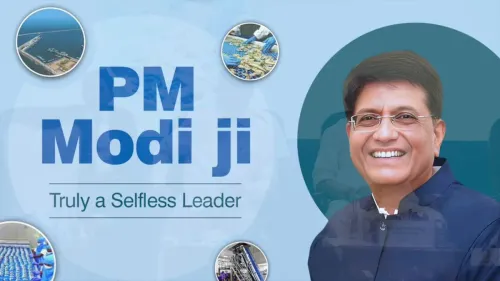
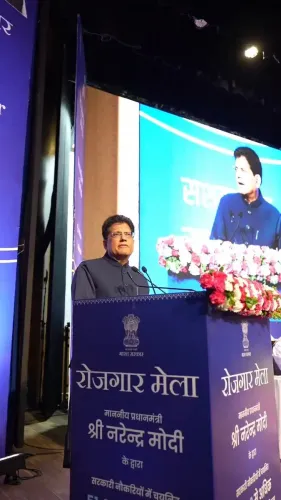
Piyush Goyal calls service to people a collective duty
Synopsis
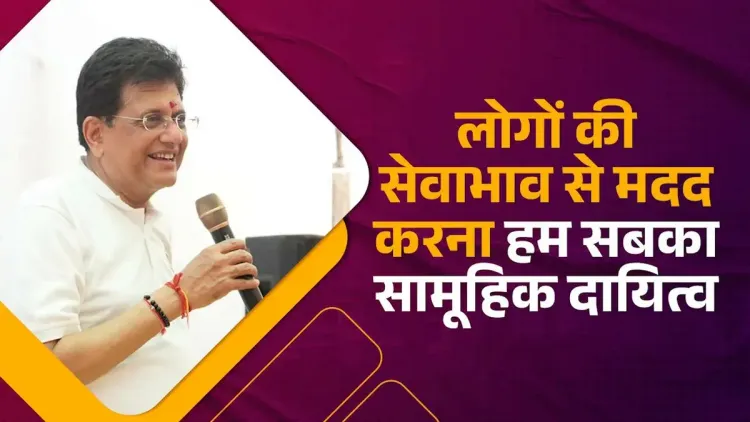
Union Commerce Minister Piyush Goyal on 21 June 2026 posted on X invoking the spirit of selfless service, calling it a collective responsibility of all citizens. The message, shared with a video, reflects the minister's broader civic outreach beyond his trade and industry portfolio.
Key Takeaways
Piyush Goyal , Union Minister of Commerce and Industry, posted on X on 21 June 2026 on the theme of civic duty.
The post, in Hindi, stated that helping people with a spirit of selfless service — sevabhaav — is the collective responsibility of all citizens.
The message was accompanied by a video, suggesting an intent to amplify the theme beyond text.
No specific scheme, event, or beneficiary group was named in the post.
As Leader of the House in the Rajya Sabha , Goyal's civic messages carry institutional weight beyond his commerce portfolio.
The post is consistent with a broader pattern of senior BJP leaders using social media for civic and moral outreach.
Union Commerce and Industry Minister Piyush Goyal on Sunday, 21 June 2026, took to X to share a message on civic responsibility, stating that helping people with a spirit of service is a collective obligation shared by all.
Context
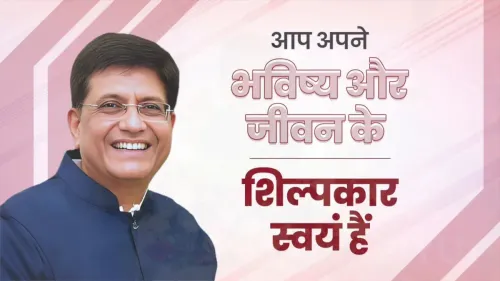
In his post, Goyal wrote in Hindi: 'लोगों की सेवाभाव से मदद करना हम सबका सामूहिक दायित्व' — meaning, 'Helping people with a spirit of selfless service is the collective responsibility of all of us.' The message, brief but pointed, was shared alongside a video, underscoring the minister's intent to amplify the theme visually as well as through text.
The post is consistent with a broader pattern of senior government ministers using social media to articulate civic and moral values, separate from their formal policy mandates. Goyal, who holds one of the most consequential economic portfolios in the Union Cabinet, has previously addressed national and societal themes that extend beyond commerce and trade.
Policy Backdrop
The idea of sevabhaav — a spirit of selfless service — carries deep cultural and political resonance in India, invoked across party lines and in public discourse ranging from voluntary organisations to government welfare schemes. For the BJP, the concept is closely tied to the Rashtriya Swayamsevak Sangh's foundational ethos of community service, which has long shaped the party's public communication on social responsibility.
Indian ministers routinely use platforms such as X to reinforce values of public duty, particularly in the absence of a specific policy announcement. Such posts serve as touchpoints between elected representatives and citizens, reflecting the executive branch's ongoing effort to maintain public engagement across multiple registers — formal policy and civic messaging alike.
Stakeholders and Impact
The message is addressed broadly to Indian citizens, with no specific beneficiary group, scheme, or institution named. Its open-ended framing invites a wide audience — from civil servants and elected representatives to ordinary citizens — to reflect on their role in community welfare.
As Leader of the House in the Rajya Sabha, Goyal occupies a position that extends well beyond his commerce portfolio. Messages of this nature, issued from such a platform, carry institutional weight and are often read as signals of the government's broader social values, even when they do not announce concrete policy action.
What's Next
It remains to be seen whether this post precedes a more formal initiative, event, or campaign tied to the theme of public service. Observers and political analysts will watch for any follow-up statements, ministerial engagements, or scheme announcements that give operational shape to the sentiment expressed.
For now, the post stands as a statement of collective moral intent — one that reflects the minister's continued use of social media not merely as a policy communication tool, but as a platform for civic exhortation.
Point of View
Not just policy communication. For a minister who leads the House in the Rajya Sabha, such messaging reinforces the BJP's long-standing public identity around community service and the ethos of sevabhaav. The absence of any specific policy hook suggests this is deliberate moral signalling — aimed at keeping the minister's public persona anchored in values-based leadership. Whether it precedes a formal initiative or stands alone, it reflects the executive branch's growing comfort with using personal platforms for soft-power civic outreach.
NationPress
21 Jun 2026
Frequently Asked Questions
What did Piyush Goyal post on X on 21 June 2026?
Piyush Goyal posted a message in Hindi stating that helping people with a spirit of selfless service is the collective responsibility of all citizens. The post was shared with a video.
What does sevabhaav mean?
Sevabhaav is a Hindi term meaning the spirit of selfless service — a disposition to help others without expectation of personal gain. It is a concept with deep cultural and civic resonance in India.
Is Piyush Goyal only the Commerce Minister?
No. In addition to being Union Minister of Commerce and Industry, Piyush Goyal is also a senior BJP leader and serves as Leader of the House in the Rajya Sabha, giving him a significant role in Parliament beyond his ministry.
Why do Indian ministers post civic messages on X?
Senior ministers use platforms like X to maintain public engagement beyond formal policy announcements. Such posts help reinforce the government's social values and keep elected representatives visible to citizens on everyday civic themes.
Did Piyush Goyal announce any new scheme or policy in this post?
No. The post did not announce any specific scheme, event, or policy. It was a values-based message on the theme of collective civic responsibility and selfless service.