Is the India-US Trade Deal Truly Fair and Balanced?
Synopsis
Union Minister Piyush Goyal has strongly defended the India-US interim trade deal against opposition claims, asserting its fairness and balance. The agreement aims to enhance economic ties while protecting domestic interests, ensuring a promising future for India's industries. This crucial dialogue highlights India's position as a $4 trillion economy in global trade.
Key Takeaways
The trade deal is designed to protect domestic interests.
India aims to import $500 billion in US goods over five years.
Tariffs on Indian exports have significantly decreased.
Sensitive agricultural products are excluded from the agreement.
The deal is expected to benefit the cotton and aviation industries.
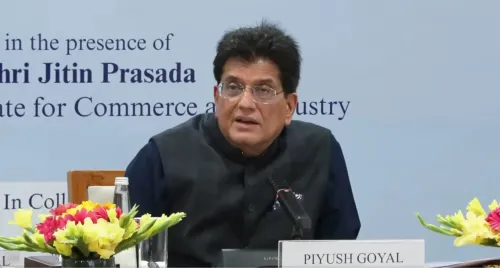
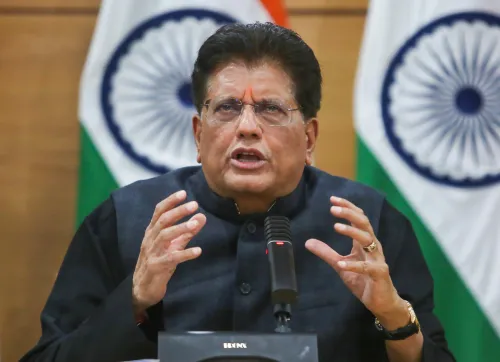
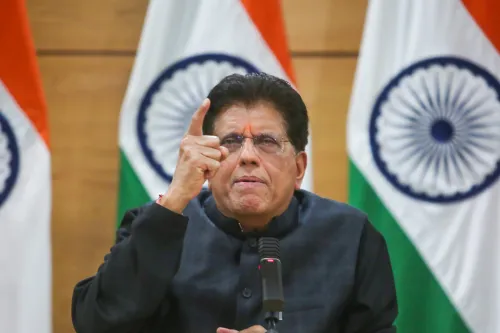
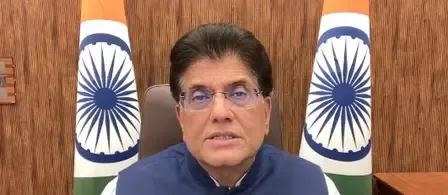
Mumbai, Feb 14 (NationPress) Union Commerce Minister Piyush Goyal on Saturday rejected the Opposition's assertions that the India-US interim trade agreement undermines domestic interests.
He emphasized that the deal was negotiated from a position of strength as a $4 trillion economy and specifically safeguarded the 'Aatmanirbhar' (self-reliant) sectors.
He stated that the agreement was crafted to harmonize consumer interests with export-led growth while maintaining sovereignty.
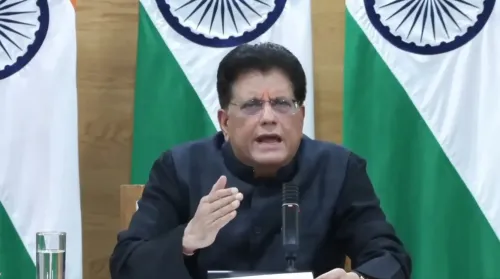
Describing the internal arrangement as fair and balanced, Union Minister Goyal mentioned at the press conference that the objective to import $500 billion worth of US goods (including energy, aircraft, and technology) over the next five years is an intent, not a binding commitment, driven by India's real commercial requirements.
He pointed out that the US has lowered reciprocal tariffs on Indian exports from 50% to 18%, giving India a significant edge over competitors like China (35%) and Bangladesh/Vietnam (20%). Several crucial Indian sectors will now benefit from zero tariffs, he added.
He also indicated that sensitive agricultural products such as rice, wheat, corn, millets, and dairy have been deliberately excluded from the agreement to shield domestic producers, ensuring they remain protected.
No duty concessions were granted to the US for dairy, poultry, meat, wheat, rice, maize, and soy, the Union Minister clarified.
Goyal mentioned that India only allowed selective access for items it requires or does not produce in surplus, like walnuts, pistachios, and certain wines with a minimum import price.
He projected a bright future for the Indian cotton industry, asserting that the trade deal would enhance demand instead of harming growers.
India will benefit from a 'yarn forward' mechanism (similar to concessions available to Bangladesh), allowing Indian garments to be exported to the US at zero duty if they use specific yarns.
Union Minister Goyal anticipated that India would import nearly $100 billion worth of Boeing aircraft, engines, and spare parts over the next five years.
He indicated that this boost in the aviation sector would improve connectivity in remote areas and could lead to lower airfares for Indian citizens.
Regarding the Union Budget for 2026-27, Goyal referred to it as a blueprint for Viksit Bharat by 2047.
He characterized the budget as a performance-driven document focusing on three pillars of 'duty' (Kartavya): economic growth, self-reliance (Aatmanirbharta), and infrastructure.
He asserted that the budget is tailored to transform India into a developed nation by its centenary of independence.
He underscored the significant push for infrastructure expansion to reduce logistic costs and boost manufacturing.
Invoking the slogan 'Nagrik Devo Bhava' (The citizen is God), he stated that the budget reflects a collective commitment to inclusive development.
Point of View
The India-US trade agreement emerges as a strategic maneuver aimed at bolstering economic resilience while safeguarding local industries. Piyush Goyal's defense underscores a commitment to self-reliance, suggesting that careful negotiation can yield benefits without compromising domestic interests. As India navigates its path in global trade, this agreement could play a pivotal role in shaping its economic landscape.
NationPress
19 Sept 2026
Frequently Asked Questions
What are the main benefits of the India-US trade deal?
The trade deal aims to enhance economic ties, promote export-led growth, and safeguard domestic sectors, particularly in agriculture and textiles.
How does the trade deal affect tariffs?
The US has reduced reciprocal tariffs on Indian exports from 50% to 18%, offering India a competitive advantage over other countries.
What agricultural products are excluded from the deal?
Sensitive agricultural products like rice, wheat, corn, millets, and dairy are explicitly excluded to protect domestic producers.
How will this deal impact Indian industries?
The deal is expected to boost demand for Indian textiles and cotton, while also facilitating significant imports in the aviation sector.
What is the significance of the 'yarn forward' mechanism?
This mechanism allows for zero-duty exports of Indian garments to the US if they use specific yarns, enhancing competitiveness.