PM Modi Addresses IIT Kharagpur Platinum Jubilee

Synopsis
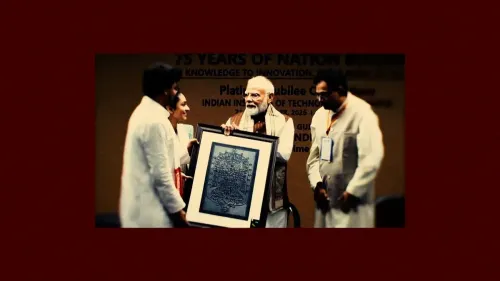
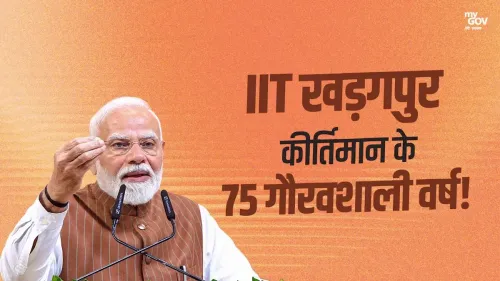
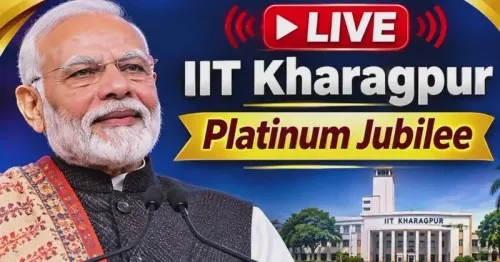
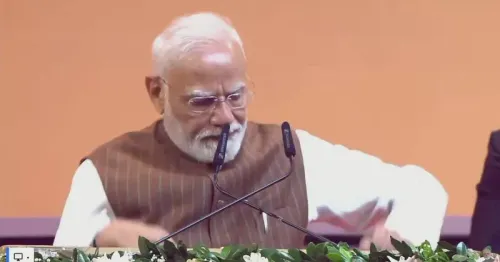
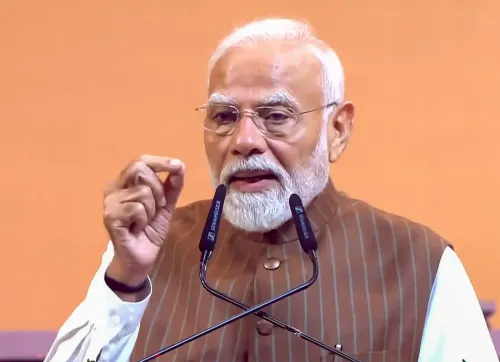
Prime Minister Narendra Modi addressed the Platinum Jubilee celebrations of IIT Kharagpur on 21 November 2026, declaring there are no limits to what young minds can achieve. India's first IIT, founded in 1951, marks 75 years as a cornerstone of the country's technical education and innovation story.
Key Takeaways
PM Narendra Modi spoke at IIT Kharagpur's Platinum Jubilee on 21 November 2026 .
IIT Kharagpur was established in 1951 as the first Indian Institute of Technology under the post-independence IIT Act framework.
The campus was built on the site of the former Hijli Detention Camp in Kharagpur, West Bengal — a colonial-era facility repurposed for education.
Modi declared: 'There are no limits to what young minds can achieve,' in keeping with his consistent messaging on youth-led national development.
The institution has grown beyond engineering to include schools of law, management, medical science, and humanities over its 75-year history.
Education policy watchers will monitor whether the Ministry of Education follows the occasion with announcements on higher-education funding or IIT expansion.
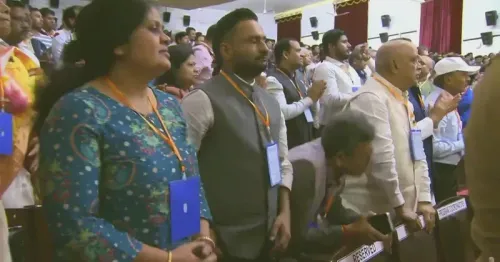
Seventy-five years after India's oldest technology institute opened its gates in a repurposed British-era prison in West Bengal, Prime Minister Narendra Modi stood before a new generation of its students on Saturday, 21 November 2026 — and told them the ceiling does not exist. Speaking at the Platinum Jubilee celebrations of IIT Kharagpur, Modi framed young intellect as the country's most consequential resource.
Seventy-five years of IIT Kharagpur — from Hijli to the world stage
IIT Kharagpur was established in 1951 as the very first Indian Institute of Technology, born out of a post-independence resolve to build a homegrown technical workforce. The campus rose on the grounds of the former Hijli Detention Camp in Kharagpur, West Bengal — a deliberate symbolic reclamation: a site of colonial confinement transformed into a crucible of national ambition. In the seven decades since, its alumni have seeded Silicon Valley start-ups, led multinational corporations, and driven foundational research across engineering, science, and technology.
Modi's message and the IIT arc he has shaped
The Prime Minister's declaration — 'There are no limits to what young minds can achieve' — fits a consistent pattern in his addresses to India's premier technical institutions: connecting campus energy to a broader national project of self-reliance and digital infrastructure. Successive governments have positioned the IIT network as the talent pipeline for industry and research, but the Modi era has repeatedly used these platforms to push narratives around Aatmanirbhar Bharat (self-reliant India) and deep-tech entrepreneurship.
IIT Kharagpur has itself expanded well beyond its founding engineering mandate — today running schools of law, management, medical science, and humanities, making its Platinum Jubilee a moment to measure not just longevity but breadth.
What the milestone means for India's higher-education conversation
A Platinum Jubilee address by a sitting Prime Minister carries institutional weight beyond ceremony. Observers of education policy will watch for any follow-through from the Ministry of Education — whether in the next parliamentary session or in the Union Budget cycle — on higher-education funding, new IIT campuses, or research endowment frameworks that the occasion might set in motion. For now, the signal from the top is unambiguous: the state considers institutions like IIT Kharagpur central to where India is heading, not just where it has been.
Seventy-five years on, the first IIT still sets the standard. The question the next 75 will answer is how far its graduates take it.
Point of View
He is quietly setting an expectations framework — one that will face scrutiny if higher-education funding or research infrastructure does not follow. The choice of IIT Kharagpur, the oldest and symbolically heaviest of the IITs, also signals that milestone institutions remain useful political stages for projecting national ambition. Whether the visit translates into concrete policy momentum is the sharper question.
NationPress
21 Nov 2026
Frequently Asked Questions
Why is IIT Kharagpur celebrating its Platinum Jubilee in 2026?
IIT Kharagpur was founded in 1951 as India's first IIT, making 2026 its 75th anniversary — the Platinum Jubilee. It was established under the IIT Act framework to build indigenous technical capacity after independence.
What did PM Modi say at IIT Kharagpur's Platinum Jubilee?
PM Modi declared that 'there are no limits to what young minds can achieve' while speaking at the Platinum Jubilee celebrations of IIT Kharagpur on 21 November 2026 .
Where is IIT Kharagpur located and when was it founded?
IIT Kharagpur is located in Kharagpur, West Bengal . It was founded in 1951 on the grounds of the former Hijli Detention Camp and is the oldest of all the IITs.
How many IITs are there in India?
India has 23 IITs as of recent years, with IIT Kharagpur being the first, established in 1951 . The network has expanded significantly under successive governments, including the Modi administration.
What is Modi's education policy focus for the IITs?
Under PM Modi, IIT addresses have consistently linked campus innovation to national priorities like digital infrastructure and Aatmanirbhar Bharat (self-reliant India), with the IIT system positioned as a key talent pipeline for industry and research.