PM Modi Addresses India-Japan Joint Economic Forum

Synopsis
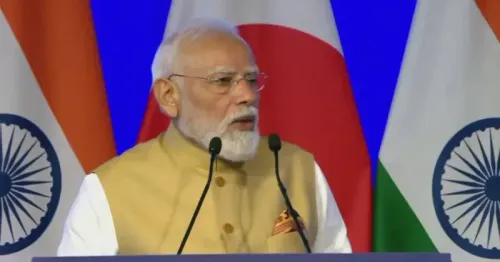
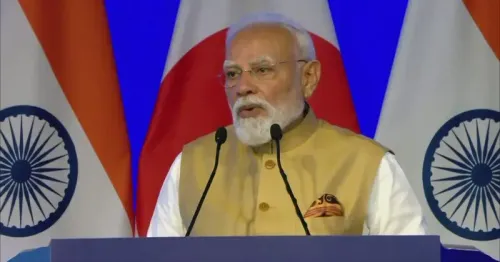
Prime Minister Narendra Modi addressed the India-Japan Joint Economic Forum on 2 July 2026, reaffirming India's commitment to deepening bilateral economic ties with Japan across infrastructure, technology, and trade under the Act East Policy framework.
Key Takeaways
Prime Minister Narendra Modi addressed the India-Japan Joint Economic Forum on 2 July 2026 .
The forum is a key bilateral platform for reviewing trade, investment, and industrial cooperation between India and Japan .
Japan committed $35 billion in investment in India 's manufacturing and connectivity sectors in 2015 .
The India-Japan CEPA , signed in 2011 , underpins liberalised trade and investment flows between the two nations.
The Mumbai-Ahmedabad High-Speed Rail project remains a flagship deliverable of the bilateral partnership.
India's Act East Policy positions Japan as a central partner in Indo-Pacific connectivity and supply-chain resilience.
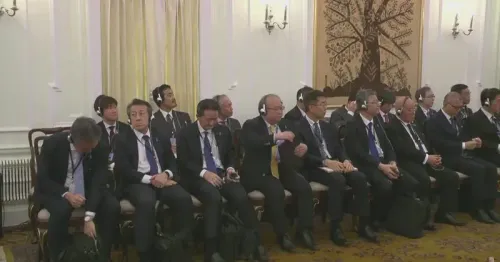
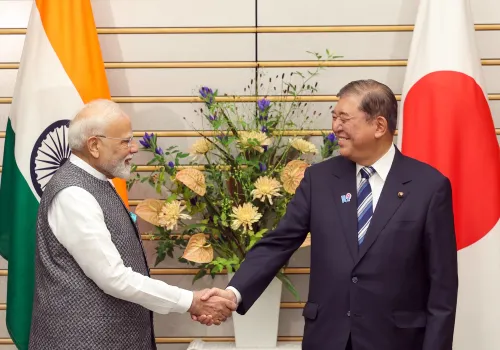
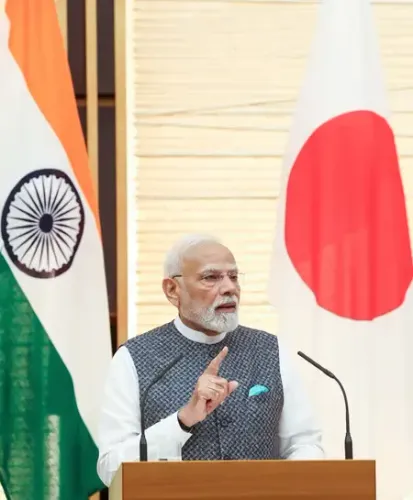
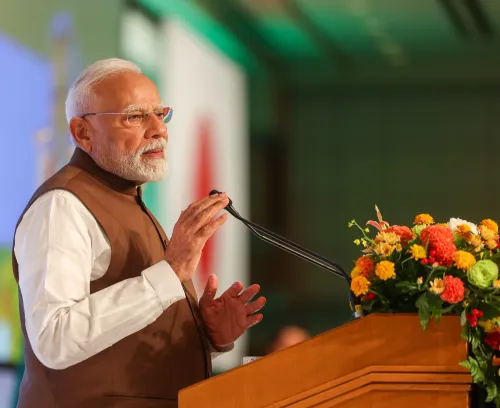
Prime Minister Narendra Modi addressed the India-Japan Joint Economic Forum on Thursday, 2 July 2026, sharing his remarks with the bilateral business and policy audience as part of ongoing high-level economic engagement between the two nations.
Context
The India-Japan Joint Economic Forum is a structured bilateral platform that brings together senior officials, business leaders, and policymakers from both countries to advance trade, investment, and industrial cooperation. Prime Minister Modi has made deepening ties with Japan a consistent priority since taking office in 2014, anchoring the relationship in shared interests across infrastructure, technology, and Indo-Pacific stability.
The forum typically accompanies or precedes the annual India-Japan Summit mechanism, which was upgraded in 2006 to institutionalise regular head-of-government dialogue. Such economic forums serve as a key venue for reviewing ongoing project commitments and setting the agenda for fresh investment pledges.
Policy Backdrop
India and Japan formalised their economic relationship through the Comprehensive Economic Partnership Agreement (CEPA), signed in 2011, which liberalised trade and investment flows between the two countries. That framework was reinforced in 2014 with the Tokyo Declaration and the launch of the India-Japan Industrial Competitiveness Partnership, designed to facilitate technology transfer and business matching.
In 2015, Japan committed to investing $35 billion over five years in India's manufacturing and connectivity sectors, a pledge that has shaped subsequent bilateral project pipelines. Flagship initiatives under this cooperation include the Mumbai-Ahmedabad High-Speed Rail project, which remains among the most closely watched deliverables of the partnership.
India's Act East Policy, pursued actively since 2014, has positioned Japan as a central partner in building supply-chain resilience and deepening Indo-Pacific connectivity. This bilateral economic engagement also complements multilateral frameworks such as the Quad, in which both nations are members alongside the United States and Australia.
Stakeholders and Impact
The forum directly engages Japanese investors and Indian manufacturing sector representatives who are central to translating bilateral commitments into on-the-ground projects. For Japan, India represents a large and growing market as well as a strategic partner in diversifying regional supply chains away from single-country dependence.
For India, Japanese capital and technology have been critical to infrastructure modernisation, particularly in railways, urban mobility, and advanced manufacturing. Business communities on both sides look to forums of this kind for clarity on regulatory environments, project timelines, and investment facilitation measures.
What's Next
Progress reports on the Mumbai-Ahmedabad bullet train corridor and any new investment announcements are expected to be closely tracked following this forum. The next India-Japan Annual Summit will be the key moment to watch for fresh numerical targets and updated project implementation reviews.
As both economies deepen integration within broader Indo-Pacific frameworks, the outcomes of forums such as this one will increasingly shape the investment climate and strategic posture of the bilateral relationship in the years ahead.
Point of View
New Delhi signals that Japan is not merely a development financier but a strategic partner in India's manufacturing and connectivity ambitions. The forum also serves a domestic political function, showcasing tangible foreign investment pipelines at a time when India is competing aggressively for global capital. Sustained follow-through on flagship projects such as the bullet train will be the real test of whether these high-level engagements translate into durable economic outcomes.
NationPress
2 Jul 2026
Frequently Asked Questions
What is the India-Japan Joint Economic Forum?
The India-Japan Joint Economic Forum is a bilateral platform that brings together officials and business leaders from both countries to discuss trade, investment, and industrial cooperation. It typically accompanies high-level diplomatic engagements such as the annual India-Japan Summit.
What did PM Modi say at the India-Japan Joint Economic Forum in 2026?
Prime Minister Modi shared his remarks at the forum on 2 July 2026. The specific content of his address was shared via his official post on X; detailed statements are expected to be released through official government channels.
What is the India-Japan CEPA?
The India-Japan Comprehensive Economic Partnership Agreement (CEPA), signed in 2011, liberalised trade and investment flows between the two countries and remains the foundational treaty governing bilateral economic relations.
What is Japan's investment commitment to India?
Japan committed to investing $35 billion in India's manufacturing and connectivity sectors over five years starting in 2015 , covering areas such as infrastructure, technology transfer, and industrial competitiveness.
What is the status of the Mumbai-Ahmedabad bullet train project?
The Mumbai-Ahmedabad High-Speed Rail project is a flagship deliverable of India-Japan bilateral cooperation, built with Japanese technology and financing. Progress on the project is a key indicator tracked at bilateral forums and summits.