CM Shivakumar Lays Foundation for Hebbal-UAS Tunnel in Bengaluru

Synopsis
The Karnataka CMO announced a foundation stone laying for a three-lane tunnel linking Hebbal Flyover to the University of Agricultural Sciences in Bengaluru, days after inaugurating the SM Krishna Dashapatha Road, as Deputy CM DK Shivakumar pushes a signal-free corridor agenda for the congested city.
Key Takeaways
The Chief Minister's Office of Karnataka announced the foundation stone for a three-lane tunnel in Bengaluru on 2 July 2026 .
The tunnel will connect the Hebbal Flyover to the staff quarters of the University of Agricultural Sciences (UAS) , offering a signal-free route in northern Bengaluru.
The announcement came within days of the inauguration of the S.M.
Krishna Dashapatha Road , a 10-lane road named after the former Chief Minister.
Deputy Chief Minister D.K.
Shivakumar is credited with spearheading Bengaluru's infrastructure transformation under the current Congress government.
Bengaluru's vehicle growth has historically exceeded 10 percent annually , driving demand for grade-separated road infrastructure.
Past tunnel and elevated corridor projects in the city have faced land acquisition delays and cost escalations , making implementation timelines a key watch point.
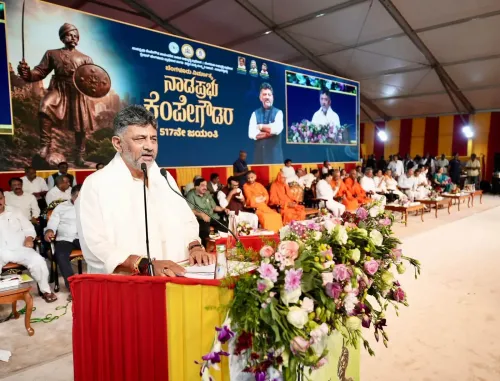
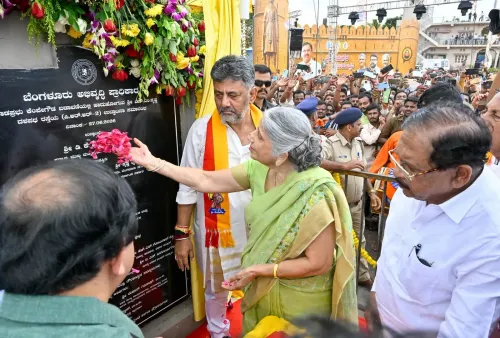
The Chief Minister's Office of Karnataka announced on 2 July 2026 that a foundation stone has been laid for a new three-lane tunnel in Bengaluru, connecting the Hebbal Flyover to the staff quarters of the University of Agricultural Sciences (UAS), under the leadership of Deputy Chief Minister D.K. Shivakumar, who holds charge of Bengaluru's development.
The official post, written in Kannada, states: 'ಮುಖ್ಯಮಂತ್ರಿ ಶ್ರೀ @DKShivakumar ಅವರ ಮುಂದಾಳತ್ವದಲ್ಲಿ ಬೆಂಗಳೂರು ನಗರದ ಚಿತ್ರಣ ಬದಲಾಗುತ್ತಿದೆ' ('The face of Bengaluru city is changing under the leadership of Deputy Chief Minister Shivakumar'). It notes that the tunnel foundation stone was laid within days of the inauguration of the S.M. Krishna Dashapatha Road — a 10-lane road named after former Chief Minister S.M. Krishna — signalling the state government's intent to deliver signal-free, congestion-free corridors in rapid succession.
Context
Bengaluru's road network has long struggled to keep pace with vehicle growth that has historically exceeded 10 percent annually. The Hebbal junction in northern Bengaluru is among the most congested nodes in the city, serving as the gateway to the airport expressway and several residential and institutional zones. The proposed three-lane tunnel is designed to take vehicles beneath the existing surface grid, offering a signal-free passage between the flyover and the UAS GKVK campus area.
The CMO's post frames the project as part of a broader transformation of the city's mobility landscape, promising relief to commuters who have long faced gridlock at traffic signals on this corridor.
Policy Backdrop
Grade-separated road infrastructure has been a recurring priority across successive Karnataka governments. A signal-free corridor programme between 2017 and 2022 saw the construction of multiple elevated roads and underpasses across Bengaluru. A tunnel corridor proposal for central Bengaluru was floated in 2019, later shelved, and subsequently revived in a modified form.
The current Congress government, which came to power in 2023, has positioned urban infrastructure delivery — particularly in Bengaluru — as a key governance benchmark. The near-simultaneous inauguration of the S.M. Krishna Dashapatha Road and the tunnel foundation stone event reflects a deliberate sequencing of announcements to signal momentum.
Stakeholders and Impact
The primary beneficiaries are northern Bengaluru commuters, including residents of areas around the Hebbal, Yelahanka, and GKVK zones, as well as students, faculty, and staff of the University of Agricultural Sciences. The tunnel, once operational, is expected to reduce travel time on one of the city's most delay-prone stretches.
Historically, however, tunnel and elevated corridor projects in Bengaluru have faced challenges including land acquisition delays and cost escalations. Civil society groups and urban planners have also raised questions about whether grade-separated road projects adequately address long-term mobility needs compared to mass transit expansion.
What's Next
The immediate milestone to watch is whether the Hebbal-UAS tunnel moves from foundation stone to active construction within the current financial year. Budget allocations for the project in the 2026-27 Karnataka state budget and any environmental or land clearance updates will be key indicators of implementation pace. The state government's ability to deliver this project on schedule will be closely watched given the city's track record with large infrastructure timelines.
Point of View
Who has staked his political identity on Bengaluru's development, is using visible infrastructure milestones to counter criticism over the city's persistent congestion and civic woes. However, the gap between foundation-stone events and actual delivery has been a recurring vulnerability for Karnataka governments of all stripes, and the Hebbal-UAS tunnel will ultimately be judged on construction pace rather than announcement optics. The broader question of whether road-centric solutions can keep pace with Bengaluru's growth — or whether mass transit investment is the more durable answer — remains unresolved.
NationPress
2 Jul 2026
Frequently Asked Questions
What is the Hebbal-UAS tunnel in Bengaluru?
The Hebbal-UAS tunnel is a proposed three-lane underground road corridor in northern Bengaluru that will connect the Hebbal Flyover to the staff residential quarters of the University of Agricultural Sciences (UAS), providing a signal-free route for commuters in that zone.
Who laid the foundation stone for the Bengaluru tunnel?
The foundation stone was laid under the leadership of Karnataka Deputy Chief Minister D.K. Shivakumar, who oversees Bengaluru's development, as announced by the Chief Minister's Office of Karnataka on 2 July 2026.
What is the SM Krishna Dashapatha Road in Bengaluru?
The SM Krishna Dashapatha Road is a 10-lane road in Bengaluru named after former Karnataka Chief Minister S.M. Krishna, who served from 1999 to 2004. It was inaugurated just before the tunnel foundation stone event in July 2026.
Will the Hebbal tunnel solve Bengaluru's traffic problem?
The three-lane tunnel is designed to provide signal-free connectivity on the Hebbal-UAS stretch, offering relief to northern Bengaluru commuters. However, urban planners have noted that grade-separated road projects address only part of the problem, and mass transit expansion is needed for a long-term solution.
What is DK Shivakumar's role in Bengaluru infrastructure?
D.K. Shivakumar serves as Deputy Chief Minister of Karnataka and holds direct charge of Bengaluru's development and public works, making him the key political figure responsible for the city's infrastructure projects under the Congress government that came to power in 2023.