Joshi Hails India-Japan Green Hydrogen Offtake Deals
Synopsis
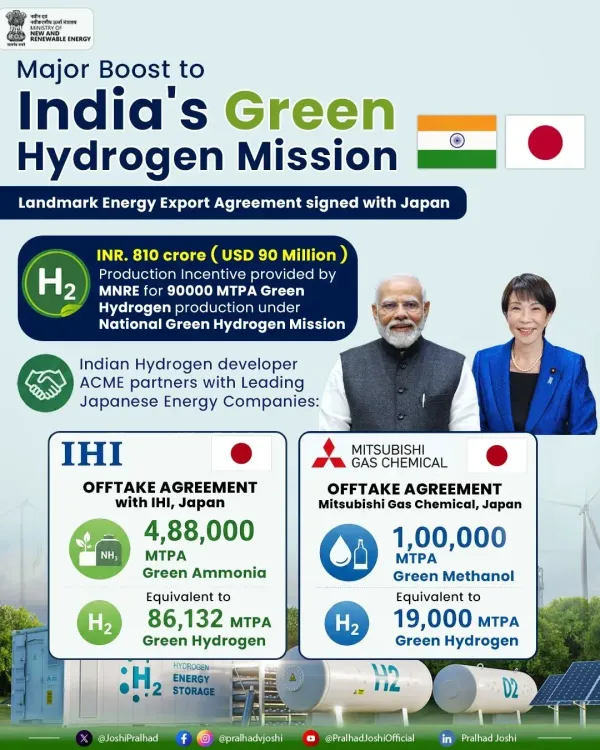
Union Minister Pralhad Joshi has welcomed offtake agreements signed by ACME with Japan's IHI Corporation and Mitsubishi Gas Chemical for Green Ammonia and Methanol, marking a commercial milestone under India's Rs 19,744-crore National Green Hydrogen Mission and deepening India-Japan clean-energy ties.
Key Takeaways
Union Minister Pralhad Joshi welcomed offtake agreements between ACME and Japan's IHI Corporation and Mitsubishi Gas Chemical on July 2, 2026 .
The deals cover exports of Green Ammonia and Green Methanol , key commercial derivatives of green hydrogen.
India's National Green Hydrogen Mission , approved in January 2023 , carries a Rs 19,744 crore outlay targeting 5 million tonnes of annual green hydrogen production by 2030 .
The agreements build on the India-Japan Energy Dialogue , which has included hydrogen and ammonia cooperation tracks since 2017 .
India has signed similar frameworks with Singapore , the UAE , and European buyers, signalling a broad export-corridor strategy.
Japan seeks the deals to diversify low-carbon feedstock and meet its own 2030 decarbonisation commitments.
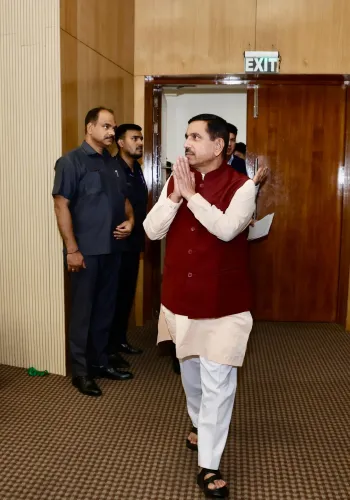
Union Consumer Affairs and New and Renewable Energy Minister Pralhad Joshi on Thursday, July 2, 2026, welcomed the signing of offtake agreements between Indian clean-energy developer ACME and Japan's IHI Corporation and Mitsubishi Gas Chemical, calling it a significant milestone under India's National Green Hydrogen Mission.
Context
Minister Joshi described the agreements as a landmark step toward positioning India as a 'global hub for green fuels.' The deals cover the production and export of Green Ammonia and Green Methanol, two key derivatives that form the commercial backbone of the hydrogen economy. The minister credited the progress to the 'visionary leadership' of Prime Minister Narendra Modi.
ACME is among India's leading clean-energy developers with a stated focus on green hydrogen and ammonia projects oriented toward both domestic use and export markets. IHI Corporation is a Japanese heavy-industry firm active in energy infrastructure, while Mitsubishi Gas Chemical is a major player in methanol and ammonia value chains seeking sustainable feedstock.
Policy Backdrop
The National Green Hydrogen Mission was approved by the Union Cabinet in January 2023 with a total outlay of Rs 19,744 crore. Its headline target is the production of 5 million tonnes of green hydrogen annually by 2030, with India positioned as both a producer and a major exporter.
The India-Japan Energy Dialogue, which has convened annually since 2017, has progressively expanded to include hydrogen and ammonia cooperation tracks. The ACME-IHI-Mitsubishi agreements represent a commercial crystallisation of that diplomatic groundwork. India has pursued similar offtake frameworks with Singapore, the UAE, and several European buyers under the same mission umbrella, signalling a deliberate strategy to build diversified export corridors.
Stakeholders and Impact
For India, the agreements serve a dual purpose: accelerating domestic green-hydrogen production capacity while locking in export revenue streams that can justify large-scale infrastructure investment. Green ammonia and green methanol are easier to transport and store than hydrogen in its pure form, making them the preferred trade commodities in early-stage hydrogen markets.
For Japan, the partnerships address an urgent policy need. Tokyo has committed to ambitious 2030 decarbonisation targets and is actively seeking to diversify away from fossil-fuel imports. Securing offtake agreements with Indian producers reduces Japan's supply-chain risk and supports its own domestic energy-transition goals. Indian green-hydrogen developers, in turn, gain the long-term demand certainty required to attract project financing.
What's Next
The next indicators to watch include the release of the next tranche of mission pilot-project allocations under the National Green Hydrogen Mission and any joint energy statements at the 2027 India-Japan Annual Summit. Progress on these offtake agreements could also influence how other Indian developers structure export-oriented green-fuel projects. If the ACME model proves bankable, it may accelerate the broader commercialisation timeline for India's green-hydrogen ambitions well ahead of the 2030 target.
Point of View
A transition the government has been working toward since the Mission's January 2023 launch. Minister Joshi's public endorsement signals that New Delhi views bilateral offtake deals — rather than domestic demand alone — as the primary lever to unlock large-scale private investment in green-fuel infrastructure. The India-Japan axis is strategically significant: Japan's capital, technology, and appetite for low-carbon imports complement India's land, solar resources, and manufacturing ambitions. If this model scales, it could redefine India's role in Asian energy geopolitics well before the 2030 target date.
NationPress
2 Jul 2026
Frequently Asked Questions
What is India's National Green Hydrogen Mission?
The National Green Hydrogen Mission is a central government scheme approved in January 2023 with an outlay of Rs 19,744 crore, aimed at producing 5 million tonnes of green hydrogen annually by 2030 and making India a global green-hydrogen hub.
What did ACME sign with IHI Corporation and Mitsubishi Gas Chemical?
Indian clean-energy developer ACME signed offtake agreements with Japan's IHI Corporation and Mitsubishi Gas Chemical for the export of Green Ammonia and Green Methanol produced using green hydrogen.
Why is Japan interested in Indian green hydrogen?
Japan needs to diversify its energy imports and meet its 2030 decarbonisation targets. Securing offtake agreements with Indian producers gives Japan access to affordable low-carbon feedstock and reduces its dependence on fossil-fuel imports.
What is Green Ammonia and why does it matter?
Green Ammonia is ammonia produced using green hydrogen derived from renewable energy. It is easier to transport and store than pure hydrogen, making it a preferred commodity for early-stage international hydrogen trade.
What did Minister Pralhad Joshi say about the ACME agreements?
Minister Joshi called the signings a 'significant step' toward positioning India as a 'global hub for green fuels' and said the partnerships would strengthen India-Japan clean-energy cooperation and accelerate the global transition to sustainable energy.