Odisha CMO: ₹1.10 Lakh Crore UAE Aluminium MoU Signed
Synopsis
Odisha's Chief Minister's Office announced a ₹1.10 lakh crore MoU with UAE conglomerate IHC Group for a mega integrated aluminium project. Signed through IPICOL, the deal promises 53,500 jobs and targets green-metals production, marking one of the state's largest-ever foreign investment commitments.
Key Takeaways
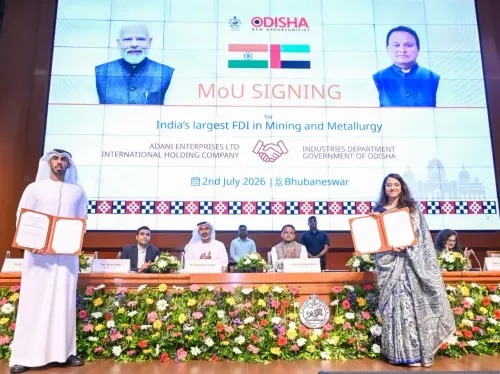
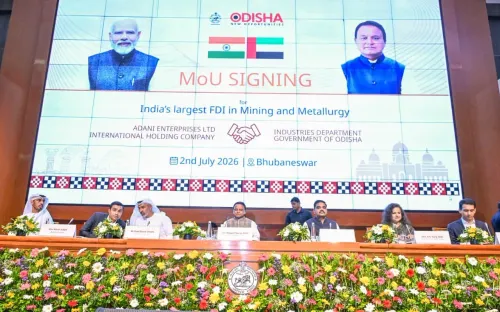
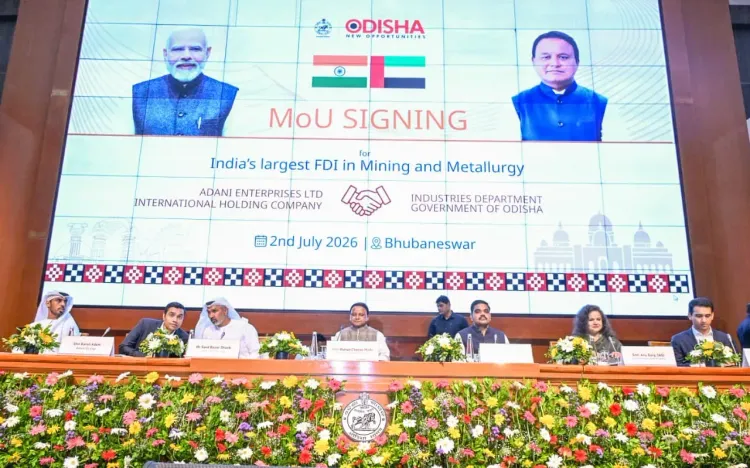
IPICOL signed an MoU with UAE's International Holding Company (IHC Group) for a mega integrated aluminium project on 2 July 2026 .
The project is valued at approximately ₹1.10 lakh crore (~$11.5 billion USD) , making it one of Odisha's largest-ever foreign investment deals.
The project is projected to create 53,500 employment opportunities in the state.
The initiative is framed around 'Green Metals' , emphasising environmentally friendly, lower-emission aluminium production.
The deal builds on the India-UAE Comprehensive Economic Partnership Agreement (2022) and Odisha's longstanding aluminium-sector policy priority.
Implementation will require environmental clearances, land acquisition, and phased investment over an estimated three-to-five-year horizon.
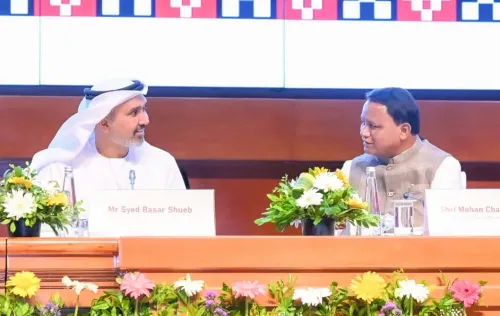
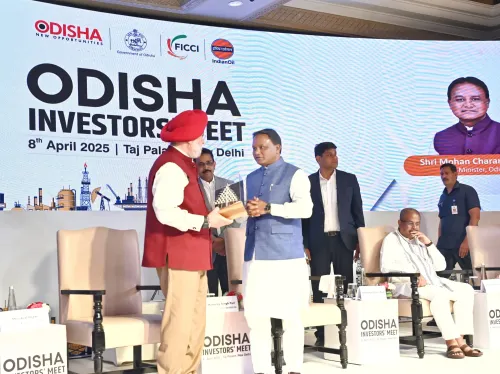
The Chief Minister's Office of Odisha announced on 2 July 2026 that the state has signed a landmark Memorandum of Understanding with the UAE's International Holding Company (IHC Group) for a mega integrated aluminium project worth approximately ₹1.10 lakh crore (around $11.5 billion USD), one of the largest single-sector foreign investment commitments the state has attracted. The MoU was executed between IPICOL (Industrial Promotion and Investment Corporation of Odisha Limited), the state's nodal industrial promotion agency, and the Abu Dhabi-headquartered conglomerate, and is projected to generate 53,500 employment opportunities.
Context
The post from the Chief Minister's Office describes the agreement as 'a new chapter in Odisha's industrial development,' framing it as evidence of a 'people-centric government' steering the state toward becoming 'an industrially prosperous economy.' The announcement specifically highlights three pillars: the scale of investment, the employment multiplier, and the project's alignment with 'Green Metals' — a term used for aluminium produced through cleaner, lower-emission processes. The emphasis on eco-friendly industrialisation signals that the project is expected to incorporate renewable energy or recycling-led production methods rather than conventional carbon-intensive smelting.
Policy Backdrop
Odisha is one of India's most mineral-rich states, holding substantial bauxite reserves that have historically made it a natural base for aluminium smelting and downstream industries. The state's Industrial Policy Resolution of 2015 formally identified aluminium and downstream metals as priority sectors to maximise value addition from these reserves. Successive investment summits between 2018 and 2022 produced multiple large-scale metal-sector MoUs, each worth over ₹1 lakh crore, establishing a pattern of high-value commitments in the sector.
The broader diplomatic architecture supporting this deal includes the India-UAE Comprehensive Economic Partnership Agreement (CEPA), signed in 2022, which lowered tariffs and created an enabling framework for Gulf capital to flow into Indian manufacturing. The IHC Group, formally known as International Holding Company, is one of the UAE's largest publicly listed conglomerates with diversified interests spanning infrastructure, energy, and industry. IPICOL, as Odisha's single-window investment facilitation body, has been the counterparty in several such landmark agreements over the past decade.
Stakeholders and Impact
The most immediate beneficiaries, if the project reaches implementation, would be local youth and semi-skilled workers in Odisha's industrial belt, where unemployment in mining-adjacent communities has been a persistent concern. Downstream, the project could generate significant business for ancillary MSMEs supplying raw materials, logistics, and fabrication services to the integrated aluminium complex. Bauxite miners and mineral-sector workers in the state's interior districts could also see demand-side gains as feedstock requirements scale up.
The 'Green Metals' framing carries strategic weight beyond Odisha's borders: global buyers of aluminium — particularly in the automotive, aerospace, and renewable energy sectors — are increasingly demanding low-carbon certificates of origin, and a project built around cleaner production could give Odisha-origin aluminium a competitive edge in export markets. India's national push to decarbonise heavy industry aligns directly with this positioning.
What's Next
An MoU is a statement of intent, not a binding financial commitment, and the path from signature to production typically involves phased investment disbursements, environmental clearances, and land acquisition — a process that can span three to five years for projects of this scale. Analysts tracking Odisha's industrial pipeline will watch for follow-on agreements on project timelines, the specific location of the proposed complex, and the renewable energy sourcing plan that would underpin the green-metals claim. The success of this MoU could also catalyse further outreach to other Gulf and East Asian conglomerates in critical minerals and metals, deepening Odisha's profile as a preferred destination for large-format foreign direct investment in India's eastern industrial corridor.
Point of View
Decade-long strategy by Odisha to convert its bauxite endowment into high-value industrial output rather than raw mineral exports — a model that has produced headline numbers but also a record of slow implementation. The 'Green Metals' framing is politically astute: it pre-empts environmental opposition while positioning Odisha-origin aluminium for premium global markets increasingly governed by carbon-border adjustments. The Gulf capital angle is significant too — it reflects how the India-UAE CEPA is beginning to yield tangible FDI flows into manufacturing states, not just trade in goods. The real test, as with previous mega-MoUs, will be whether clearances, land, and power infrastructure can be assembled fast enough to retain investor confidence.
NationPress
2 Jul 2026
Frequently Asked Questions
What is the Odisha UAE aluminium MoU about?
Odisha's state investment agency IPICOL signed an MoU with UAE conglomerate IHC Group for a mega integrated aluminium project worth ₹1.10 lakh crore (~$11.5 billion USD) that is expected to create 53,500 jobs and focus on green-metals production.
What is IPICOL and what role does it play?
IPICOL, the Industrial Promotion and Investment Corporation of Odisha Limited, is the state government's nodal agency for attracting and facilitating industrial investments; it was the signatory on the Odisha side of the IHC Group MoU.
Who is IHC Group and where is it based?
IHC Group, formally the International Holding Company, is one of the UAE's largest publicly listed conglomerates, headquartered in Abu Dhabi, with diversified interests in infrastructure, energy, and industry.
What does 'Green Metals' mean in the context of this project?
'Green Metals' refers to aluminium produced using cleaner, lower-emission methods — such as renewable energy-powered smelting or recycling — rather than conventional carbon-intensive processes, aligning with global decarbonisation trends.
When will the Odisha aluminium project be completed?
No completion date has been announced; projects of this scale typically require three to five years of phased investment, environmental clearances, and land acquisition before production begins.