PM Modi Announces Nationwide Talent Hunt for 2036 Olympics
Synopsis
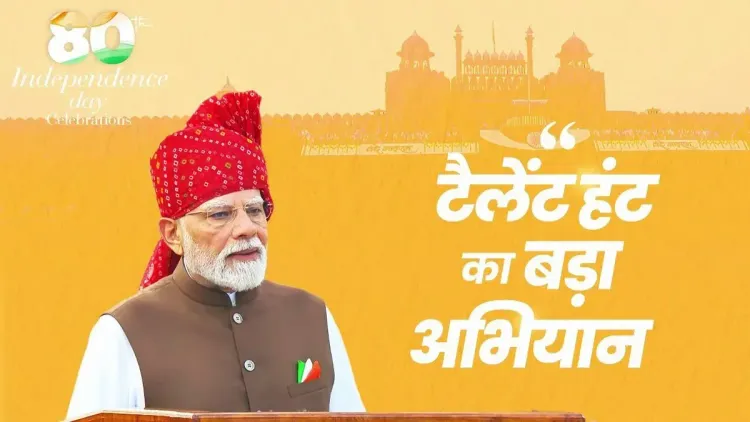
Prime Minister Narendra Modi on Independence Day 2026 announced a nationwide talent hunt campaign targeting children aged 5 to 15, aimed at building a deep grassroots sports pipeline for the 2036 Olympics — extending India's existing Khelo India and SAI frameworks into rural India.
Key Takeaways
PM Modi announced a nationwide sports talent hunt campaign on Independence Day, 15 August 2026 .
The campaign targets children aged 5 to 15 years across villages and cities for specialised sports training.
The initiative is explicitly framed around India's ambitions for the 2036 Summer Olympics .
It builds on existing schemes including Khelo India (launched 2017), the Sports Authority of India , and the Target Olympic Podium Scheme .
India has expressed interest in hosting the 2036 Olympics , making domestic medal performance a dual national priority.
Operational details, budget allocations, and timelines have not yet been officially confirmed.
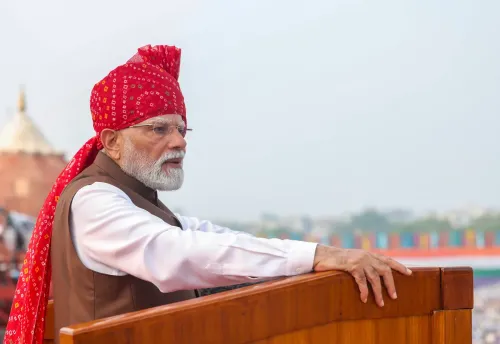
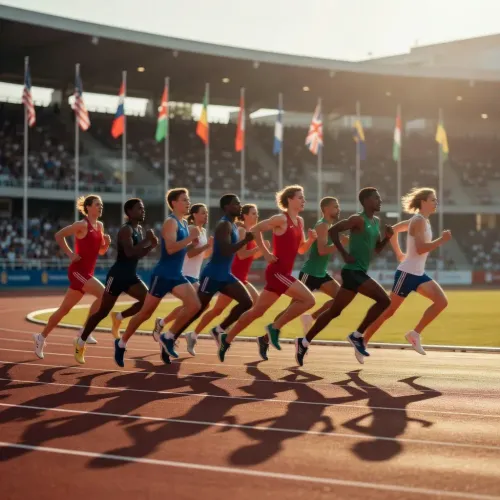
With one eye fixed on 2036 and the other on every dusty playground and school ground across the country, Prime Minister Narendra Modi on Independence Day, 15 August 2026, announced a sweeping national talent hunt that will reach from India's villages to its cities — targeting children aged 5 to 15 years for specialised sports training.
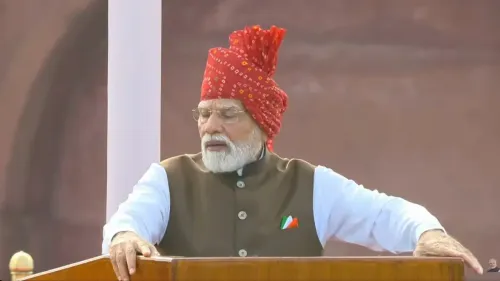
In his announcement, PM Modi said: 'Keeping the 2036 Olympics in view, a major talent hunt campaign will be run across the country — from villages to cities. Under this, the sporting talent of children between 5 and 15 years of age will be honed through special training.' The declaration, made on the national stage of Independence Day, signals that India's Olympic ambitions have moved well beyond the podium — they now begin at the playground.
Why 5-to-15 Is the Critical Window
The age band is not arbitrary. Nations that consistently top Olympic medal tallies — China, the United States, Great Britain — have long built their pipelines around early identification and decade-long nurturing. A child spotted at age 8 in 2026 would be a peak-performance athlete of 18 by the time the 2036 Games open. That arithmetic is the entire logic of this campaign.
India already has institutional scaffolding to build on. The Khelo India scheme, launched in 2017, created a national talent identification pipeline stretching from schools upward. The Sports Authority of India (SAI) runs national training centres with residential coaching programmes. The Target Olympic Podium Scheme (TOPS) supports elite athletes with funding and foreign exposure. The new campaign, as announced, would extend that funnel much deeper — into rural India, where raw talent has historically gone unspotted.
India's 2036 Olympic Bid: The Stakes Behind the Announcement
India has publicly expressed interest in bidding to host the 2036 Summer Olympics — a prospect that would make the country simultaneously the host nation and a medal contender on home soil. Hosting alone does not produce medals; the athletes who will compete in 2036 are, right now, between 5 and 15 years old. This announcement is, in effect, the first recruitment drive for that generation.
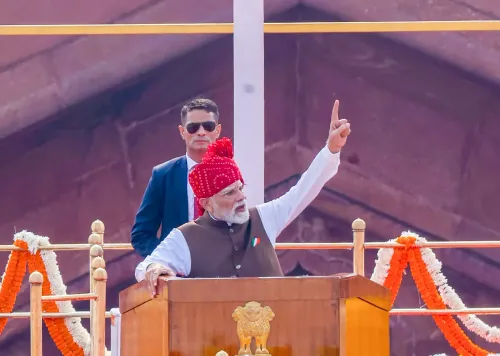
The political weight of making this pledge on Independence Day — from the ramparts of the Red Fort, the traditional platform for prime ministerial addresses to the nation — is deliberate. It places Olympic ambition alongside the language of national aspiration, not merely sporting administration.
What Comes Next for State Sports Departments and SAI
The immediate question is integration: how the new talent hunt maps onto existing Khelo India centres, SAI academies, and state sports departments that already run identification trials. Budget allocations — likely to surface in the next Union Budget or a dedicated Sports Ministry action plan — will determine whether the campaign has the teeth to match its ambition. State governments, district sports officers, and school physical education infrastructure will all need to be mobilised at scale.
India has never won more than 7 medals at a single Olympics. A systematic, decade-long grassroots pipeline — if funded and executed — is the structural answer to that ceiling. The announcement sets the direction. The delivery will be the real test.
Point of View
The government links national identity to athletic ambition in a single stroke. It also insulates the policy from short-term results — a decade-long pipeline is judged a decade later. The move deepens the Khelo India legacy while raising the stakes: if India is simultaneously bidding to host 2036, a credible talent pipeline becomes a diplomatic asset, not just a domestic one. The real test will be whether this announcement translates into budget lines and district-level infrastructure, or remains a vision statement.
NationPress
15 Aug 2026
Frequently Asked Questions
What did PM Modi announce for the 2036 Olympics on Independence Day?
PM Modi announced a nationwide talent hunt campaign to identify and train children aged 5 to 15 years from villages and cities across India, with the goal of building a sports pipeline for the 2036 Olympics .
Which age group will be targeted in India's new sports talent hunt?
Children between 5 and 15 years of age will be identified and given specialised sports training under the new campaign.
How does this relate to the Khelo India scheme?
The Khelo India scheme, launched in 2017 , already runs a national talent identification pipeline from schools upward. The new campaign is expected to extend that framework deeper into rural India, though integration details are yet to be officially confirmed.
Is India bidding to host the 2036 Olympics?
India has publicly expressed interest in submitting a bid to host the 2036 Summer Olympics , which gives domestic talent development both a sporting and a diplomatic dimension.
When will the details and budget for this talent hunt be announced?
Exact operational details and budget allocations have not yet been confirmed. Observers expect further specifics to emerge in the next Union Budget or a dedicated Sports Ministry action plan.