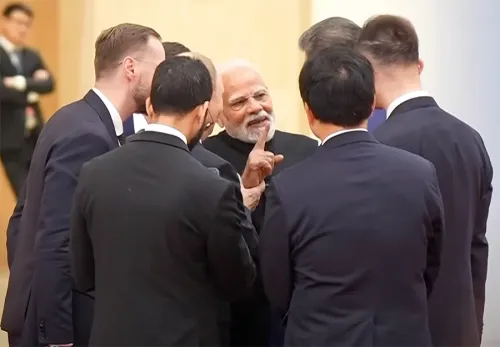
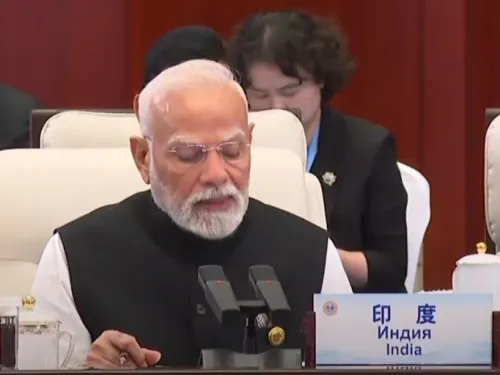
PM Modi calls for 25-year SCO vision built on security, connectivity

Synopsis
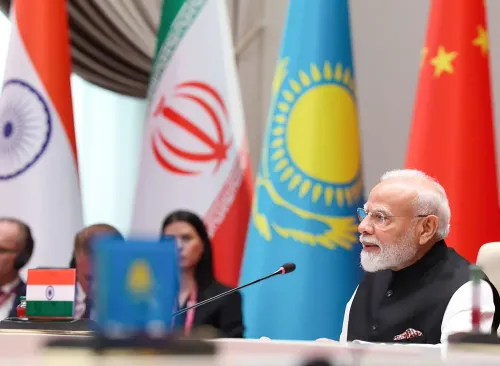
Prime Minister Narendra Modi has called for a 25-year SCO agenda anchored on Security, Connectivity, and Opportunity — framing India's position as transforming shared geography into shared opportunity, while implicitly pushing back against unilateral connectivity projects inside the bloc.
Key Takeaways
PM Modi called for a 25-year SCO agenda on 1 September 2026 , marking a shift from summit-by-summit engagement to long-range institutional shaping.
India's stated SCO framework rests on three pillars: Security , Connectivity , and Opportunity , in that order.
India has been a full SCO member since the 2017 Astana summit , joining alongside Pakistan.
India's connectivity position — requiring respect for sovereignty and territorial integrity — places it at odds with China's Belt and Road Initiative inside the same grouping.
A 25-year vision document, if agreed upon, would embed India's red lines into the SCO's institutional framework through the 2050s .
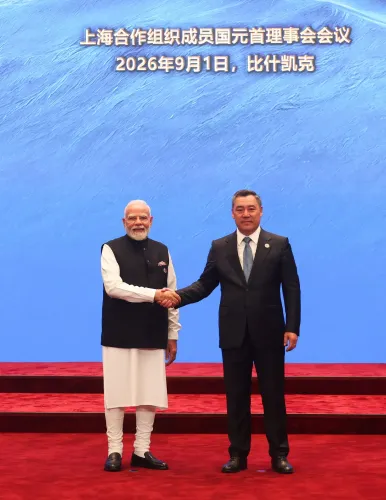
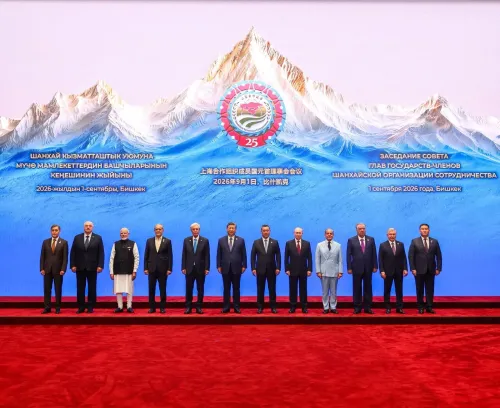
A quarter-century roadmap for one of the world's most consequential regional blocs — that is the ambition Prime Minister Narendra Modi placed on the table at the Shanghai Cooperation Organisation on Tuesday, 1 September 2026. In a pointed statement, Modi framed India's position around three interlocking pillars and a single, clarifying phrase: shared geography must become shared opportunity.
The three-pillar framework India is pushing
Modi's formulation — Security, Connectivity, and Opportunity — is precise, and the order is deliberate. Security comes first, a consistent Indian demand inside the SCO that has historically meant pressuring the grouping to take a harder line on cross-border terrorism. Connectivity is second, and that sequencing carries weight: India has long insisted that infrastructure linkages must respect sovereignty and territorial integrity, a position that places it in direct tension with China's Belt and Road Initiative, which several SCO partners have embraced.
Opportunity rounds out the triad — the economic dividend that, in India's telling, can only be unlocked once the first two pillars are in place. It is a logical chain, not a wish list.
India's SCO journey since the 2017 Astana summit
India became a full SCO member at the 2017 Astana summit, joining alongside Pakistan in an expansion that immediately complicated the bloc's internal dynamics. Since then, New Delhi has used successive summits — Bishkek in 2019, the virtual session in 2020 — to push the same themes: counter-terrorism cooperation, connectivity on India's terms, and a rules-based approach to regional security. The 25-year horizon Modi is now proposing would lock in those priorities at an institutional level, shaping the SCO's agenda well into the 2050s.
Why a long-range vision document matters now
The SCO's founding charter is now more than two decades old. Its membership has grown, its geography has expanded, and the geopolitical pressures on its members — from the Russia-Ukraine war to US-China competition — have intensified. A 25-year agenda document, if agreed upon, would force member states to negotiate red lines and shared goals in writing. For India, that is an opportunity to embed its connectivity conditions and counter-terrorism benchmarks into the organisation's DNA rather than relitigating them at every summit.
Modi's call is also a signal of India's multi-alignment posture: engaged inside non-Western forums, but never a passive participant. New Delhi wants a seat at the table where the next quarter-century of Eurasian architecture is drawn — and it wants its name on the blueprint.
The next SCO summit will reveal whether member states are ready to negotiate a long-range vision on India's terms, or whether the three-pillar framework meets the same friction it always has.
Point of View
But actively contesting their direction rather than deferring to dominant powers. The 25-year horizon is a strategic move — long-range agenda documents force members to negotiate principles, not just projects, which is precisely where India's connectivity red lines and counter-terrorism demands gain the most institutional traction. The implicit target is China's Belt and Road footprint inside the SCO; the explicit language is cooperative and forward-looking, giving India plausible multilateralism while defending its bilateral interests. Whether the bloc's other members — several of whom depend on Chinese infrastructure financing — are willing to negotiate on India's terms will define the SCO's next chapter.
NationPress
1 Sept 2026
Frequently Asked Questions
What is India's position on the SCO's 25-year agenda?
India wants the SCO's next 25-year agenda built on three pillars — Security, Connectivity, and Opportunity — with the goal of transforming shared geography among member states into shared economic and strategic opportunity.
When did India join the SCO?
India became a full member of the Shanghai Cooperation Organisation at the 2017 Astana summit , joining alongside Pakistan in a major expansion of the bloc.
What is the SCO and which countries are members?
The Shanghai Cooperation Organisation is a Eurasian political, economic, and security grouping founded in 2001 by China, Russia, Kazakhstan, Kyrgyzstan, Tajikistan, and Uzbekistan. India and Pakistan joined as full members in 2017 .
Why does India oppose China's Belt and Road Initiative inside the SCO?
India insists that any connectivity projects must respect national sovereignty and territorial integrity — a condition that excludes the China-Pakistan Economic Corridor, which passes through Pakistan-administered Kashmir. This position puts India at odds with BRI-aligned SCO members.
What would a 25-year SCO vision document mean for India?
A long-range agenda document would allow India to embed its counter-terrorism benchmarks and connectivity conditions into the SCO's institutional framework, reducing the need to relitigate these positions at every summit through the 2050s .