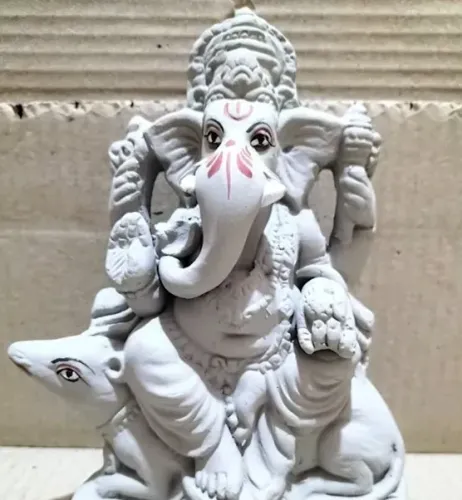
PM Modi Hails Citizens' Embrace of Clay Ganesh Idols
Synopsis
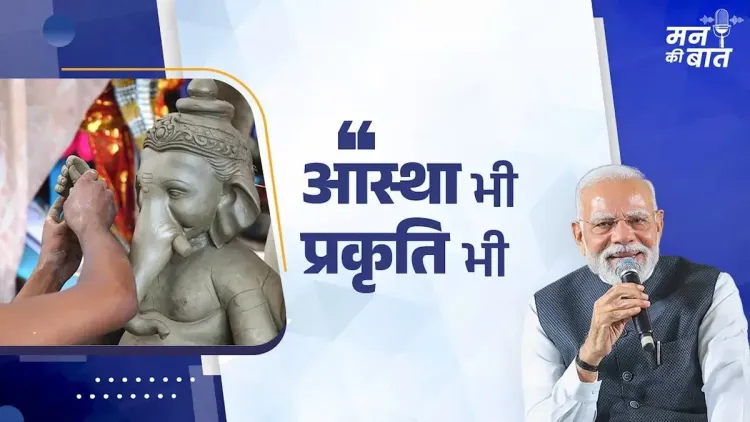
PM Modi on 26 July 2026 applauded the positive public response to his appeal for clay Ganesh idols, linking citizen messages to both religious devotion and environmental commitment under the #MannKiBaat banner.
Key Takeaways
PM Modi expressed satisfaction on 26 July 2026 over citizens' positive response to his clay idol appeal for Ganesh Utsav .
The appeal was made through his monthly radio programme Mann Ki Baat , launched in October 2014 .
Clay idols dissolve naturally in water, unlike plaster-of-Paris idols that release chemical dyes and heavy metals into rivers and lakes.
The initiative supports traditional kumhar (potter) artisans whose craft competes with cheaper industrially produced alternatives.
The upcoming Ganesh Chaturthi season in August-September 2026 will test whether the public response translates into measurable adoption of eco-friendly idols.
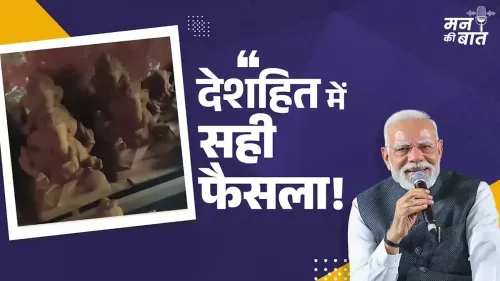
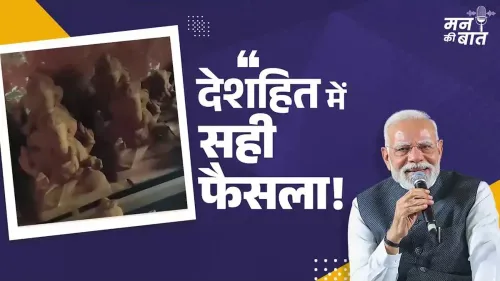
Prime Minister Narendra Modi on Sunday, 26 July 2026, expressed deep satisfaction over the positive public response to his appeal for clay idols during Ganesh Utsav, saying citizen messages reflected both devotion to Lord Ganesha and a sincere commitment to nature.
Posting on X under the #MannKiBaat hashtag, PM Modi wrote in Hindi: 'मुझे इस बात की बहुत प्रसन्नता है कि गणेश उत्सव पर मिट्टी की प्रतिमा बनाने के मेरे आग्रह पर देशवासियों ने बहुत सकारात्मक रुख दिखाया है' ('I am very pleased that fellow citizens have shown a very positive attitude towards my appeal to make clay idols for Ganesh Utsav'). He added that the messages sent to him revealed not only devotion to Ganpati but also a spirit of dedication towards nature.
Context
Ganesh Utsav, one of India's most widely observed Hindu festivals, involves the installation and subsequent immersion of Lord Ganesha idols in rivers, lakes, and water bodies. The festival draws millions of devotees, particularly in Maharashtra and across western India, where public celebrations can last up to ten days. PM Modi had previously used the platform of his monthly radio programme, Mann Ki Baat, to urge citizens to opt for eco-friendly clay idols over chemically treated plaster-of-Paris versions.
Policy Backdrop
Mann Ki Baat, launched in October 2014, has served as a consistent channel for PM Modi to amplify citizen-level behavioural change without formal legislation. The appeal for clay idols is part of a recurring government effort to reduce water pollution caused by the immersion of idols made with synthetic paints and non-biodegradable materials in rivers and lakes. This messaging links religious observance directly with ecological responsibility — a pattern that has been applied across multiple festivals over the years.
Clay or mitti idols dissolve naturally in water, avoiding the release of heavy metals and chemical dyes that degrade aquatic ecosystems. Artisans who traditionally work with clay have also stood to benefit from any revival of demand for their craft, which faced competition from cheaper industrially produced alternatives.
Stakeholders and Impact
Ganesh devotees across the country and traditional idol artisans are the primary stakeholders in this appeal. A broader shift towards clay idols, if sustained, could reduce chemical load on water bodies ahead of the Ganesh Chaturthi immersion season, which falls in August-September. Environmental groups focused on river and lake conservation have long advocated for exactly this transition.
The positive citizen response cited by PM Modi suggests growing public awareness of the environmental consequences of idol immersion. Traditional kumhars (potters) and clay artisans could see renewed interest in their work if the trend holds through the upcoming festival season.
What's Next
Attention will now turn to whether state governments — particularly in Maharashtra, Goa, Karnataka, and Andhra Pradesh — follow up with workshops or support programmes for clay idol production ahead of Ganesh Chaturthi. Any regulatory guidance or municipal-level incentives for eco-friendly idol procurement would be the next concrete step. The scale of clay idol adoption during the 2026 festival season will serve as a measure of how deeply this appeal has translated into action on the ground.
Point of View
He reinforces the narrative that the shift to clay idols is a grassroots movement rather than a top-down directive. The move also dovetails with the government's broader Namami Gange and river-conservation messaging, threading ecological responsibility through cultural practice rather than confronting it. Ahead of the Ganesh Chaturthi season, this public validation could pressure state governments and festival committees to formalise support for clay idol artisans.
NationPress
27 Jul 2026
Frequently Asked Questions
Why is PM Modi asking people to use clay idols for Ganesh Utsav?
PM Modi has appealed for clay idols because they dissolve naturally in water, unlike plaster-of-Paris idols treated with chemical paints that release heavy metals and dyes into rivers and lakes, causing water pollution.
What is Mann Ki Baat and why did Modi mention it?
Mann Ki Baat is PM Modi's monthly radio address, started in October 2014 , where he discusses governance, social issues, and citizen initiatives. He used it to appeal for eco-friendly clay Ganesh idols and tagged the post with #MannKiBaat .
Are clay Ganesh idols better for the environment?
Yes. Clay or mitti idols are biodegradable and dissolve naturally when immersed in water, whereas synthetic plaster-of-Paris idols with chemical paints can harm aquatic ecosystems and degrade water quality.
When is Ganesh Chaturthi 2026?
Ganesh Chaturthi falls in the August-September period each year. The exact date in 2026 follows the Hindu lunar calendar, and the festival is celebrated most prominently in Maharashtra and across western and southern India .
How do clay Ganesh idols help traditional artisans?
A shift towards clay idols revives demand for the work of traditional kumhars (potters) and clay artisans, whose craft has faced competition from cheaper, industrially produced plaster-of-Paris alternatives in recent decades.