PM Modi writes to CM Dhami on Uttarakhand's 26th Foundation Day
Synopsis
On Uttarakhand's 26th Foundation Day, PM Modi wrote to CM Dhami praising the state's spiritual heritage and citing central investments in Char Dham roads, Rishikesh-Karnprayag rail, Kedarnath-Badrinath redevelopment, border village programmes, and Haridwar Kumbh preparations.
Key Takeaways
Uttarakhand marks its 26th Foundation Day on 9 November 2026 , the state having been carved out of Uttar Pradesh on the same date in 2000 under PM Atal Bihari Vajpayee.
PM Modi cited a central investment of over ₹11,000 crore in the 890-km Char Dham All Weather Road Project linking the four major pilgrimage sites.
The 125-km Rishikesh–Karnprayag rail line is advancing rapidly and will be the first railway into the Garhwal Himalayas.
Badrinath Dham is receiving approximately ₹500 crore in riverfront and plaza development; Kedarnath has seen hundreds of crores in post-flood reconstruction.
The Vibrant Village Programme is active in border hamlets including Mana, Jadung, Niti, and Gunji, promoting handicrafts, culture, and tourism alongside basic infrastructure.
The central government has committed ₹500 crore to assist preparations for the upcoming Haridwar Kumbh Mela .
Twenty-six years after Atal Bihari Vajpayee signed the state into existence, Prime Minister Narendra Modi marked Uttarakhand's Foundation Day on 9 November 2026 with a detailed personal letter to Chief Minister Pushkar Singh Dhami — recounting the state's spiritual identity, its infrastructure leap, and his own decades-long bond with Devbhoomi.
The letter, shared by the Chief Minister's Office of Uttarakhand on X, is more than a ceremonial greeting. It reads as a comprehensive stock-taking of central investment in the hill state — roads, rail, pilgrimage infrastructure, border villages, and tourism — framed within the broader 'Viksit Uttarakhand se Viksit Bharat' (developed Uttarakhand for a developed India) vision.
A state born of Vajpayee's vision, now 26 years on
Modi anchored the message in history. On 9 November 2000, the Vajpayee government carved Uttarakhand out of Uttar Pradesh — an act Modi described as the product of the late Prime Minister's 'far-sightedness and firm resolve.' The Foundation Day, he wrote, is an occasion to salute the 'indomitable courage, unshakeable self-respect, and unceasing resolve for progress' of the people of Devbhoomi.
Modi also drew on personal memory. He recalled spending extended periods in the state during his years as a party organiser — meditating in the sacred cave at Kedarnath, making a spiritual journey to Adi Kailash, receiving the blessings of the high-altitude meadows (bugyals), and the warmth of the women of Uttarakhand. 'These memories remain alive in me,' he wrote.
₹11,000 crore roads and a 125-km rail line into the mountains
The centrepiece of the infrastructure narrative is the Char Dham All Weather Road Project — a 890-kilometre connectivity corridor linking the four major pilgrimage sites. Modi cited a central investment of over ₹11,000 crore. Work on the 125-kilometre Rishikesh–Karnprayag rail line is advancing rapidly, he noted — a project that would, for the first time, bring a railway deep into the Garhwal Himalayas.
At Kedarnath Dham, hundreds of crores have been spent on reconstruction and development since the 2013 floods. At Badrinath Dham, riverfront development, a plaza, and beautification work worth approximately ₹500 crore are under way under a master plan. Taken together, the figures make a pointed argument: the state's pilgrimage economy is not incidental policy — it is a deliberate infrastructure bet.
Border villages as symbols of strength, not just geography
Modi gave particular weight to the Vibrant Village Programme, naming specific hamlets — Mana, Jadung, Timmarsain, Niti, and Gunji — where the scheme is promoting local culture, handicrafts, and tourism. 'These villages are not merely identifiers of our borders,' he wrote. 'They are symbols of the nation's security and capability.'
The framing matters: by tying economic development explicitly to border security, the message reinforces a standing central government doctrine — that populated, prosperous border villages are a strategic asset in the high Himalayas.
365-day tourism and ₹500 crore for Haridwar Kumbh
Modi praised record tourist arrivals in the state and the spread of homestay culture as a new income stream for local families. He pointed to active pushes for adventure tourism, winter tourism, wedding tourism, and sustainable tourism as part of a '365-day tourism' strategy — an explicit attempt to end the traditional seasonal dependency of a Himalayan economy.
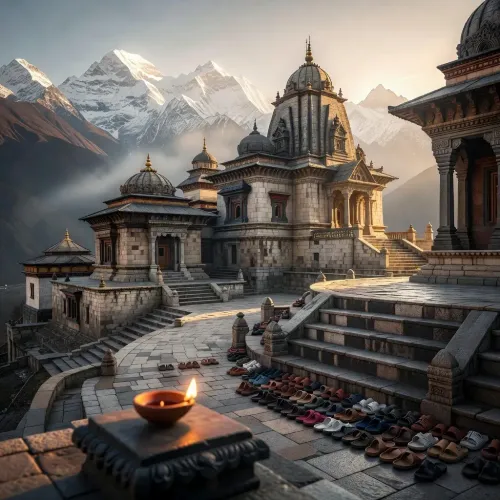
He closed with the upcoming Haridwar Kumbh Mela, for which the central government has committed ₹500 crore in assistance. Modi expressed confidence the event would be an 'unforgettable experience' for devotees from India and around the world. He described Uttarakhand — home to the Panch Kedar, Panch Prayag, Char Dham, Gangotri, Yamunotri, Hemkund Sahib, Jageshwar Dham, and Adi Kailash — as a state with 'full potential to become the spiritual capital of the world.'
At twenty-six, Uttarakhand has been given a letter that doubles as a development manifesto — and the central government has staked its credibility on whether the roads, the rail, and the riverfront actually deliver.
Point of View
And Uttarakhand — with its dual role as pilgrimage hub and strategic border state — fits neatly into that framework. The enumeration of specific investment figures (Char Dham roads, Badrinath redevelopment, Kumbh assistance) transforms a ceremonial message into a public audit of central commitments, implicitly holding both governments to account. The Vibrant Village Programme references reflect a continuing doctrine that demographic and economic vitality in border hamlets is as important to national security as physical infrastructure. If the Rishikesh–Karnprayag rail line and Char Dham roads deliver on schedule, they would reshape the Uttarakhand economy in ways that go well beyond seasonal pilgrimage.
NationPress
9 Nov 2026
Frequently Asked Questions
When was Uttarakhand formed as a separate state?
Uttarakhand was formed on 9 November 2000 when the Atal Bihari Vajpayee government carved it out of Uttar Pradesh. It celebrates its Foundation Day every year on that date.
What is the Char Dham All Weather Road Project?
The Char Dham All Weather Road Project is an approximately 890-kilometre highway corridor linking the four major Uttarakhand pilgrimage sites — Kedarnath, Badrinath, Gangotri, and Yamunotri — with central funding cited at over ₹11,000 crore .
What is the Rishikesh-Karnprayag rail project?
The Rishikesh–Karnprayag rail line is a 125-kilometre railway project that will extend the Indian Railways network deep into the Garhwal Himalayas for the first time, aiming to ease access to Char Dham pilgrimage sites.
What is the Vibrant Village Programme and which Uttarakhand villages are included?
The Vibrant Village Programme is a central government scheme launched in 2022-23 to develop border hamlets through basic infrastructure, tourism, and cultural promotion. In Uttarakhand, villages such as Mana, Jadung, Timmarsain, Niti, and Gunji are among those covered.
How much central funding is going to the Haridwar Kumbh Mela?
PM Modi's letter states that the central government is providing ₹500 crore in assistance for preparations for the upcoming Haridwar Kumbh Mela .