CM Dhami Thanks PM Modi on Uttarakhand Foundation Day
Synopsis
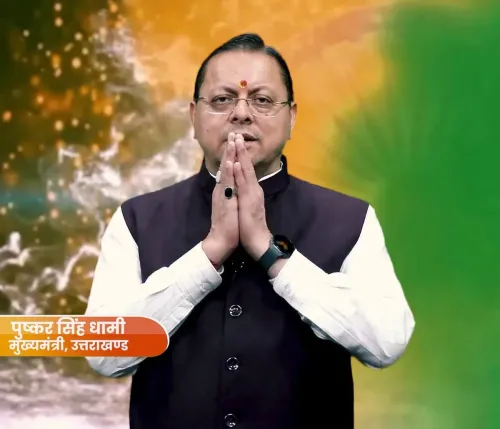
On Uttarakhand's 26th Foundation Day, CM Pushkar Singh Dhami thanked PM Narendra Modi for his wishes, reaffirming the state's commitment to development, cultural preservation, and the Viksit Bharat vision.
Key Takeaways
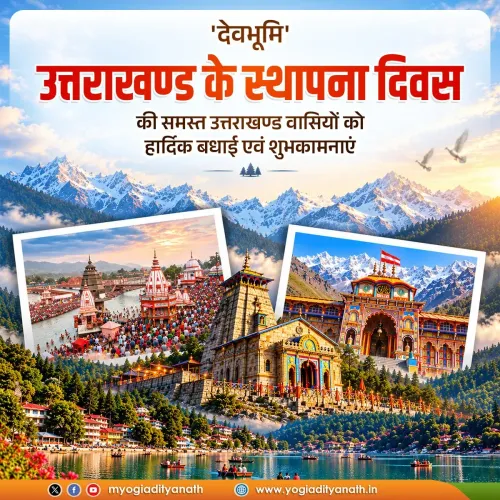
9 November 2026 marks Uttarakhand's 26th Foundation Day , commemorating its formation from Uttar Pradesh in 2000.
CM Pushkar Singh Dhami publicly thanked PM Narendra Modi on behalf of all state residents for his wishes and message.
Dhami credited 'unprecedented central government support' for the state setting new development benchmarks.
The CM invoked the Viksit Uttarakhand se Viksit Bharat framework, aligning state goals with PM Modi's 'Viksit Bharat 2047' national vision.
The message stressed preserving Uttarakhand's 'rich cultural heritage and natural character' alongside economic growth.
Twenty-six years after a Himalayan state was carved out of Uttar Pradesh, Uttarakhand Chief Minister Pushkar Singh Dhami used the state's Foundation Day on Monday, 9 November 2026 to publicly thank Prime Minister Narendra Modi for his wishes — and to restate the state's commitment to the 'Viksit Bharat' vision.
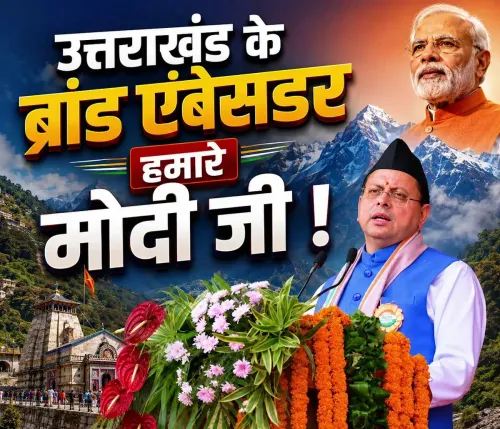
Posting in Hindi on X, CM Dhami expressed gratitude on behalf of all residents of the state: 'समस्त प्रदेशवासियों की ओर से हृदय से आभार' ('heartfelt thanks on behalf of all people of the state'). He credited PM Modi's 'visionary leadership, constant guidance and unprecedented support from the central government' for Uttarakhand setting new benchmarks in development and prosperity.
Uttarakhand at 26: The Foundation Day Milestone
Uttarakhand was established as a separate state on 9 November 2000, when it was bifurcated from Uttar Pradesh following a prolonged popular movement. The day — observed as Uttarakhand Rajya Sthapna Diwas — is marked each year with official functions, cultural programmes, and exchanges between state and central leadership. For a state that turned 26 this year, the occasion carries both symbolic and administrative weight.
Dhami's 'Viksit Uttarakhand, Viksit Bharat' Pledge
The CM's message wove together two recurring themes of BJP governance in the Himalayan region: economic development and ecological-cultural preservation. 'Under your guidance,' he wrote, 'we are working with full commitment to realise the resolve of a developed Uttarakhand leading to a developed India — while preserving the state's rich cultural heritage and natural character.' The formulation — Viksit Uttarakhand se Viksit Bharat — directly echoes PM Modi's national 'Viksit Bharat 2047' agenda, anchoring state ambition within the broader national goal.
Such public exchanges between a Chief Minister and the Prime Minister on state formation days are standard diplomatic ritual in Indian politics, but the specific framing in BJP-ruled states consistently references central-scheme alignment and shared development targets — signalling administrative coordination as much as ceremonial courtesy.
Point of View
But its language is deliberate: invoking 'Viksit Bharat' on a state occasion reinforces BJP's strategy of vertically aligning state narratives with the Centre's flagship 2047 vision. For a Himalayan state whose political identity has long balanced development pressures against ecological fragility, the dual emphasis on growth and heritage preservation is a carefully calibrated signal — both to voters and to New Delhi. As Uttarakhand enters its 27th year, the degree to which central scheme funding translates into visible ground-level outcomes will ultimately test how much weight these annual pledges carry.
NationPress
9 Nov 2026
Frequently Asked Questions
When was Uttarakhand formed as a separate state?
Uttarakhand was established on 9 November 2000 , carved out of Uttar Pradesh following a popular statehood movement. The day is now observed annually as Rajya Sthapna Diwas .
What did CM Dhami say to PM Modi on Foundation Day 2026?
CM Dhami thanked PM Modi on behalf of all Uttarakhand residents for his wishes, crediting Modi's 'visionary leadership and unprecedented central support' for the state's development, and pledging to work towards 'Viksit Uttarakhand se Viksit Bharat'.
What is 'Viksit Bharat' and how does it relate to Uttarakhand?
'Viksit Bharat 2047' is PM Modi's national vision of making India a developed nation by its 100th Independence anniversary. CM Dhami framed Uttarakhand's own development goals as directly contributing to this national target.
Who is the Chief Minister of Uttarakhand in 2026?
Pushkar Singh Dhami is the Chief Minister of Uttarakhand. He has held the post since 2021 and belongs to the Bharatiya Janata Party (BJP).
How does Uttarakhand balance development with ecology?
Uttarakhand's political leadership consistently frames development policy around preserving the state's Himalayan ecology and cultural heritage — a standard approach for states whose economy depends heavily on pilgrimage tourism and natural resources.