HP CM Office Claims Historic Win in 15-Year BBMB Dispute
Synopsis
The Chief Minister's Office of Himachal Pradesh announced a historic resolution of its 15-year BBMB dispute on November 9, 2026, claiming ~12,000 million units of electricity over 20 years worth ₹500 crore — following a similar win on the Kishau Dam project.
Key Takeaways
The Chief Minister's Office of Himachal Pradesh announced a historic win in its 15-year pending BBMB dispute on November 9, 2026 .
The resolution is projected to deliver approximately 12,000 million units of electricity to Himachal Pradesh over the next 20 years .
At current rates, the power benefit is valued at approximately ₹500 crore and above over the two-decade period.
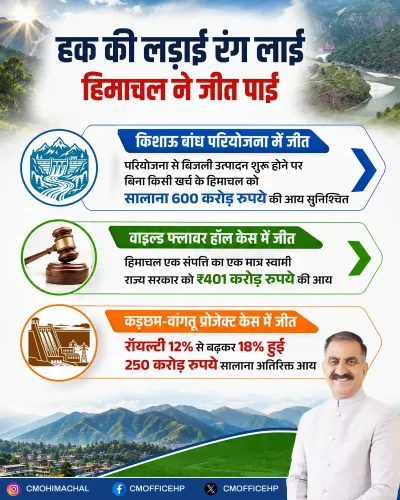
The BBMB victory follows an earlier resolution on the Kishau Dam (660 MW) project on the Tons river , which the government frames as a broader rights-protection strategy.
The Bhakra Beas Management Board was constituted in 1982 to regulate power and water sharing among Punjab, Haryana, Himachal Pradesh, and Rajasthan.
Formal notification from the Ministry of Power and a grid-supply schedule are the critical next milestones to watch.
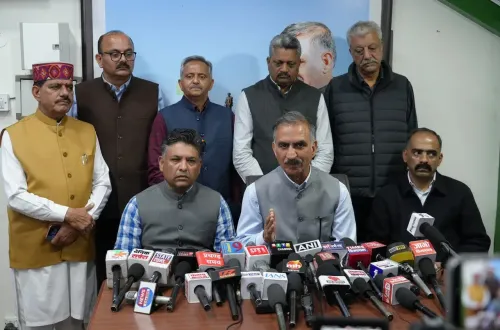
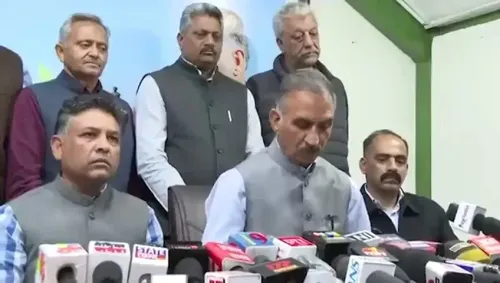
A decade and a half of negotiation, litigation, and persistent upstream assertion — and Himachal Pradesh says it has finally cracked one of its most stubborn inter-state resource battles. The Chief Minister's Office of Himachal Pradesh announced on Monday, November 9, 2026, that the state has secured what it is calling a historic victory in its long-pending dispute with the Bhakra Beas Management Board (BBMB) — a win that the government says will deliver approximately 12,000 million units of electricity to the state over the next 20 years, worth an estimated ₹500 crore and more at current rates.
The BBMB Dispute: 15 Years in the Making
The Bhakra Beas Management Board was constituted in 1982 under the Punjab Reorganisation Act framework to regulate power and water sharing among four partner states: Punjab, Haryana, Himachal Pradesh, and Rajasthan. For Himachal Pradesh — the upstream riparian state whose rivers and terrain make the entire Bhakra-Nangal and Beas system physically possible — the arrangement has long felt lopsided. The state has argued for years that its share of power royalties and allocations from projects built on its soil does not reflect its legitimate upstream claims.
That grievance, the CMO post signals, has now been addressed. The government stated its resolve to protect 'हिमाचल के हितों और अधिकारों की रक्षा' (the interests and rights of Himachal Pradesh) — framing the BBMB resolution not as a bureaucratic settlement but as a constitutional and moral due.
Kishau Dam Win Sets the Pattern
The CMO's announcement explicitly links the BBMB outcome to the state's earlier resolution of the Kishau Dam project dispute — a proposed 660 MW hydroelectric project on the Tons river whose benefit-sharing arrangements had also been a point of contention. Together, the two victories are being presented as evidence of a coherent strategy: Himachal Pradesh is no longer content to be the terrain on which India's power story is built while receiving a fraction of the returns.
The pattern is not unique to Himachal. Uttarakhand and Jammu & Kashmir have pursued similar upstream-rights assertions on the Yamuna, Chenab, and Ravi basins — but Himachal's consecutive wins within a short window give its government a sharper political narrative heading into future inter-state water negotiations.
What ₹500 Crore in Annual-Equivalent Power Means for a Hill State
For a state whose budget is heavily dependent on central transfers and whose topography limits conventional industrial development, the fiscal arithmetic of hydro power is not abstract — it is structural. 12,000 million units of electricity over 20 years translates to roughly 600 million units per year: power the state can either consume directly, reducing its purchase costs, or sell into the grid at prevailing rates. At current prices, the government pegs the value at approximately ₹500 crore and above — a number that, compounded over two decades and adjusted for rising tariffs, could meaningfully change Himachal's energy balance sheet.
The next step to watch: a formal notification from the Ministry of Power revising the allocation, and the actual schedule under which additional units begin flowing into Himachal's grid.
Point of View
Hydro power is not just an energy source — it is the fiscal lever that can reduce structural dependence on central transfers. The ₹500-crore figure, while subject to tariff movements, signals that the state is now treating power allocation as a revenue-rights issue, not merely an energy-supply one.
NationPress
9 Nov 2026
Frequently Asked Questions
What is the BBMB and why was Himachal Pradesh in dispute with it?
The Bhakra Beas Management Board (BBMB) is a statutory body constituted in 1982 to manage the Bhakra-Nangal and Beas river projects and distribute power and water among Punjab, Haryana, Himachal Pradesh, and Rajasthan. Himachal Pradesh argued that its share of power royalties and allocations did not adequately reflect its status as the upstream riparian state on whose terrain the projects stand.
How much electricity will Himachal Pradesh get from the BBMB resolution?
According to the Chief Minister's Office, Himachal Pradesh will receive approximately 12,000 million units of electricity over the next 20 years — roughly 600 million units per year — valued at ₹500 crore and above at current rates.
What is the Kishau Dam project and how is it connected to the BBMB win?
The Kishau Dam is a proposed 660 MW hydroelectric project on the Tons river. Its benefit-sharing dispute was resolved earlier in Himachal Pradesh's favour, and the government is presenting the BBMB win as a continuation of the same upstream-rights strategy.
What happens next after the BBMB dispute resolution?
The key next steps are a formal notification from the Ministry of Power revising Himachal Pradesh's power allocation, and a schedule for the additional electricity units to begin flowing into the state's grid over the coming two decades.
Which other states have made similar upstream power rights claims?
Uttarakhand and Jammu and Kashmir have pursued comparable upstream-rights assertions regarding projects on the Yamuna, Chenab, and Ravi basins, reflecting a broader pattern of Himalayan states seeking to renegotiate older inter-state resource-sharing frameworks.