HP CM Office: Kishau Dam to yield ₹1,500 cr annually
Synopsis
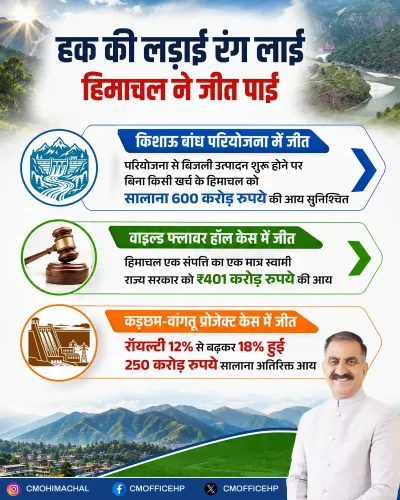
The Chief Minister's Office of Himachal Pradesh projects the Kishau Dam Project on the Yamuna river will yield approximately ₹1,500 crore annually at no recurring cost, with cumulative benefits of nearly ₹20,000 crore over 20 years as part of the state's hydropower revenue strategy.
Key Takeaways
The Kishau Dam Project on the Yamuna river is projected to generate approximately ₹1,500 crore annually without recurring expenditure, per the HP CMO.
Cumulative benefits including tariff hikes are estimated at nearly ₹20,000 crore over 20 years .
The state government's broader hydropower efforts are expected to bring in roughly ₹3,000 crore per year to the Himachal exchequer.
The Kishau Dam is a multipurpose inter-state project involving Himachal Pradesh and Uttarakhand on the Yamuna basin.
Revenue projections remain subject to inter-state clearances and construction timelines; formal agreements and tendering are the next key milestones.
The project is part of Himachal Pradesh's long-term strategy to reduce fiscal dependence on central transfers through river-resource monetisation.
A dam on the Yamuna river could quietly rewrite Himachal Pradesh's fiscal future — and the numbers the Chief Minister's Office of Himachal Pradesh put on the table on Monday, 9 November 2026 are hard to ignore. The state government projects that the Kishau Dam Project alone could generate approximately ₹1,500 crore every year without any recurring expenditure, while broader government efforts are expected to bring in roughly ₹3,000 crore annually to the state exchequer.
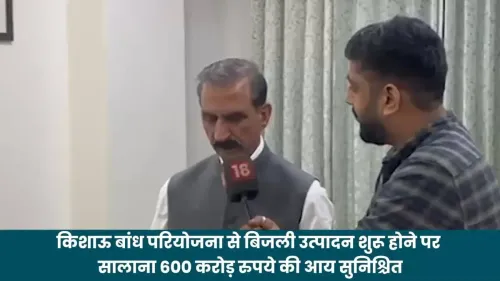
The CMO's post outlines a sweeping revenue vision: factoring in tariff increases, cumulative benefits from the project are pegged at nearly ₹20,000 crore over the next 20 years. The post states, 'किशाऊ बाँध परियोजना से बिना किसी खर्च के सालाना लगभग 1,500 करोड़ रुपये की आय होने की संभावना है' — 'the Kishau Dam Project is expected to generate approximately ₹1,500 crore annually without any expenditure.' These figures are the state government's own projections and are subject to inter-state clearances and construction timelines.
What the Kishau Dam actually is — and why it has taken this long
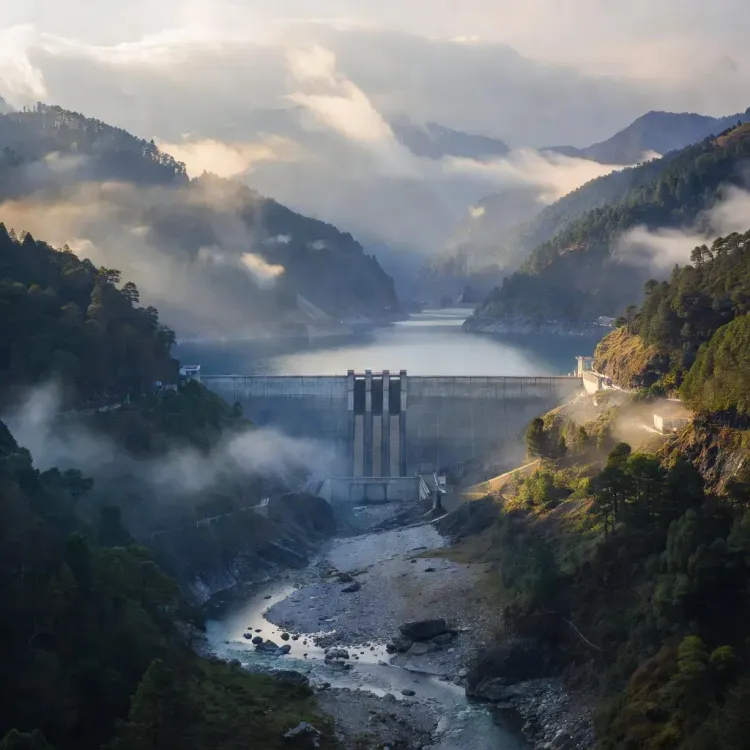
The Kishau Dam is a proposed multipurpose project on the Yamuna river, straddling Himachal Pradesh and Uttarakhand. Conceived for hydropower generation, irrigation, and water storage, it has featured in bilateral discussions between the two states since the early 2000s as part of Yamuna basin development. The project has moved slowly — tangled in inter-state coordination, clearances, and shifting fiscal priorities — making today's revenue framing a signal that Shimla is pushing to accelerate momentum.
Himachal Pradesh sits on enormous hydropower potential, and successive state governments have pursued river-based projects as a way to build non-tax revenue and reduce dependence on central transfers. The Kishau project, shared with Uttarakhand, is one of the larger pieces of that puzzle — and projecting a ₹20,000 crore benefit over two decades is the state's clearest public articulation yet of what that prize looks like in rupee terms.
Himachal's hydropower bet and the ₹3,000 crore annual target
Beyond Kishau, the CMO post points to a combined state-government effort expected to deliver roughly ₹3,000 crore per year to Himachal. This fits a broader pattern visible across Himalayan states: treating river resources as a long-term balance-sheet asset rather than merely an environmental or agricultural variable. India's wider push to harness Himalayan water for energy security gives these state-level bets a tailwind — both in terms of central support and investor interest in the hydropower sector.
The immediate next tests are concrete: formal inter-state agreements, tendering for construction, and the first actual revenue transfers once the dam becomes operational. Until those milestones are hit, the ₹1,500 crore annual figure remains a projection — but one the state government is now publicly staking its fiscal planning on.
For a mountain state that has long run on central grants and tourism receipts, a dam that pays for itself and then some would be nothing short of a structural shift. Himachal Pradesh is betting the Yamuna can deliver exactly that.
Point of View
The Himachal Pradesh government is doing something strategically deliberate: converting a long-stalled inter-state infrastructure proposal into a fiscal urgency narrative. The ₹20,000 crore over 20 years framing borrows from the playbook of central scheme communications — big lifetime numbers that build political pressure for action. For a state whose finances have historically leaned on central devolution, the pivot to hydropower as a structural revenue source mirrors what Sikkim and Arunachal Pradesh have attempted with varying success. The real test is whether this public projection accelerates inter-state coordination with Uttarakhand or remains aspirational arithmetic.
NationPress
9 Nov 2026
Frequently Asked Questions
What is the Kishau Dam Project?
The Kishau Dam is a proposed multipurpose project on the Yamuna river, jointly involving Himachal Pradesh and Uttarakhand, designed for hydropower generation, irrigation, and water storage. It has been under discussion since the early 2000s as part of Yamuna basin development.
How much revenue will Kishau Dam generate for Himachal Pradesh?
The Chief Minister's Office of Himachal Pradesh projects the Kishau Dam will generate approximately ₹1,500 crore annually without any recurring expenditure, and cumulative benefits including tariff increases are estimated at nearly ₹20,000 crore over 20 years. These are state government projections subject to clearances and construction timelines.
What is Himachal Pradesh's total annual revenue target from hydropower projects?
The HP government estimates that its combined efforts, including the Kishau Dam and other projects, could bring approximately ₹3,000 crore per year into the state exchequer.
Is the Kishau Dam under construction?
As of November 2026, the Kishau Dam project is not yet under construction. It still requires formal inter-state agreements and tendering; the revenue figures cited are forward-looking projections contingent on these clearances.
Why is Himachal Pradesh focusing on hydropower for state revenue?
Himachal Pradesh has significant river resources but has historically depended on central transfers. Monetising hydropower through projects like Kishau Dam is part of a strategy to build non-tax revenue, reduce fiscal dependence on New Delhi, and create long-term income for the state exchequer.