PM Modi Hails Fast Patrol Vessel Transfer to Seychelles Coast Guard
Synopsis
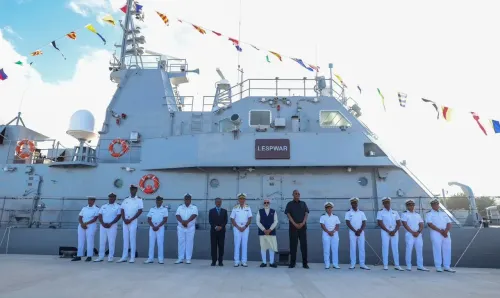
Prime Minister Narendra Modi on 27 June 2026 hailed the transfer of Fast Patrol Vessel Lespwar to the Seychelles Coast Guard as a milestone in bilateral defence ties, reflecting India's SAGAR doctrine of building maritime capacity across the Indian Ocean Region.
Key Takeaways
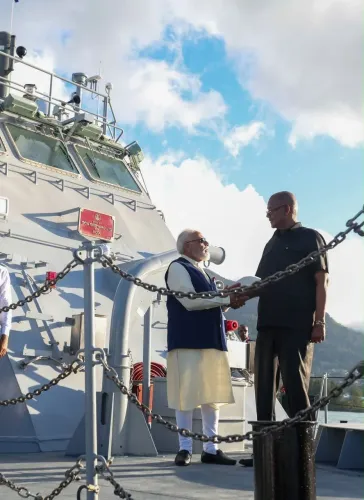
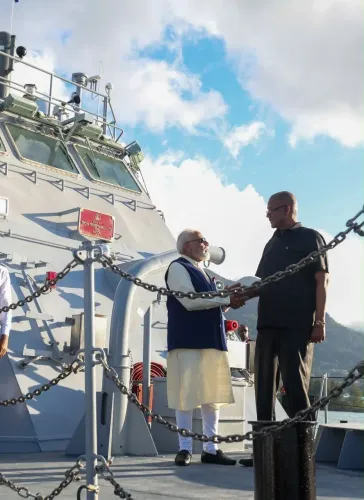
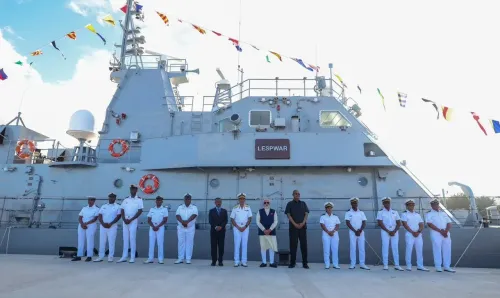
PM Modi on 27 June 2026 welcomed the transfer of Fast Patrol Vessel Lespwar to the Seychelles Coast Guard .
The handover is described as the latest in a series of capability-building initiatives under the India-Seychelles defence partnership.
The transfer is anchored in India's SAGAR doctrine, announced during PM Modi 's 2015 visit to Seychelles .
India has previously provided Seychelles with a patrol vessel and Advanced Light Helicopters in 2018 .
Similar support has been extended to Maldives , Mauritius and Sri Lanka , forming a pattern of Indian Ocean maritime diplomacy.
The vessel bolsters Seychelles ' ability to police its 1.37 million sq km EEZ against illegal fishing, trafficking and piracy.
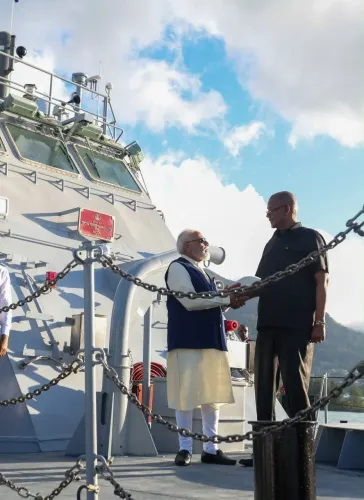
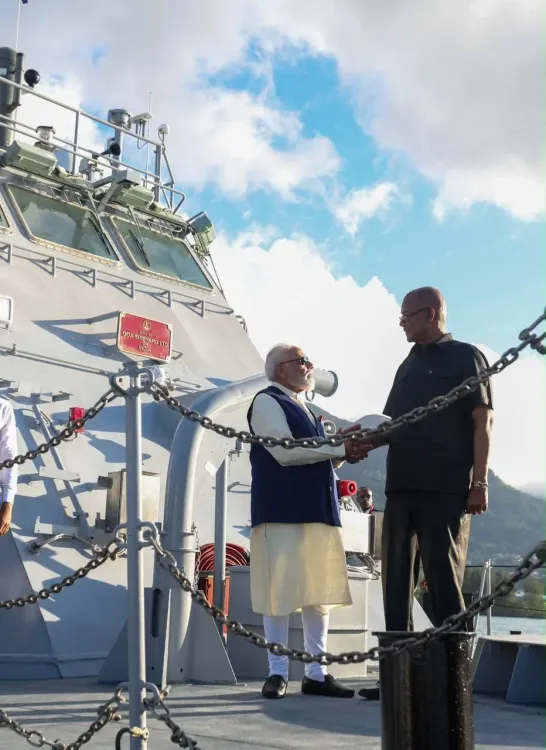
Prime Minister Narendra Modi on Saturday, 27 June 2026, welcomed the transfer of the Fast Patrol Vessel Lespwar to the Seychelles Coast Guard, calling it an important milestone in the deepening India-Seychelles defence and maritime security partnership.
In his post on X, PM Modi described the handover as 'the latest in a series of capability-building initiatives,' underscoring India's sustained commitment to strengthening maritime capacity across the Indian Ocean Region.
Context
The transfer of FPV Lespwar adds to a growing list of defence assets India has provided to Seychelles over the past decade. Earlier transfers included a second-hand patrol vessel and Advanced Light Helicopters handed over in 2018 to help Seychelles monitor its vast Exclusive Economic Zone (EEZ). These steps have progressively expanded the operational reach of the Seychelles Coast Guard.
The vessel transfer was accompanied by Indian Navy training support, a standard component of New Delhi's defence cooperation model with Indian Ocean island states.
Policy Backdrop
The handover is rooted in India's SAGAR doctrine — Security and Growth for All in the Region — announced by PM Modi during his 2015 visit to Seychelles. The framework commits India to building the maritime security capabilities of its Indian Ocean neighbours through equipment, training and intelligence-sharing, without formal military alliances.
SAGAR has since guided a pattern of similar support extended to Maldives, Mauritius and Sri Lanka, making vessel and aircraft transfers a recurring instrument of New Delhi's regional diplomacy. The Lespwar transfer reinforces this arc of cooperative maritime engagement.
Stakeholders and Impact
For the Seychelles Coast Guard, the addition of a fast patrol vessel directly enhances its ability to combat illegal fishing, drug trafficking and piracy across one of the world's largest EEZs — spanning approximately 1.37 million square kilometres. Seychelles relies heavily on its maritime resources, making coast guard capability a national security and economic priority.
For India, the transfer consolidates influence among Indian Ocean littoral states at a time when maritime domain awareness and interoperability with friendly navies are strategic imperatives. The move also signals that New Delhi's defence partnerships extend well beyond its immediate neighbourhood.
What's Next
Analysts tracking India-Seychelles ties will watch for announcements of joint hydrographic surveys or expanded training programmes, which typically follow vessel transfers under bilateral defence agreements. Any upcoming high-level visit between the two countries could yield further cooperation announcements, potentially covering radar systems or coastal surveillance infrastructure. The Lespwar transfer is expected to deepen operational coordination between the Indian Navy and the Seychelles Coast Guard in the months ahead.
Point of View
Long-running strategy to make India the security partner of choice for Indian Ocean island states. By consistently offering patrol craft, helicopters and training rather than seeking basing rights or formal alliances, New Delhi positions itself as a non-coercive alternative to other external powers active in the region. PM Modi's public acknowledgement of the handover on X also serves a domestic and diplomatic signalling function — reaffirming the SAGAR framework as a live, deliverable policy rather than an aspirational doctrine. Sustained execution of these transfers, across multiple island capitals, is quietly building a web of maritime interoperability that could prove strategically significant in any future regional contingency.
NationPress
26 Sept 2026
Frequently Asked Questions
What is the Fast Patrol Vessel Lespwar?
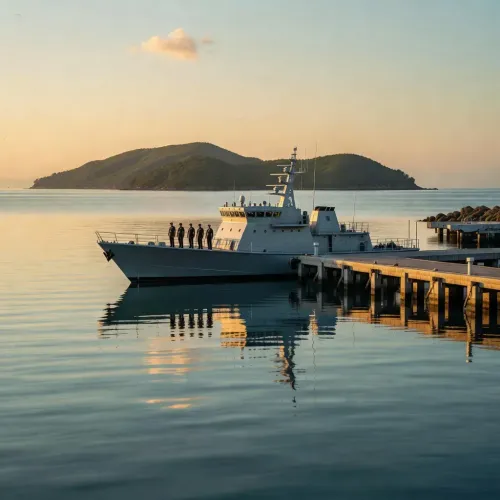
FPV Lespwar is a fast patrol vessel transferred by India to the Seychelles Coast Guard to enhance its maritime surveillance and enforcement capability across the Seychelles EEZ . Technical specifications have not been officially confirmed in public records.
Why did India give a patrol vessel to Seychelles?
The transfer is part of India's SAGAR doctrine, which commits New Delhi to building the maritime security capacity of Indian Ocean neighbours through equipment transfers, training and cooperation — without formal military alliances.
What is India's SAGAR policy?
SAGAR stands for Security and Growth for All in the Region , a maritime cooperation framework announced by PM Modi in 2015 . It guides India's defence and development engagement with Indian Ocean island and littoral states including Seychelles , Maldives and Mauritius .
Has India given vessels to Seychelles before?
Yes. India handed over a patrol vessel and Advanced Light Helicopters to Seychelles in 2018 to strengthen its EEZ surveillance. The Lespwar transfer is the latest in this series of capability-building steps.
What does the India-Seychelles defence partnership cover?
The partnership covers patrol vessel transfers, helicopter support, Indian Navy training for the Seychelles Coast Guard , and broader maritime domain awareness cooperation, all framed under the bilateral defence agreement and the SAGAR policy.