PM Modi pays tribute to Chandra Shekhar Azad on birth anniversary
Synopsis
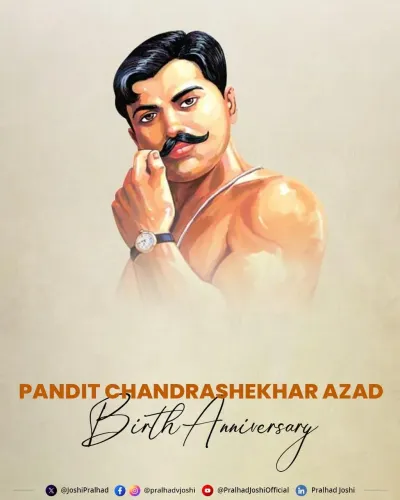
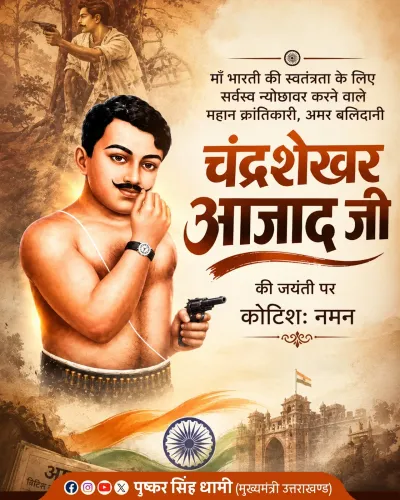
Prime Minister Narendra Modi on 23 July 2026 paid homage to revolutionary freedom fighter Chandra Shekhar Azad on his birth anniversary, praising his fearless courage, unwavering patriotism, and his enduring inspiration to generations of young Indians in the nation's freedom struggle.
Key Takeaways
Prime Minister Narendra Modi paid tribute to Chandra Shekhar Azad on his birth anniversary, 23 July 2026 , via a post on X.
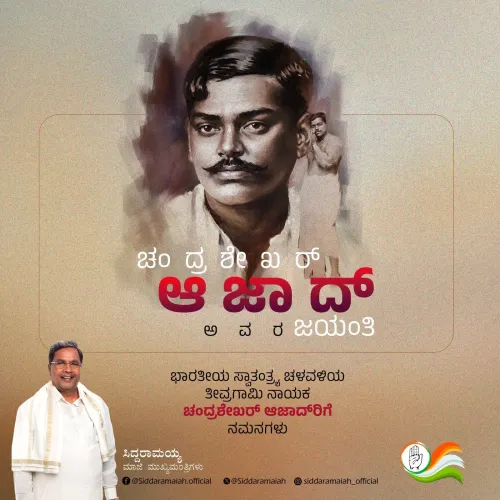
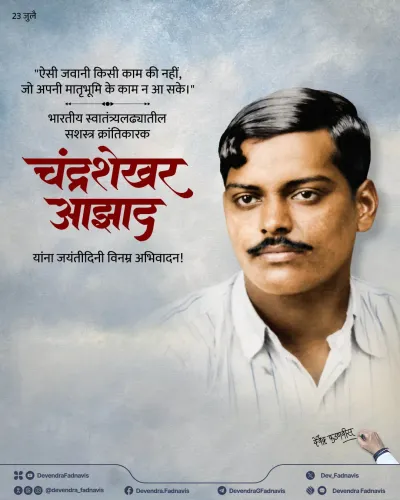
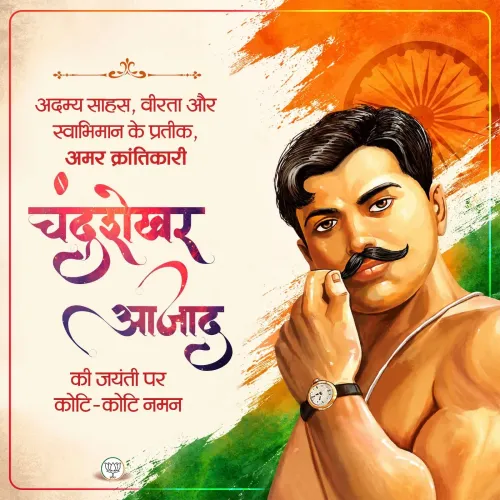
Chandra Shekhar Azad was born on 23 July 1906 and was a key member of the Hindustan Socialist Republican Association (HSRA) .
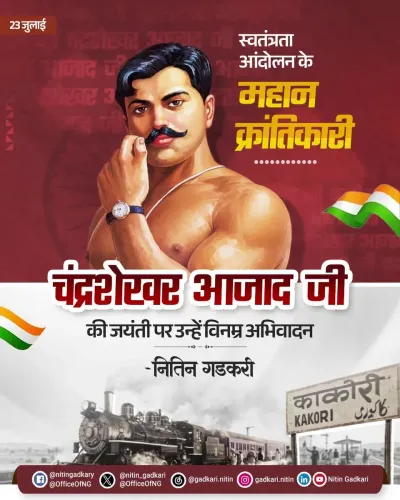
Azad is remembered for his role in the 1925 Kakori train robbery and his death during a police encounter in Allahabad in 1931 .
Modi praised Azad's 'fearless courage and unwavering patriotism' and his role in motivating 'countless young Indians to devote themselves to the nation.' Annual official commemorations of Azad's birth anniversary have been observed by Indian governments and leaders since independence in 1947 .
State-level observances, school programmes, and cultural events are expected across India to mark the occasion.
Prime Minister Narendra Modi on Thursday, 23 July 2026, paid homage to revolutionary freedom fighter Chandra Shekhar Azad on his birth anniversary, honouring his role in India's independence struggle and the inspiration he provided to generations of young Indians.
Context
In his post, Prime Minister Modi wrote: 'Paying homage to the brave Chandra Shekhar Azad on his birth anniversary. His fearless courage and unwavering patriotism occupy a proud place in the history of India's freedom struggle. He motivated countless young Indians to devote themselves to the nation. His resolve continues.' The message reflects the annual tradition of official commemoration of Azad's birth anniversary on 23 July, observed by Indian governments and leaders since independence in 1947.
Chandra Shekhar Azad was born on 23 July 1906 and became one of the most prominent revolutionary figures of the independence movement. He was a key member of the Hindustan Socialist Republican Association (HSRA) and is remembered for his role in the 1925 Kakori train robbery, among other acts of resistance against British rule. He died during a police encounter in Allahabad in 1931, having vowed never to be captured alive.
Policy Backdrop
Prime Minister Modi regularly marks the anniversaries of independence movement figures on social media, a practice consistent with BJP-led governments' emphasis on revolutionary nationalists alongside Gandhian leaders. This official messaging forms part of broader efforts to shape public historical memory and national identity, ensuring that figures such as Azad remain prominent in mainstream commemoration.
India's freedom struggle encompassed both non-violent and revolutionary streams. Azad remains a symbol of the latter — a tradition that successive governments have sought to honour through state-level observances, school programmes, and official declarations. His legacy is taught in school curricula across the country, making annual tributes from senior leaders a significant moment of public reinforcement.
Stakeholders and Impact
The tribute is directed most visibly at Indian youth and students, whom Azad himself sought to mobilise during the independence era. Prime Minister Modi's reference to Azad having 'motivated countless young Indians to devote themselves to the nation' underscores this intergenerational connection, framing the revolutionary's legacy as a living call to civic duty.
State governments, educational institutions, and cultural organisations typically hold events on 23 July to mark the occasion. Such commemorations often include lectures, exhibitions, and youth programmes centred on Azad's life and the broader revolutionary movement of the early twentieth century.
What's Next
State-level observances and school programmes marking Azad's birth anniversary are expected across India in the coming days. Observers will watch for any linked government announcements on historical education initiatives or the naming of public infrastructure — a pattern seen in past commemorations of independence-era figures under the current administration.
As India continues to build its national narrative around the freedom struggle, tributes such as this signal that revolutionary figures will remain central to official memory, alongside the non-violent tradition most closely associated with Mahatma Gandhi.
Point of View
Complementing rather than displacing the Gandhian tradition. By invoking Azad's power to motivate 'countless young Indians,' the message carries an implicit contemporary resonance, linking a century-old legacy to present-day civic mobilisation. Such tributes also serve a political function: reinforcing the BJP's claim to a broad nationalist inheritance that spans both armed resistance and mass non-violence. The regularity of these commemorations suggests they are as much about constructing a living national identity as about honouring the past.
NationPress
21 Oct 2026
Frequently Asked Questions
When is Chandra Shekhar Azad's birth anniversary?
Chandra Shekhar Azad's birth anniversary falls on 23 July . He was born on 23 July 1906 and is commemorated annually on this date by Indian governments, leaders, and institutions.
Why is Chandra Shekhar Azad famous?
Chandra Shekhar Azad is famous as a fearless revolutionary who fought against British rule in India. He was a key leader of the Hindustan Socialist Republican Association (HSRA) and played a central role in the 1925 Kakori train robbery . He died in a police encounter in Allahabad in 1931 , having vowed never to be taken alive.
What did PM Modi say about Chandra Shekhar Azad?
Prime Minister Narendra Modi said that Azad's 'fearless courage and unwavering patriotism occupy a proud place in the history of India's freedom struggle' and that 'he motivated countless young Indians to devote themselves to the nation.'
What was the Kakori train robbery?
The Kakori train robbery took place in 1925 and was carried out by members of the Hindustan Socialist Republican Association , including Chandra Shekhar Azad . The action targeted British colonial authorities and became one of the most iconic acts of armed resistance in India's independence movement.
How did Chandra Shekhar Azad die?
Chandra Shekhar Azad died on 27 February 1931 during a police encounter at Alfred Park in Allahabad (now called Chandrashekhar Azad Park ). True to his vow never to be captured alive, he used his last bullet on himself.