PM Modi Honors Chandrashekhar Azad: A Hero's Legacy
Synopsis
On the martyrdom anniversary of Chandrashekhar Azad, PM Modi pays tribute to the fearless freedom fighter who sacrificed everything for the liberation of Mother India. His legacy continues to inspire future generations in the fight against injustice.
Key Takeaways
Chandrashekhar Azad was a fearless freedom fighter.
He was born on July 23, 1906, in Madhya Pradesh.
Azad led significant revolutionary activities, including the Kakori train robbery .
His life exemplifies bravery against oppression.
He died fighting for his beliefs on February 27, 1931.
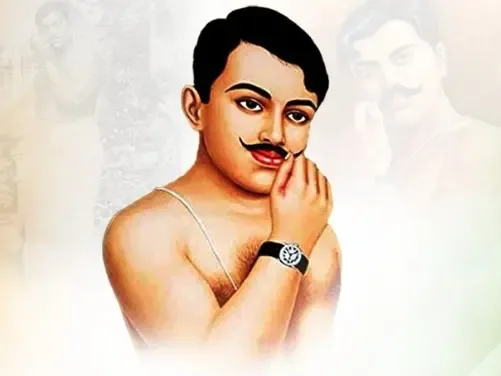
New Delhi, Feb 27 (NationPress) Prime Minister Narendra Modi on Friday honored the memory of Chandrashekhar Azad, a courageous freedom fighter, on the anniversary of his martyrdom, stating that he gave up everything to liberate Mother India from the chains of oppression.
Taking to his social media platform X, PM Modi expressed, “I pay my heartfelt tribute to Chandrashekhar Azad, a valiant son of Mother India, on this day of remembrance. He dedicated everything to liberate Mother India from the bonds of slavery, and his legacy will forever be cherished.”
In another post, PM Modi remarked, “The life of the legendary revolutionary Chandrashekhar Azad exemplifies that the resolve to resist injustice is the essence of true bravery. His tale of sacrifice for the homeland will continue to motivate future generations.”
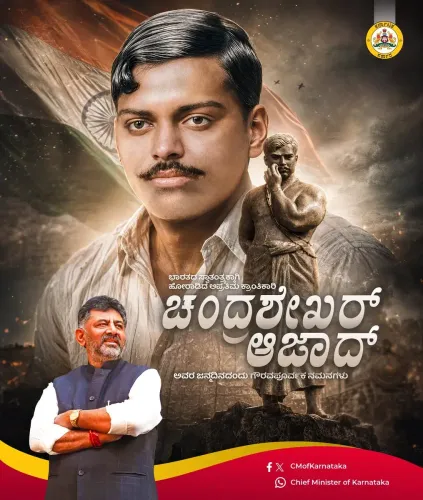
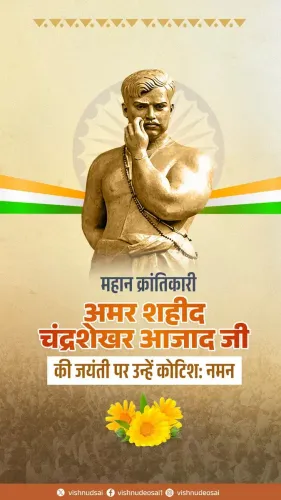
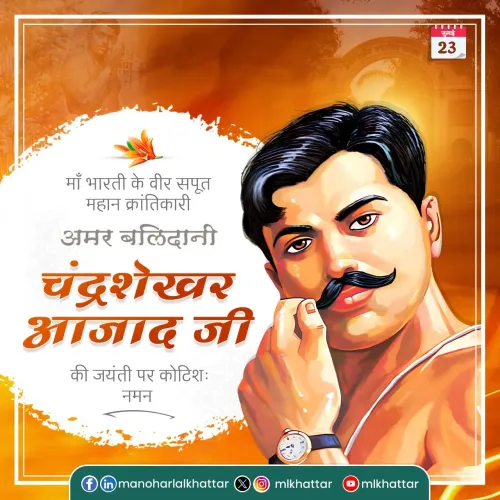
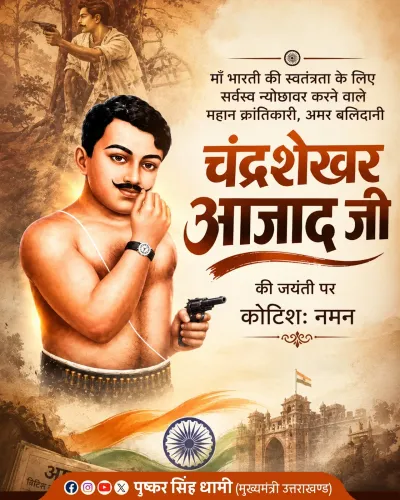
Chandrashekhar Azad was born on July 23, 1906, in Alirajpur, Madhya Pradesh, as Chandra Shekhar Sitaram Tiwari. At just 15 years old, he was detained during the Non-Cooperation Movement (1920-21). When brought to court, he boldly introduced himself as ‘Azad’ (free), gave his father’s name as ‘Swatantrata’ (freedom), and declared his residence as ‘prison’. This fearless declaration earned him the remarkable name by which he became a legend.
He was deeply affected when Mahatma Gandhi suspended the Non-Cooperation Movement in February 1922, which led him and many contemporaries to adopt a more militant approach.
Subsequently, he joined the Hindustan Republican Army, established by Ram Prasad Bismil and Sachindranath Sanyal.
Azad played a pivotal role in the 1925 Kakori train robbery, led by Ram Prasad Bismil, which became a key moment in the revolutionary movement.
In 1928, along with his fellow revolutionaries, Azad restructured the HRA into the Hindustan Socialist Republican Association, aiming to create a socialist republic in India.
Following the death of Lala Lajpat Rai, Azad, alongside Bhagat Singh and Rajguru, sought vengeance. While Bhagat Singh and Rajguru executed British officer John Saunders, Azad shot a pursuing police constable.
Under Azad’s direction, Bhagat Singh and Batukeshwar Dutt carried out a bombing at the Central Legislative Assembly on April 8, 1929, intending to make a political statement rather than inflict casualties.
Additionally, Azad was indirectly involved in an attempt to derail the Viceroy’s train in December 1929, further illustrating his commitment to armed resistance against colonial rule.
In 1928, the Hindustan Republican Association was reorganized into the Hindustan Socialist Republican Association at a historic assembly held at Feroz Shah Kotla in Delhi. Notable members present included Bhagat Singh, Bejoy Kumar Sinha, Shiv Varma, Jaidev Kapur, Bhagwati Charan Vohra, and Sukhdev. Chandrashekhar Azad was not in attendance at this meeting.
This reorganization marked a significant ideological change. Bhagat Singh and his colleagues emphasized socialism as a guiding principle, envisioning India's independence as not just political freedom but economic and social liberation for the masses. The adopted leadership model was collective, moving away from reliance on individual acts of revolution towards a broader mass movement.
Although Chandrashekhar Azad was absent from the Kotla meeting, he was appointed as the Commander of the Military Division of the HSRA. In this capacity, he was responsible for planning and executing organized armed resistance against colonial authorities.
On February 27, 1931, Chandrashekhar Azad was betrayed to the police at Alfred Park in Allahabad (now Prayagraj). Surrounded by police, he fought valiantly until his last bullet, which he used on himself to avoid capture, remaining true to his vow of never being taken alive.
Point of View
Showcasing his unwavering determination to fight colonial oppression. PM Modi's tribute underscores the importance of remembering such heroes who shaped India's freedom struggle.
NationPress
1 Oct 2026
Frequently Asked Questions
Who was Chandrashekhar Azad?
Chandrashekhar Azad was a prominent Indian freedom fighter known for his revolutionary activities against British colonial rule.
What is the significance of February 27?
February 27 marks the martyrdom day of Chandrashekhar Azad, commemorating his sacrifice for India's independence.
What role did Azad play in the freedom movement?
Azad was a key figure in the Hindustan Republican Army and participated in significant events such as the Kakori train robbery.
Why is Azad remembered today?
He is remembered for his bravery, commitment to justice, and the legacy of his sacrifices in the fight for India's freedom.