PM Modi Inaugurates CG Semi OSAT Facility in Sanand

Synopsis
Prime Minister Narendra Modi inaugurated the CG Semi OSAT facility in Sanand, Gujarat on 4 July 2026, advancing India's domestic semiconductor assembly and testing capacity under the India Semiconductor Mission launched in 2021.
Key Takeaways
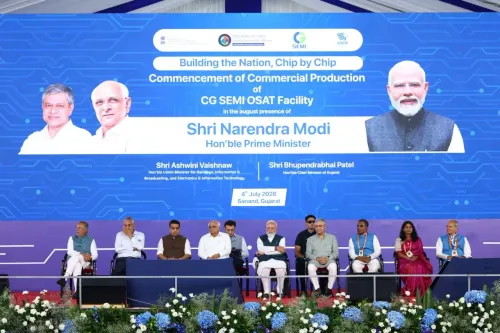
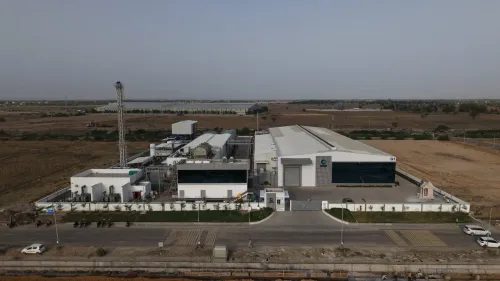
Prime Minister Narendra Modi inaugurated the CG Semi OSAT facility in Sanand, Gujarat on 4 July 2026 .
The facility handles semiconductor assembly, packaging and testing — critical back-end stages of chip manufacturing.
The project is part of the India Semiconductor Mission , launched in 2021 to build domestic chip manufacturing capability.
Sanand has emerged as a key industrial destination in Gujarat for electronics and semiconductor investments.
The facility is expected to benefit domestic electronics manufacturers by reducing dependence on overseas chip assembly services.
The inauguration signals that approved ISM projects are moving from planning to operational commissioning.
Union Culture and Tourism Minister Gajendra Singh Shekhawat shared a live update on Saturday, 4 July 2026, as Prime Minister Narendra Modi inaugurated the CG Semi OSAT facility in Sanand, Gujarat, marking a significant milestone in India's push for domestic semiconductor manufacturing capability.
Context
The inauguration of the CG Semi OSAT (Outsourced Semiconductor Assembly and Test) facility in Sanand adds a new chapter to India's semiconductor journey. Sanand has steadily grown into one of Gujarat's most prominent industrial corridors, hosting a range of electronics and automobile manufacturing units that have attracted both domestic and international investment.
Minister Shekhawat's live post captured the moment, reflecting the wider government enthusiasm around the event. OSAT facilities perform the critical back-end stages of chip manufacturing — assembly, packaging and testing — which are essential links in the global semiconductor supply chain.
Policy Backdrop
The inauguration is rooted in the India Semiconductor Mission (ISM), launched in 2021 with a comprehensive incentive framework covering fabrication units, OSAT facilities and design-linked projects. The mission was conceived to reduce India's heavy dependence on imported chips, a vulnerability exposed sharply during the global semiconductor shortage of the early 2020s.
Under the ISM, the central government extended financial support and production-linked incentives to approved projects, with Gujarat emerging as one of the leading destination states. The state government's investor-friendly policies and existing industrial infrastructure in zones such as Sanand made it a natural anchor for approved semiconductor investments.
Successive central budgets have reinforced the semiconductor push, with allocations directed at both greenfield fabrication and assembly capacity. The broader goal is to integrate India into global chip supply chains as a reliable, cost-competitive hub for design and manufacturing.
Stakeholders and Impact
The commissioning of a domestic OSAT facility has direct implications for electronics manufacturers across India who currently rely on overseas assembly and testing services, primarily in Taiwan, South Korea and Malaysia. A local OSAT node shortens supply chains, reduces logistics costs and provides greater control over production timelines.
Gujarat's industrial units — particularly those in consumer electronics, automotive electronics and telecom equipment — stand to benefit from proximity to a domestic chip assembly and test centre. The facility is also expected to generate skilled employment in semiconductor process engineering, a domain where India has historically had strong design talent but limited manufacturing depth.
For the broader semiconductor ecosystem, the event signals that approved projects under the India Semiconductor Mission are moving from commitment to commissioning, lending credibility to the government's technology self-reliance narrative.
What's Next
Attention will now turn to the rollout of other approved semiconductor projects across India, including fabrication and advanced packaging facilities at various stages of construction. Parliamentary updates on India Semiconductor Mission budget utilisation and disbursement timelines are also expected to be closely watched by industry stakeholders.
As India positions itself as an alternative to established Asian semiconductor hubs, the pace at which these facilities reach full operational capacity will be the key metric determining whether the mission meets its strategic objectives.
Point of View
Which has faced scrutiny over the gap between announcement and execution. For the BJP-led government, commissioning a back-end semiconductor facility in Gujarat — the Prime Minister's home state and a model for its industrial policy — carries both strategic and political weight. The event fits a well-established pattern of using high-profile inaugurations to reinforce the 'Atmanirbhar Bharat' narrative ahead of continued global supply-chain realignment. The real test, however, lies in whether this facility scales to commercial volumes and catalyses further investment in the upstream fabrication segment, where India's capacity remains nascent.
NationPress
24 Aug 2026
Frequently Asked Questions
What is the CG Semi OSAT facility in Sanand?
The CG Semi OSAT facility in Sanand, Gujarat is an Outsourced Semiconductor Assembly and Test plant inaugurated by Prime Minister Narendra Modi on 4 July 2026. OSAT facilities handle the back-end stages of chip manufacturing, including assembly, packaging and testing of semiconductors.
What is the India Semiconductor Mission?
The India Semiconductor Mission (ISM) is a central government programme launched in 2021 to develop domestic semiconductor design, fabrication and assembly capabilities. It provides financial incentives and production-linked support to approved projects across India.
Why is Sanand, Gujarat significant for semiconductor manufacturing?
Sanand is a major industrial hub in Gujarat with well-developed infrastructure and investor-friendly policies. It already hosts electronics and automobile manufacturing units, making it a natural destination for semiconductor and electronics investments under national missions.
What does an OSAT facility do?
An OSAT, or Outsourced Semiconductor Assembly and Test facility, performs the critical back-end stages of chip production — assembling bare semiconductor dies into packaged chips and testing them for quality and performance before they reach end-product manufacturers.
How does this inauguration affect India's chip import dependence?
Commissioning a domestic OSAT facility reduces India's reliance on overseas chip assembly and testing services, primarily concentrated in Taiwan, South Korea and Malaysia. It shortens supply chains for Indian electronics manufacturers and is a step toward integrating India into global semiconductor supply chains.